
Munish Sood
Mandi
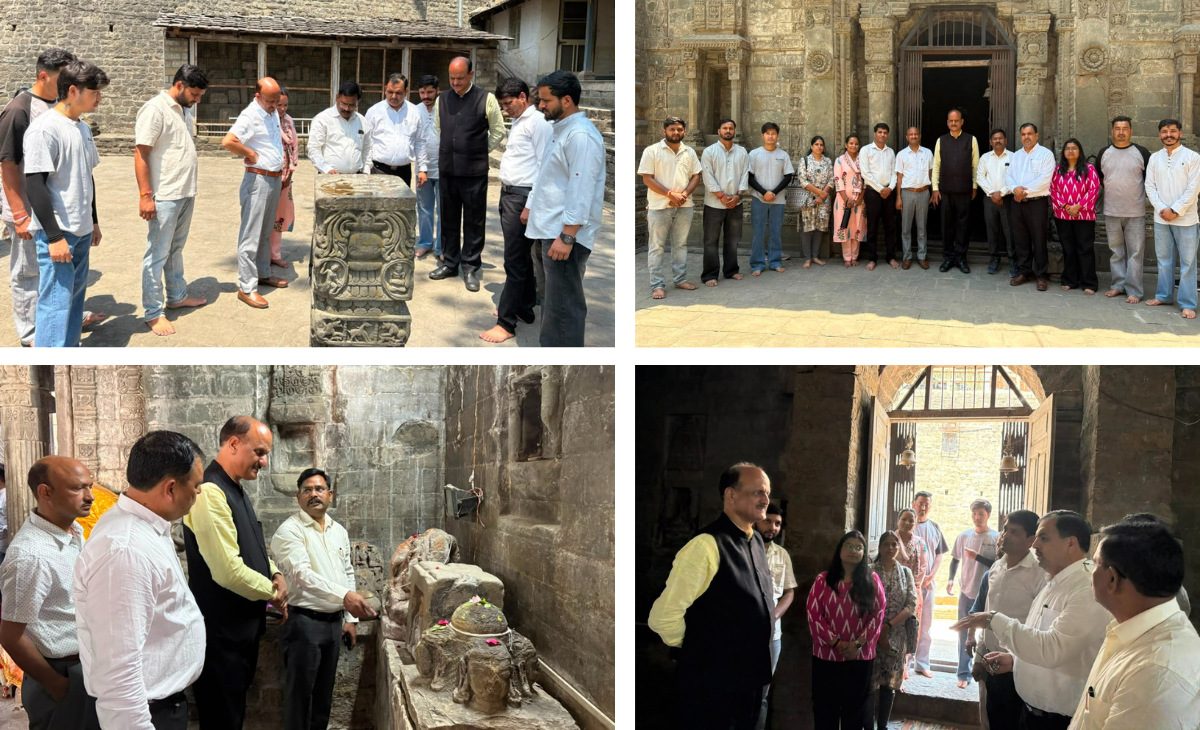
In a significant boost to academic collaboration and heritage research, a five-member delegation from Jiwaji University, Gwalior has arrived in Mandi—popularly known as Chhoti Kashi—to undertake an in-depth study of the town’s 500-year historical journey.
The visit is part of a Memorandum of Understanding (MoU) between Sardar Patel University, Mandi and Jiwaji University, aimed at strengthening faculty and student exchange along with joint archaeological and historical research initiatives.
The academic programme formally commenced with the launch of a structured archaeological and historical survey of Mandi town and its surrounding heritage sites. The delegation is being led by noted historian and archaeologist Prof. Shantidev Sisodia.
Welcoming the delegation, Vice Chancellor of Sardar Patel University, Mandi, Prof. Lalit Kumar Awasthi, described the collaboration as a landmark step in preserving India’s cultural and historical legacy. He said Mandi—renowned as Chhoti Kashi for its ancient temples and spiritual heritage—holds a unique position in the Himalayan cultural landscape.
He emphasized that the town’s 500-year historical evolution requires systematic scientific study and documentation for future generations. “This initiative will help connect the regional history of Mandi with the broader national historical narrative,” he said, expressing confidence that the joint survey would significantly contribute to research and heritage conservation.
Prof. Awasthi also appreciated the efforts of the Department of History and programme coordinator Dr. Rakesh Kumar Sharma, noting that such academic collaborations would open new avenues for research and strengthen institutional partnerships.
Dr. Rakesh Kumar Sharma, Head of the Department of History and coordinator of the programme, welcomed the visiting delegation and outlined the structure of the survey. He said the project is a major step towards documenting Mandi’s historical, cultural, and architectural heritage in a systematic scholarly format.
He further informed that the survey team would also study other significant archaeological sites in the district, and the findings would be compiled into a joint research project aimed at enriching Himalayan historical studies.
Prof. Shantidev Sisodia stated that Mandi’s heritage is vital for understanding the cultural continuity of the western Himalayas. He said the data collected during the survey would be used for academic publications, research work, and future heritage conservation planning.
Following the formal proceedings, the team conducted field visits to several prominent historical and archaeological sites in Mandi. These included the Triloknath Temple, Panchvaktra Mahadev Temple, Bhootnath Temple, Ardhanareshwar Temple, Neelkanth Mahadev Temple, Mahamrityunjay Temple, the historic Raj Mahal complex, along with ancient water sources and traditional water management systems.
The researchers examined architectural styles, sculptural details, inscriptions, and cultural traditions associated with these heritage structures, documenting key findings on the evolution of temple architecture and settlement patterns in the region.
The study is expected to offer valuable insights into Mandi’s 500-year historical development as a religious, cultural, and administrative centre of the Himalayas. Scholars believe the documentation will also strengthen broader research on Himalayan civilisation and indigenous knowledge systems.
The programme saw active participation from faculty members of the History Department, including Assistant Professors Dr. Rampal, Vikesh Kumar, and Rajesh Sharma. Research scholars Ved, Rahul, Raju, Dolma, Surya Prakash, and Surekha also participated. From Jiwaji University, research scholars Rahul Baraiya and Suman Priya were part of the delegation.
The initiative is being seen as a strong academic bridge between institutions, reinforcing inter-university cooperation and highlighting the rich heritage legacy of Chhoti Kashi Mandi on the national scholarly map.