
Munish Sood
Mandi
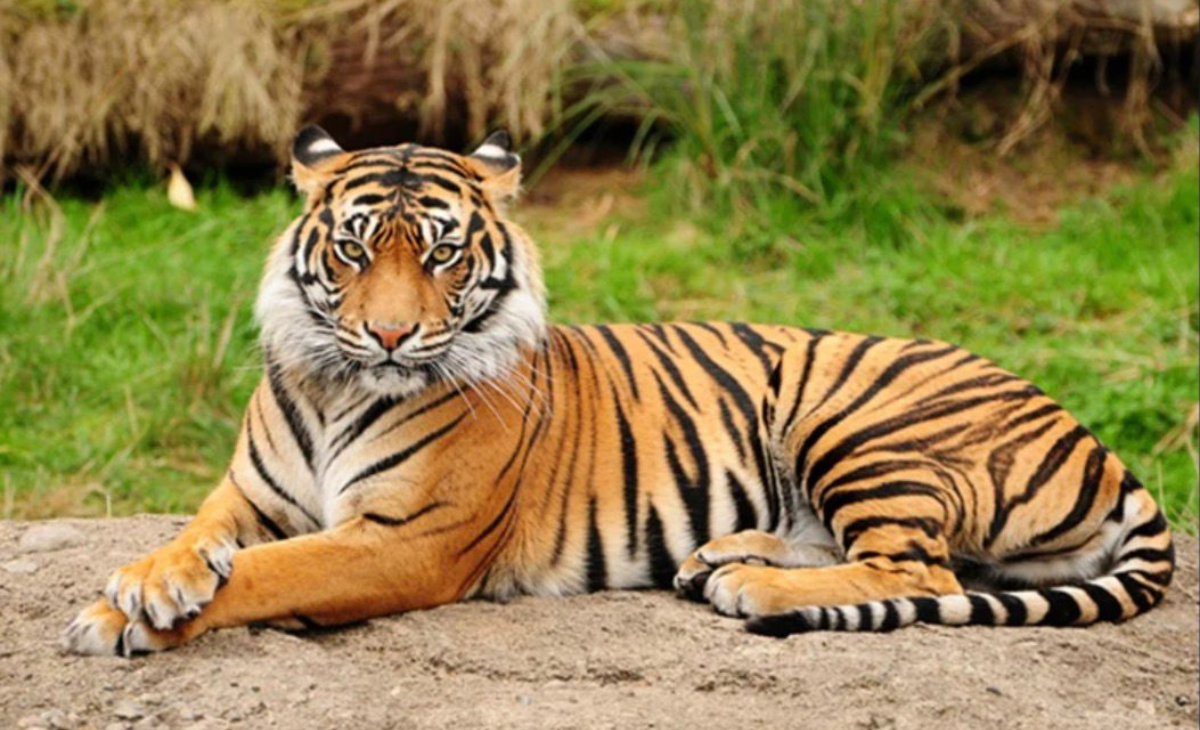
The confirmed sighting of a Royal Bengal Tiger in the Khara forest range of Paonta Sahib has generated widespread excitement among wildlife conservationists and forest officials, marking a significant moment for biodiversity conservation in Himachal Pradesh. The rare presence of the country’s national animal in the region has prompted heightened surveillance by forest authorities in both Himachal Pradesh and neighbouring Uttarakhand.
The tiger’s movement was captured on a camera trap installed in the Khara Block on June 18, confirming its presence in an area where such sightings are considered exceptionally rare. Officials said claw marks found on nearby trees suggest the animal had been frequenting the area for at least two to three days.
Forest Officials Increase Surveillance
The Forest Department has intensified monitoring by deploying additional camera traps across the forest range. Authorities believe the tiger could possibly be the same animal that reportedly disappeared from Rajaji National Park nearly a year ago.
Given that Rajaji National Park lies approximately 80 kilometres from Khara, wildlife experts say it is entirely possible for a tiger to travel between the two states through forest corridors. Forest officials from Himachal Pradesh and Uttarakhand are jointly monitoring the animal’s movement.
Officials added that it is yet to be determined whether the tiger is male or female. The Rajaji National Park administration has been informed, and a team of wildlife experts is expected to visit the area shortly.
Awareness Campaign for Local Communities
Recognising the importance of public awareness, the Forest Department organised an interaction with villagers and Panchayat representatives at the Khara Forest Rest House. During the meeting, officials appealed to residents to remain calm, avoid panic, and strictly follow the department’s safety guidelines.
Officials emphasised that while caution is essential, there is no need for fear. Residents were urged to cooperate fully with the Forest Department and immediately report any tiger sightings without attempting to approach or disturb the animal.
Special advisories have also been issued to Gaddi shepherds and others who regularly move through the forested areas.
Conservation Success Reflects Healthy Ecosystem
Forest officials described the tiger’s presence as a positive indicator of the region’s ecological health. They noted that wildlife conservation has received significant national attention in recent years, particularly with the country’s continued focus on tiger conservation.
The remote Khara forest has now become a subject of national interest, and authorities expressed optimism that ongoing monitoring and conservation measures would yield positive outcomes for wildlife protection in the region.
Earlier Claims Now Supported by Evidence
Local residents have claimed on several occasions over the years to have spotted a tiger in the area. However, those reports lacked photographic or digital evidence. The latest camera trap footage has now provided the first scientific confirmation of the tiger’s presence.
In another encouraging development for wildlife conservation in Himachal Pradesh, forest officials recently recorded a snow leopard on a camera trap in the Great Himalayan National Park in Kullu district at an altitude of approximately 3,000 to 3,500 metres above sea level. Officials said the elusive species had been documented in the area after nearly six years, highlighting the state’s rich and recovering wildlife habitat.