

Dr. Amrik Singh Thakur
Degrees without Roots: Why India’s Education System Produces Graduates Who Cannot Find Themselves, We have the world’s largest youth population. We have ancient universities that once taught the world. Today we produce millions of graduates annually who are unemployable, uprooted, and uncertain about who they are. Something went very wrong somewhere. The question is whether we have the honesty to admit it. Yes we do have and National Education Policy 2020 is the roadmap for the way forward.
India’s education system prioritizes ranks over real learning, pushing young minds into a relentless rat race. Instead of nurturing curiosity and independent thinking, children are conditioned to compete and chase marks. To build a better future, schools must foster creativity, purpose, and joy ensuring that both students and teachers thrive in a truly enriching environment. Every June, India celebrates another graduation season. Millions of young men and women collect degrees engineering, commerce, arts, sciences, management and step into a world that greets them with a troubling question: what exactly do you know, and what can you actually do? For a startling proportion of them, the honest answer is: not enough, and not much. This is not their failure. It is the failure of a system that has spent nearly two centuries optimising for the appearance of education rather than its living substance.
India is perhaps the only major civilisation on earth that has systematically excluded its own intellectual heritage from its mainstream educational curriculum. A student who spends sixteen years moving through the Indian education system will emerge knowing Newton’s laws but not Aryabhata’s foundational contributions to mathematics and astronomy. They will know Hippocrates but not Charaka, whose systematic approach to medicine predates and in several respects surpasses the Greek tradition in its holistic sophistication. they will have heard of Pythagoras but not Baudhayana, who articulated the same geometric relationship centuries earlier in the Sulbasutras. They will study Western political philosophy without ever opening Chanakya’s Arthashastra a work of governance, economics, and statecraft so rigorous that modern scholars of international relations continue to engage with it seriously.
This is not education. This is civilisational amnesia and we have institutionalised it. The origins of this amnesia are not mysterious. Lord Macaulay’s Minute of 1835 was explicitly designed to create what he famously described as a class of people Indian in blood but English in taste, opinion, morals and intellect. The curriculum he architected was never intended to produce thinkers rooted in their own civilisational inheritance. It was designed to produce administrators capable of servicing a colonial apparatus. India became independent in 1947. The colonial administrators departed. The curriculum, its assumptions, its epistemological hierarchy the unstated belief that Western knowledge is universal knowledge and everything else is regional heritage largely remained. We changed the flag. We did not change the compass.
The cost of this choice is now visible in forms that can no longer be ignored. India’s graduate unemployment and underemployment rates are among the most troubling economic statistics in an otherwise encouraging growth story. Studies across industries consistently report that a substantial proportion of graduates lack the practical competencies their degrees are supposed to certify. Medical graduates who cannot conduct a clinical examination with confidence. Engineering graduates who cannot troubleshoot a real engineering problem. Commerce graduates who cannot read a financial statement with genuine understanding. This is not a generation of unintelligent young people. It is a generation let down by a system that taught them to pass examinations rather than to think, to memorise rather than to apply, and to aspire to foreign frameworks rather than to understand the ground beneath their own feet.
What was discarded when the Gurukul and the ancient university tradition were marginalised was not primitive pedagogy. It was sophisticated educational wisdom that contemporary research is independently rediscovering. The Gurukul model embedded learning in relationship the student and teacher in sustained, personalised engagement. Modern educational psychology calls this situated learning and identifies it as among the most effective forms of knowledge transfer available. Learning in the ancient tradition was integrated mathematics, philosophy; ethics, practical arts, and spiritual cultivation were not separate compartments but dimensions of a unified human development.
The great universities of Takshashila and Nalanda did not produce specialists incapable of seeing beyond their disciplines. They produced scholars who could hold the breadth of human knowledge in sustained dialogue. When Brahmagupta formalised the rules of zero and negative numbers in the seventh century, he was working within a tradition that understood mathematics as inseparable from philosophy, astronomy, and the structure of reality itself. That integration is precisely what modern education has lost and modern industry desperately needs.
The National Education Policy 2020 understands this, at least at the level of vision. Its commitment to vocational education constituting up to 50 percent of the educational experience across all streams According to the policy, a minimum of 50% of learners in school and higher education will be exposed to vocational education through its integration into the mainstream curriculum, implemented in a phased manner across all educational institutions, its emphasis on interdisciplinary and multidisciplinary learning, its recognition of Indian Knowledge Systems as legitimate and serious fields of academic engagement these are not trivial aspirations. They represent a genuine attempt to break the Macaulayan inheritance and reorient Indian education toward something more honest, more rooted, and more useful. The tragedy is that the distance between the vision and its implementation has become a credibility crisis.
The vocational education mandate has been largely outsourced to agencies whose accountability is measured in contracts fulfilled rather than competencies developed. The Indian Knowledge Systems component has produced, in too many institutions, a single introductory course taught by faculty who are themselves unfamiliar with the tradition. This matters beyond the classroom because education is the infrastructure of civilisational continuity. The vision of Viksit Bharat at 2047 a developed, self-reliant, globally influential India cannot be built by graduates who are strangers to their own heritage, trained primarily for examinations, and uncertain about what they have to contribute to the world.
The ancient knowledge tradition that produced Sushruta’s surgical precision, Nagarjuna’s metallurgical sophistication, Shankaracharya’s philosophical rigour, and the Dharmashastra framework for governance and social ethics was not the product of accident. It was the product of an educational system that took the formation of the whole human being seriously that understood knowledge as inseparable from character, application, and social responsibility. “धर्मो धारयति प्रजाः” Dharma is that which upholds and sustains society. An educational system that does not form citizens capable of sustaining their society has failed at its most fundamental purpose, regardless of how many degrees it issues.
The reform India needs is not another policy document. It is a change in the foundational assumptions about what education is for. It requires university curricula that genuinely integrate ancient and modern knowledge where Charaka informs the medical programme, where the Arthashastra informs the economics programme, where Aryabhata and Brahmagupta are taught as intellectual ancestors of the mathematical tradition students are entering, not as historical footnotes. It requires teacher training to be rebuilt so that those responsible for implementing NEP 2020 actually understand the traditions they are transmitting. It requires examination systems reformed to assess practical competence and integrative thinking rather than the capacity to reproduce information under pressure. And it requires institutional leadership in universities, in regulatory bodies, in state education departments that is willing to be held accountable for outcomes rather than for compliance.
Takshashila did not become the world’s first great university by imitating someone else’s educational model. It became what it was because a civilisation took seriously the questions of what human beings need to know, and why, and how that knowledge transforms both the individual and the society they inhabit. That question has not become less urgent. We have simply stopped asking it seriously. The degrees we issue are multiplying. The roots that should give those degrees meaning are withering. That is the educational crisis of our time, and no amount of policy language will resolve it until we find the courage to name it honestly and act accordingly.(Views are personal)
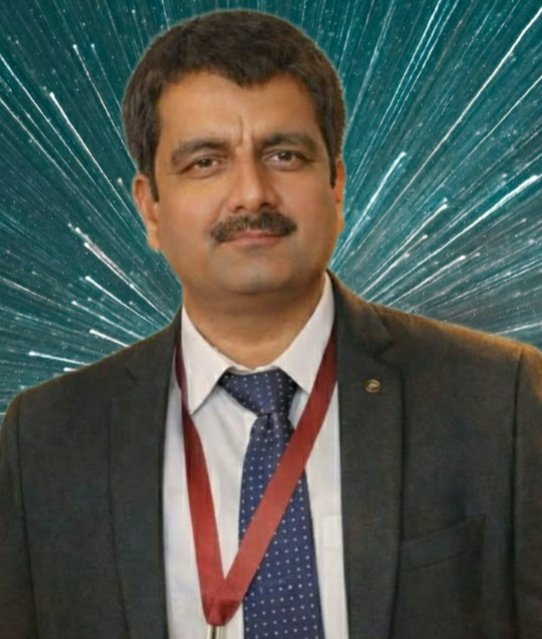
Dr.Amrik Singh Thakur
Director,
Centre for Tibetan Studies
Central University of Himachal Pradesh Dharamshala 176215