
Mahesh Pathania
Much hue and cry by people and Nitin Gadkari’s interview defending the nationwide rollout of E20 fuel have brought the contentious debate over ethanol blending into sharp focus. The aggressive transition to petrol blended with twenty percent ethanol has triggered widespread frustration among motorists, mechanics and consumer rights advocates who allege that the blend causes visible drops in fuel efficiency and inflicts subtle, cumulative damage on vehicle components.
In response to mounting public outcry and viral online campaigns, Union Minister Nitin Gadkari has firmly dismissed claims of widespread engine destruction, challenging critics to present documented evidence of single engines failing due to certified E20 fuel. While government representatives framed public skepticism as an overblown narrative orchestrated by vested interests, independent consumer surveys and preliminary studies from technical bodies like the Automotive Research Association of India present a far more complex picture.
The controversy reached an unprecedented climax when deepfakes and legal disputes escalated, prompting defamation lawsuits and intense political posturing. Beyond the immediate legal friction and media posturing lies a fundamental tension between long-term national policy objectives and immediate consumer realities, illuminating the delicate balance required when forcing structural shifts in energy ecosystems.
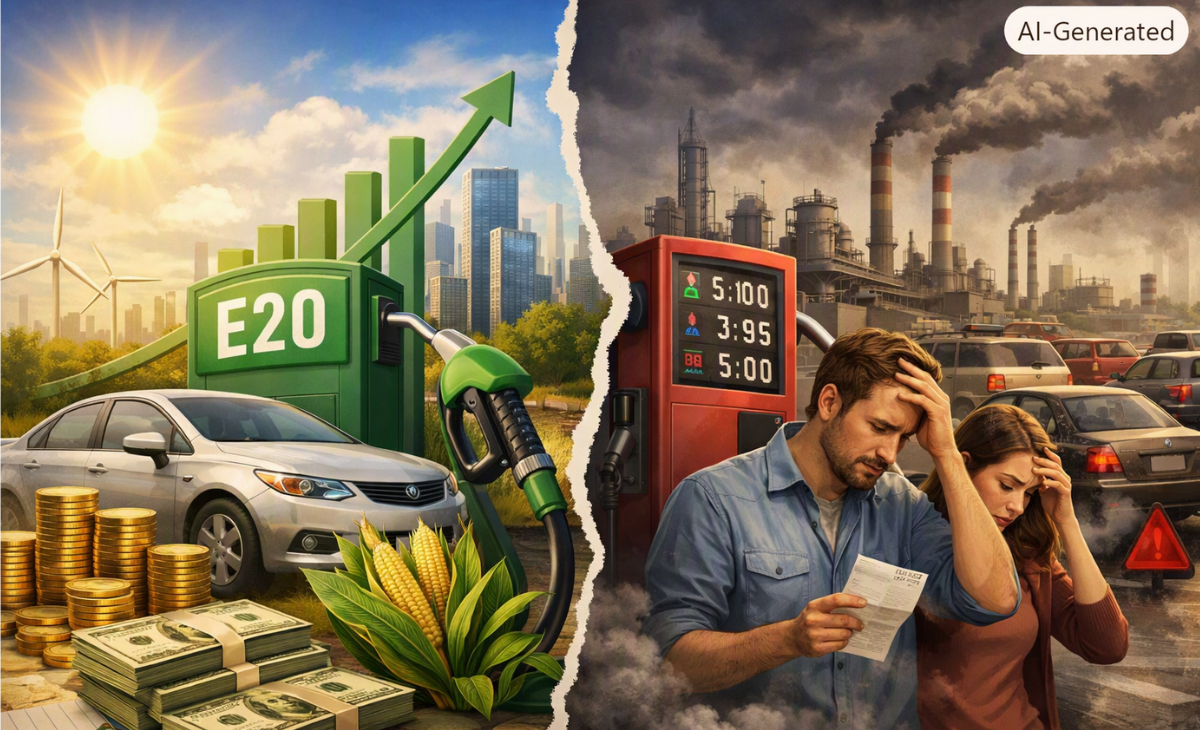
At its core, the policy of blending ethanol into conventional petrol rests on a compelling array of economic and environmental arguments that form the foundational pros of the initiative. Primary among these advantages is the imperative to achieve national energy security and dramatically cut down India’s staggering crude oil import bill.
By replacing one-fifth of conventional petrol with domestically produced biofuel, the nation conserves precious foreign exchange reserves while shielding the broader macroeconomy from volatile global oil price fluctuations. Furthermore, the ethanol ecosystem acts as a massive financial lifeline for agricultural communities and agrarian businesses, particularly sugarcane farmers and grain producers who now enjoy a stable, government-backed market for their surplus crops.
From an environmental perspective, ethanol offers a cleaner combustion profile compared to pure fossil fuels, releasing fewer particulate emissions and contributing meaningfully to carbon footprint reduction goals. The policy has also spurred a booming industrial landscape, incentivizing sugar mills, bio-distilleries and green energy firms to invest heavily in processing infrastructure, thereby generating employment opportunities across rural and semi-urban belts while fostering innovation in alternative energy technologies.
However, these macro-level benefits are accompanied by significant technical and financial drawbacks that form the critical cons of the mandate. The most pressing technical issue stems from ethanol’s hygroscopic nature, meaning it readily absorbs water from the atmosphere. In humid conditions or during extended periods of vehicle inactivity, water-saturated ethanol can separate from petrol, accelerating corrosion inside metal fuel tanks, clogging fuel injectors and eroding non-metallic components such as rubber hoses, gaskets and O-rings, especially in vehicles manufactured prior to E20 compliance standards.
Additionally, because ethanol possesses a lower calorific value and energy density than pure petrol, drivers inevitably experience a noticeable drop in fuel economy, effectively forcing consumers to purchase more litres of fuel to cover the same distance. For millions of middle-class vehicle owners and commercial operators who bought automobiles designed for pure petrol or lower blends, this reality translates into higher daily running costs and unexpected repair expenditures without any corresponding tax relief or direct subsidy.
From a broader business standpoint, the transition to E20 has fundamentally reshaped the automotive and petrochemical industries, creating a distinct division between gainers and losers. On one hand, sugar processing conglomerates, agricultural cooperatives and biofuel manufacturers are reaping unprecedented financial returns as guaranteed off-take agreements with state-run oil marketing companies secure long-term revenue streams. Similarly, original equipment manufacturers that swiftly adapted their assembly lines to build flex-fuel and E20-compliant engines stand to capitalize on replacement demand as consumers gradually phase out older, incompatible models.
On the other hand, the traditional auto repair sector, aftermarket parts vendors and fleet operators face immense operational friction. Mechanics must grapple with diagnostic challenges, while commercial transport businesses contend with compressed margins due to elevated fuel consumption and accelerated wear on legacy components. Moreover, the agricultural reliance on water-intensive crops like sugarcane for first-generation ethanol production raises pressing questions regarding ground water depletion and food security, suggesting that business models built solely on cane-derived biofuel may face long-term ecological and regulatory bottlenecks.
Ultimately, the E20 narrative serves as a stark reminder that energy transitions cannot succeed through top-down mandates alone without robust consumer alignment and transparent communication. Dismissing genuine consumer grievances as mere paid campaigns or social media hysteria risks eroding public trust in broader green energy objectives. To bridge this divide and sustain business confidence across sectors, policymakers must ensure the concurrent availability of pure petrol or lower ethanol blends for legacy vehicles, while accelerating research into non-food biomass feedstocks and second-generation biofuels.
Providing tax incentives or price adjustments at the pump to compensate for the lower calorific content of ethanol would go a long way toward alleviating consumer anger. As India marches toward ambitious clean energy milestones, navigating the intricate intersections of consumer rights, agricultural prosperity and industrial strategy with empathy and technical rigor will decide whether the E20 revolution is remembered as a triumph of economic foresight or a cautionary tale of rushed execution.
Mahesh Pathania
(Writer is a senior PR professional and has served as Addl director I&PR HP)
(Views expressed are personal)