
Shrey Awasthi
Himachal Pradesh is once again debating the creation of new districts, but the timing of this exercise deserves closer scrutiny. The state is already dealing with mounting debt, a revenue deficit and growing demands on its limited financial resources. Against this backdrop, the Congress government led by Chief Minister Sukhvinder Singh Sukhu must explain whether administrative reorganisation is backed by a sound financial plan or whether political considerations are beginning to take precedence over more pressing concerns. The people of Himachal Pradesh certainly deserve accessible government services. But a policy that appears attractive on paper must also make sense on the ground, particularly when the state has to make difficult choices about spending.
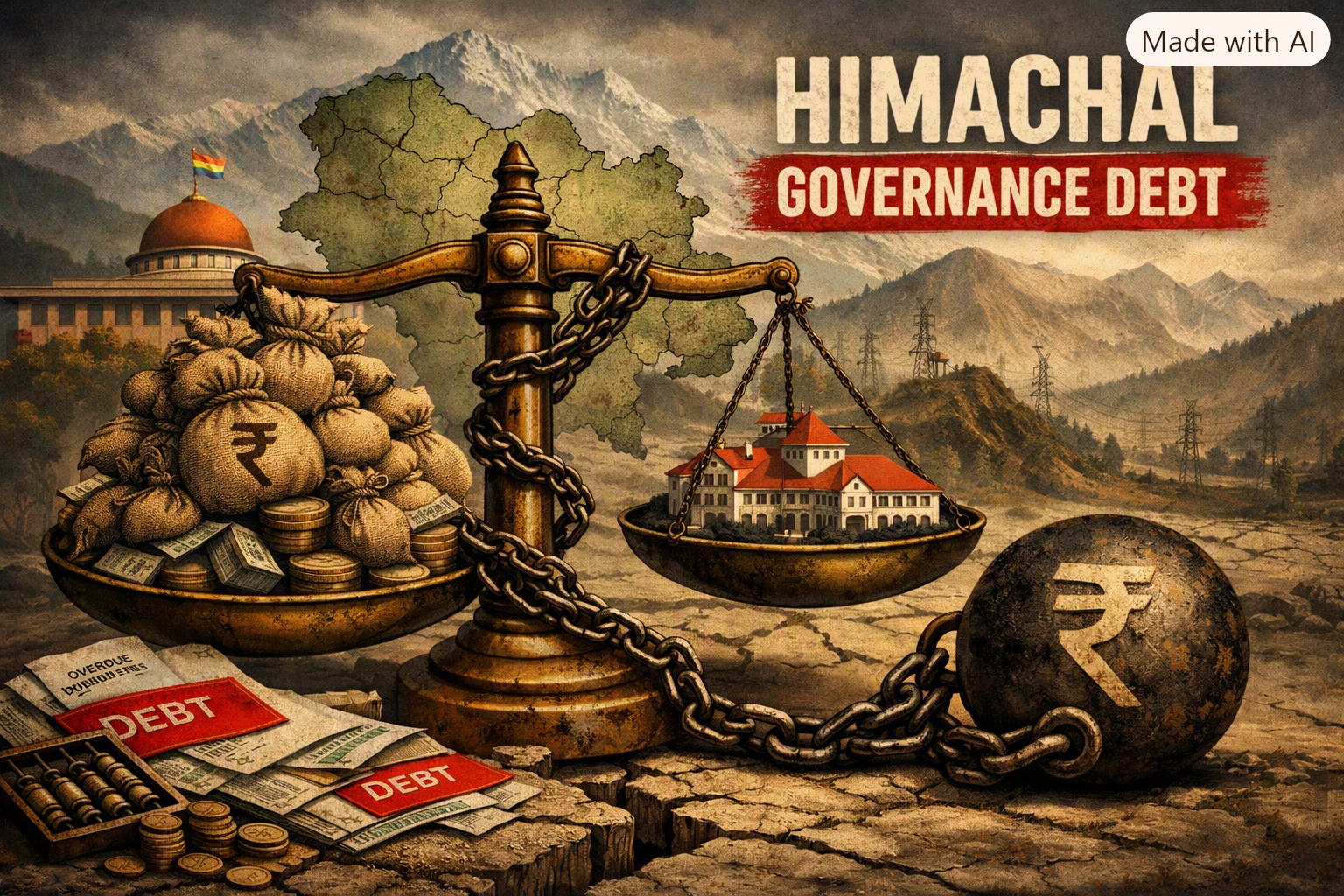
The financial position of Himachal Pradesh provides the necessary context. According to PRS Legislative Research’s analysis of the 2026–27 state budget, the fiscal deficit for 2025–26 was estimated at ₹16,708 crore in the revised estimates. For 2026–27, it is budgeted at ₹9,698 crore, while the revenue deficit is estimated at ₹6,577 crore. Outstanding liabilities are projected at 40.5 per cent of GSDP by the end of the financial year. These figures do not automatically rule out administrative reform, but they do make careful financial planning essential. When a government is operating under such constraints, every major proposal must be examined for its long-term cost and its practical value to the public.
The government has constituted a commission to examine the reorganisation of districts and other administrative units, with six months to submit its recommendations. This should not be mistaken for a final decision to create new districts. Nevertheless, the exercise raises an important question: what exactly will the state gain from such a restructuring, and at what price? A new district can require offices for the Deputy Commissioner and other departments, additional personnel, police and revenue infrastructure, vehicles, accommodation and recurring operational expenditure. Some of these requirements may be met by using existing facilities, but that possibility must be established through a proper assessment rather than assumed in advance.
The government must also consider whether improving the existing administrative system could achieve similar results at a lower cost. In a mountainous state, travelling to a district headquarters can be difficult, especially for residents of remote villages. Their concerns are genuine and should not be reduced to a political argument. However, better-equipped subdivisions, stronger tehsil offices, adequate staffing and more accessible digital services could also reduce the burden on citizens. The commission should compare these options carefully and explain why a new district would be more effective wherever such a proposal is recommended. The objective should be better public service delivery, not simply a larger administrative structure.
There is a larger issue here that the Congress government cannot afford to overlook. Himachal Pradesh needs better roads, stronger healthcare facilities, adequately staffed schools, reliable drinking-water systems and timely rehabilitation for families affected by natural disasters. These are immediate public needs, not abstract policy goals. Any decision to establish new districts must therefore account for the resources it could draw away from other priorities. At the same time, if restructuring can demonstrably reduce travel time, improve emergency response and make government services more efficient, the benefits should be recognised. The point is not to oppose new districts in principle; it is to demand evidence that the proposal will deliver more than it costs.
The political responsibility rests with the Sukhu government. A commission can examine possibilities and submit recommendations, but the final decision will belong to the government. It must explain how any proposed restructuring would be financed, whether existing infrastructure could be reused and what safeguards would prevent unnecessary expenditure. It should also publish clear performance indicators so that citizens can assess whether the changes actually improve administration. Without such information, the debate risks becoming an exercise in political expectations rather than a serious discussion about governance.
Demands for new districts have existed in several parts of Himachal Pradesh for years. Residents who believe that their areas have been neglected or are too far from existing headquarters have every right to seek a fair hearing. Yet, responding to a demand and committing public money are two different responsibilities. The government must weigh geographical realities, population, administrative workload, service-delivery gaps and financial feasibility before reaching a conclusion. It must also communicate clearly that the current exercise is a review, not an announcement that new districts will necessarily be created.
Before proceeding, the government should answer some straightforward questions. What would each proposed district cost to establish and operate every year? How many new posts and buildings would be required? Could the same improvements be achieved by strengthening existing offices? What measurable benefits would residents receive, and how would the government ensure that essential development projects remain adequately funded? The commission’s recommendations and financial assessment should be made public so that the decision can be judged on facts rather than political claims.
Ultimately, the issue is not about district boundaries alone. It is about the priorities a government chooses when resources are limited. The Congress government has an opportunity to show that it can combine public consultation with financial discipline and practical planning. That requires more than announcing a review: it requires transparent cost estimates, credible funding arrangements and evidence that the proposed changes will improve people’s lives. If new districts are genuinely necessary and financially viable, they should be considered on their merits. If less expensive alternatives can deliver the same results, those alternatives deserve equal attention. Himachal Pradesh needs governance that reaches people without placing avoidable burdens on public finances. Political ambitions may shape the debate, but the final decision must be guided by public interest, financial reality and measurable results.
Shrey Awasthi
Social Media Co-Convenor
BJP Himachal Pradesh