
Atul Thakur
Sarkaghat
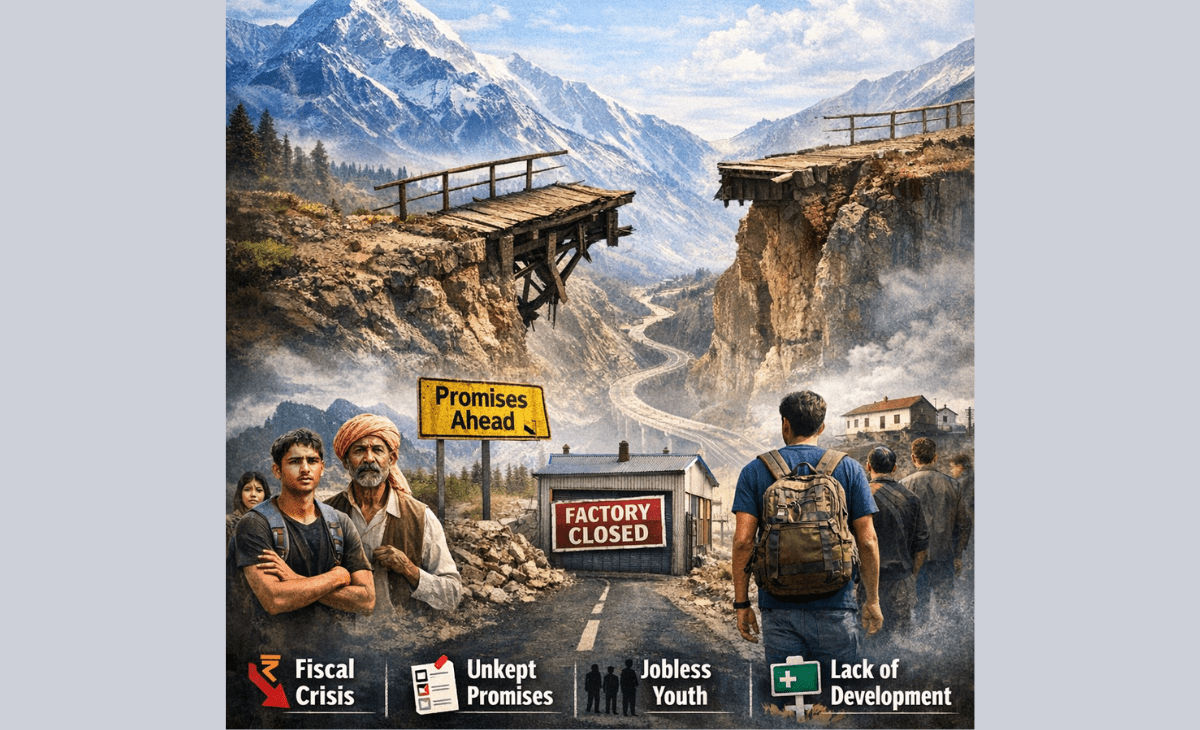
When the Himachal Pradesh government presented its Budget for 2026–27 in the Assembly, people hoped for a roadmap to tackle pressing challenges—rising unemployment, financial stress, and gaps in basic infrastructure. For mountain communities, expectations are simple: steady income, reliable roads, accessible healthcare, and a secure future for their children. Yet, the budget reads more like a compromise than a bold plan.
The government emphasized priorities such as farmers’ welfare, rural economy, and environmental protection. While commendable in spirit, the proposals lack clarity and actionable detail. Himachal’s financial strain is no secret—its revenue deficit continues to climb, worsened by the withdrawal of the Revenue Deficit Grant (RDG) from the Centre. The budget offers no clear strategy to boost income or attract investment, leaving the state’s economic recovery uncertain.
Tourism, hydropower, and small industries—sectors that could transform Himachal’s economy—received no major vision or new initiatives. Even the decision to defer salaries of ministers, legislators, and senior officials for six months, though symbolic of austerity, underscores the depth of the crisis. It signals short-term firefighting rather than long-term solutions.
Farmers were promised higher MSP, subsidies, and a new commission. But the real issues—assured procurement, timely payments, and market access—remain unaddressed. Without these, announcements risk staying on paper. For youth, the budget is even more disappointing. With limited job opportunities, many are forced to migrate out of the state. Yet, there is no strong plan for employment generation, industrial expansion, startups, or skill development.
On infrastructure, the budget offers little inspiration. Roads, healthcare, education, and digital connectivity—critical for mountain life—see no transformative push. Smaller schemes like fishery promotion or limited subsidies are positive but insufficient against the scale of challenges. Environmental goals, such as expanding forest cover to 32% by 2030, sound promising but lack clear roadmaps, resources, and accountability.
Overall, the Himachal Budget 2026–27 arrives at a time when bold, visionary decisions were needed. Instead, it attempts balance—showing intent but avoiding risk. For ordinary citizens, announcements alone no longer suffice. They seek real improvements in daily life: better roads, stronger hospitals, and jobs for their children. Without that, the budget risks being seen as just another formal document—full of promises, but short on delivery.