
Hundreds of Tourists Stranded, 14 Panchayats and Entire Pangi Valley Lose Road Connectivity
Munish Sood
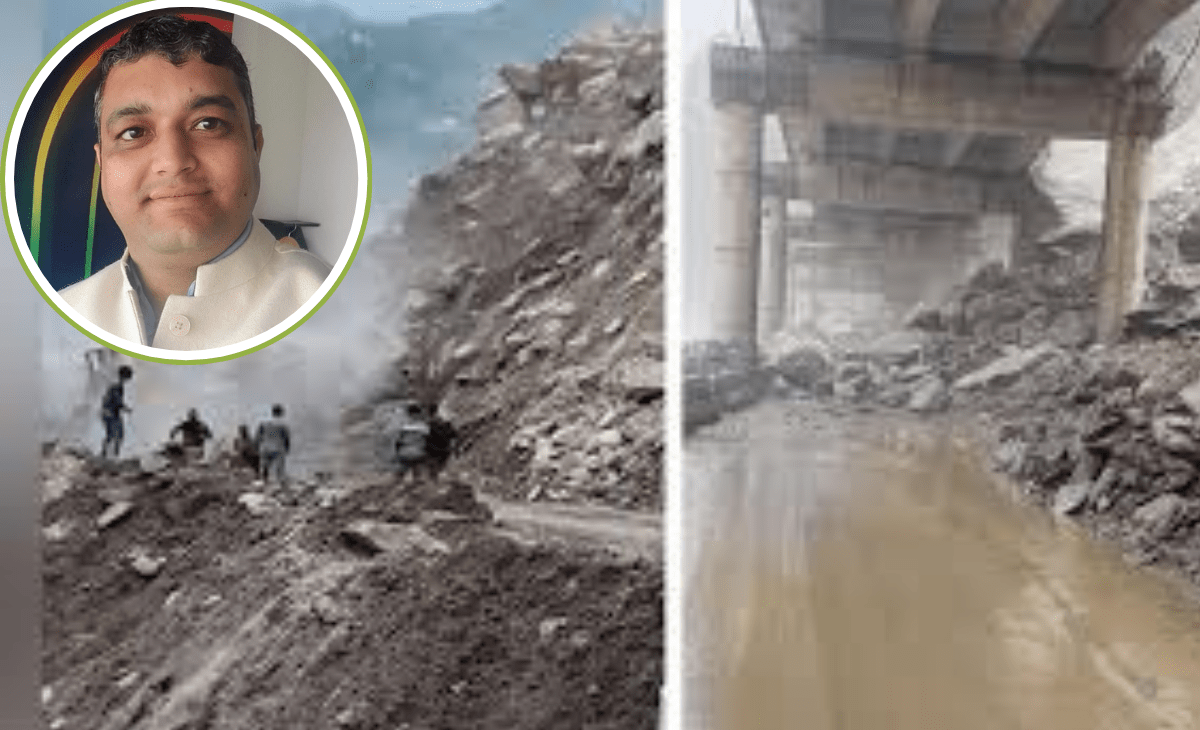
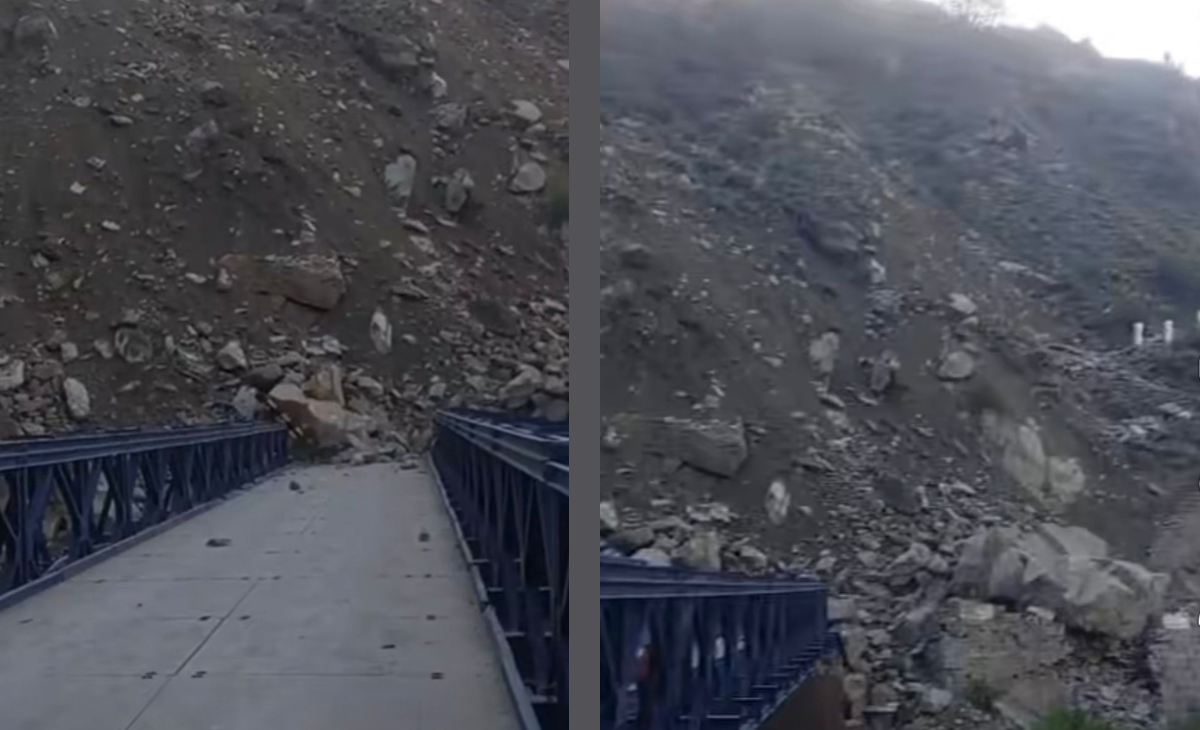
At a time when Himachal Pradesh’s high-altitude tribal valleys are witnessing peak tourist rush, a massive landslide in Lahaul-Spiti has triggered a major connectivity crisis after the strategically important Jahlma Bridge suffered severe damage, completely snapping road links to 14 panchayats and the entire Pangi Valley.
The incident has dealt a major blow not only to local residents but also to the booming summer tourism season in the region, with hundreds of vehicles, tourists, transport operators, and adventure travelers stranded on both sides of the route.
The landslide occurred near Jahlma nullah on the crucial SKTT road, when huge quantities of debris, mud, and giant boulders came crashing down from the mountainside and slammed into one end of the bridge. The impact badly damaged the structure, forcing authorities to immediately declare it unsafe for all vehicular movement.
Officials said the administration had already halted traffic during the night after sensing danger due to continuous falling debris, a move that possibly prevented a major disaster involving tourists and local commuters.
Tourism Season Takes a Massive Hit
The timing of the incident could not have been worse for the tourism-dependent tribal belt. June and July are considered the peak travel months for Lahaul, Pangi, Triloknath, Udaipur, Jispa, and other high-altitude destinations that attract thousands of tourists, bikers, trekkers, and campers from across the country.
With the bridge now shut indefinitely, tourists heading towards Pangi Valley, Triloknath temple, and remote adventure destinations have been left stranded, while hotel owners, homestay operators, taxi drivers, and local businesses fear massive financial losses during what is normally the busiest earning period of the year.
The disruption has also affected movement on the route connecting Manali, Keylong, and parts of Jammu through the tribal corridor.
Entire Belt Cut Off Overnight
The bridge closure has completely disrupted connectivity for Jahlma, Junda, Nalda, Muring, Thirot, Kishori, Triloknath, Shakoli, Udaipur, Chimret, Tingret, Madgran, Salgran, and Tindi panchayats.
Residents in these remote areas are now facing uncertainty over transportation of essential supplies, medical emergencies, fuel movement, and daily commuting. Many locals described the situation as a reminder of how fragile connectivity remains in the tribal Himalayas, where a single landslide can isolate entire valleys within minutes.
MLA Rushes to Site, BRO Begins Emergency Action
Local MLA Anuradha Rana rushed to the spot soon after the incident and reviewed the situation with officials from the Border Roads Organisation (BRO) and district administration.
She directed BRO authorities to immediately create an alternative route and begin work on constructing an additional bridge so that connectivity can be restored at the earliest. The Jal Shakti Department was also instructed to repair damaged drinking water pipelines affected by the landslide.
BRO’s 94 RCC Officer Commanding, Major Paras, said teams have already begun carving out a temporary diversion through the nullah area to restore movement for light vehicles.
However, officials admitted that the situation remains extremely dangerous as loose rocks and unstable mountain slopes continue to threaten the area. BRO teams are simultaneously scouting for a safer location for an additional bridge structure.
Another Horror Incident Near Muling Bridge
Amid the ongoing crisis, another accident further exposed the dangers lurking on mountain roads in Lahaul. Near Muling Bridge, sudden rockfall from a hillside caused a car to lose control and plunge into the Chandra river.
The driver, identified as Aneesh Rana from Chandigarh, who is reportedly associated with camping operations in Jispa, sustained serious injuries and was referred to Kullu hospital after primary treatment.
Superintendent of Police Shivani Mehla confirmed that police have registered a case and initiated an investigation.
Growing Fear Over Fragile Himalayan Roads
The back-to-back incidents have once again raised serious questions over road safety and disaster preparedness in Himachal Pradesh’s tribal regions, especially during the peak tourist season when traffic volume multiplies significantly.
Locals and tourism stakeholders say landslides, cloudbursts, and rockfalls are becoming increasingly frequent in the fragile Himalayan terrain, posing a direct threat to tourism, livelihoods, and human lives.
Residents have demanded long-term slope stabilization projects, installation of protective rockfall barriers, advanced monitoring systems, and stronger disaster-resilient infrastructure on vulnerable mountain roads.
For now, thousands of residents and travelers remain anxious as restoration work continues under dangerous conditions in one of Himachal’s most challenging terrains.