
S Gopal Puri
Dharamshala: The Central Board of Secondary Education (CBSE) is facing intense nationwide scrutiny following widespread complaints over its newly deployed digital evaluation system and the repeated technical failures of its official re-evaluation portal.
What was introduced as a tech-driven reform to supposedly improve transparency has instead triggered unprecedented anxiety, confusion, and outrage among students and parents alike.
The On-Screen Experiment
This year, CBSE implemented the On-Screen Marking (OSM) system, under which answer sheets were digitally scanned and evaluated electronically instead of through traditional physical checking.
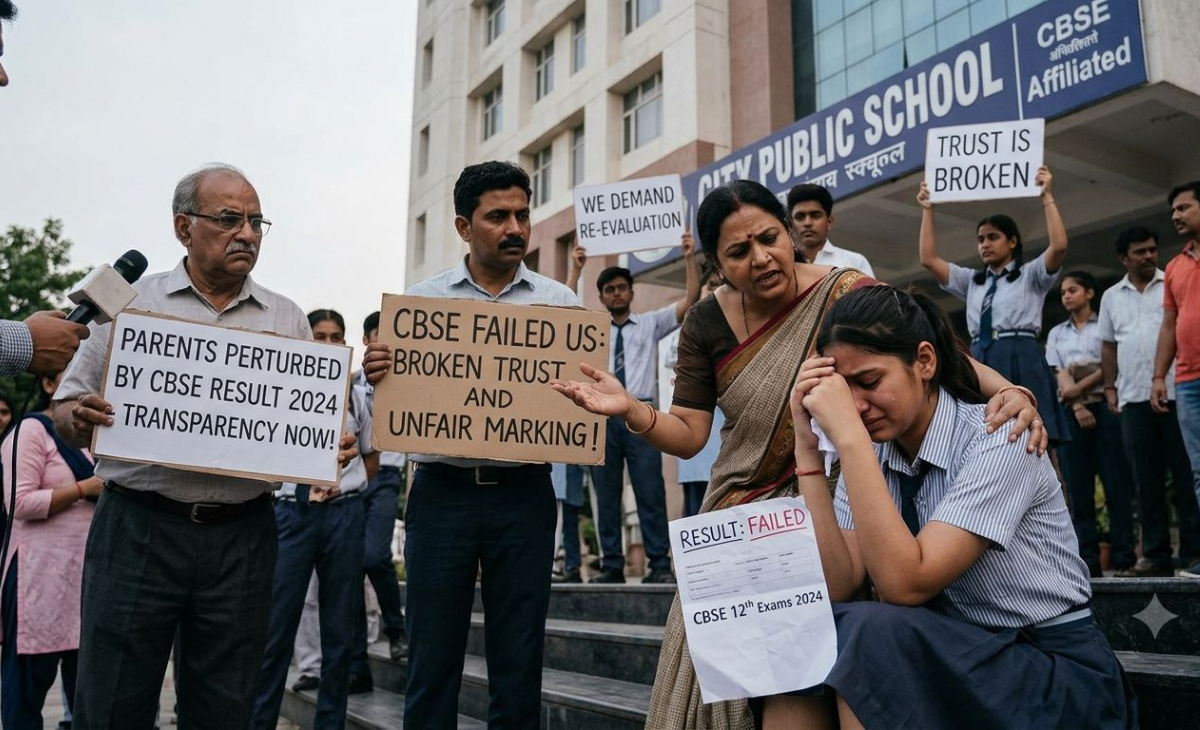
While the board projected this move as a step toward modernization, accuracy, and efficiency, thousands of students have alleged that their marks were drastically, inexplicably lower than expected.
The backlash quickly escalated into a public crisis when an unusually high number of students attempted to apply for re-evaluation and answer-sheet verification.
Reports from across the country described desperate students facing consistent login failures, blank pages, payment errors, captcha glitches, and persistent “service unavailable” messages on the official CBSE portal.
Damage Control Over Real Relief
As pressure mounted, CBSE was forced to extend the deadline for obtaining scanned copies of answer sheets from May 22 to May 23, 2026. In tandem, the board slashed re-evaluation and verification fees from hundreds of rupees to a nominal ₹100 per subject.
However, many students and parents viewed these sudden policy pivots as mere damage control rather than genuine relief.
System Lockouts
Students claimed the portal remained stuck under “maintenance,” preventing them from completing time-sensitive applications.
Widespread Gridlock
Social media and online forums were flooded with complaints from candidates who had been trying unsuccessfully for hours to access the crashing website.
“The Admission Deadline Clock”
The crisis is compounded by the fact that thousands of students are now racing against college admission deadlines. Many universities and undergraduate programmes are closing their application windows, while affected CBSE students remain paralyzed, unable to complete the re-evaluation process that could determine their final eligibility and merit standings.
Systemic Questions and Lack of Accountability
What has intensified public anger is the sheer scale of dissatisfaction surrounding this year’s results.
Several students who had successfully cleared rigorous national competitive examinations like the JEE Main claimed they received unexpectedly poor marks or even failed core subjects in the board examination.
This glaring disparity raises serious questions about whether the OSM system was rolled out prematurely without adequate stress testing, quality checks, and examiner training.
Despite the volume of complaints, CBSE initially maintained that the portal was functioning properly, downplaying the issues as limited, isolated login problems.
However, the sheer volume of student grievances, combined with the board’s eventual extension of deadlines and forced reduction in fees, strongly suggests that the systemic failures were far more widespread than officially acknowledged.
The Bottom Line
Board examination results heavily influence admissions, scholarships, careers, and the mental well-being of young citizens. For lakhs of students, this is no longer a mere technical glitch; it is a fundamental question of systemic fairness and trust.
Technology in education can only improve systems when implemented responsibly. When digital reforms are deployed without adequate infrastructure, robust contingency planning, or rigorous accountability, students become the unintended casualties of institutional experimentation.
The bigger question now is whether CBSE will merely continue to issue minor extensions and defensive clarifications—or finally undertake an independent, transparent audit of the evaluation process itself.
Because for thousands of families across India, the core concern is no longer just about a crashed website. It is about whether the system evaluated them fairly in the first place.