
Preeti
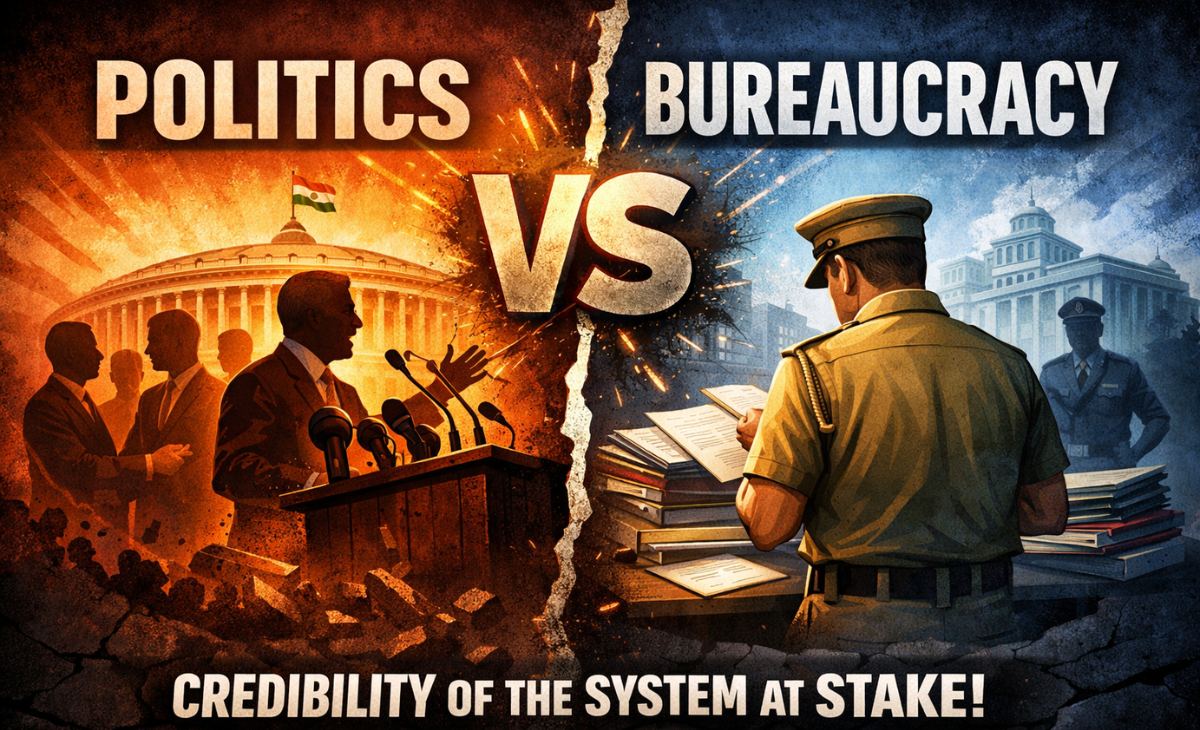
Governments come and go, but bureaucracy remains. An officer’s greatest identity lies in neutrality. Yet when that neutrality itself comes under scrutiny, the damage is not limited to the government—it shakes the credibility of the entire system.
Amid the latest controversy in Himachal Pradesh, BJP MLA Sudhir Sharma has alleged that service rules were bypassed to grant an officer an extension. His charge is not just about one decision; it raises deeper concerns about the balance between political choices and administrative processes.
In a democracy, a bureaucrat’s role is to implement decisions based on law and rules—not political influence. If administrative actions appear tilted, public trust weakens. Transparency and accountability, therefore, become essential safeguards.
That is why whenever questions arise over extensions, appointments, or major administrative decisions, the government is expected to explain its rationale. Transparency is democracy’s strongest pillar.
Because when the relationship between politics and bureaucracy is questioned, it is not about one individual—it is about the credibility of the entire system. And the only way to preserve faith in democracy is through rules, transparency, and accountability.