
Is political debate in Himachal Pradesh shifting from debt crisis and unemployment to personal rivalries? An in-depth analysis of Himachal politics, CM Sukhu vs Sudhir Sharma, and fiscal reality.
PREETI
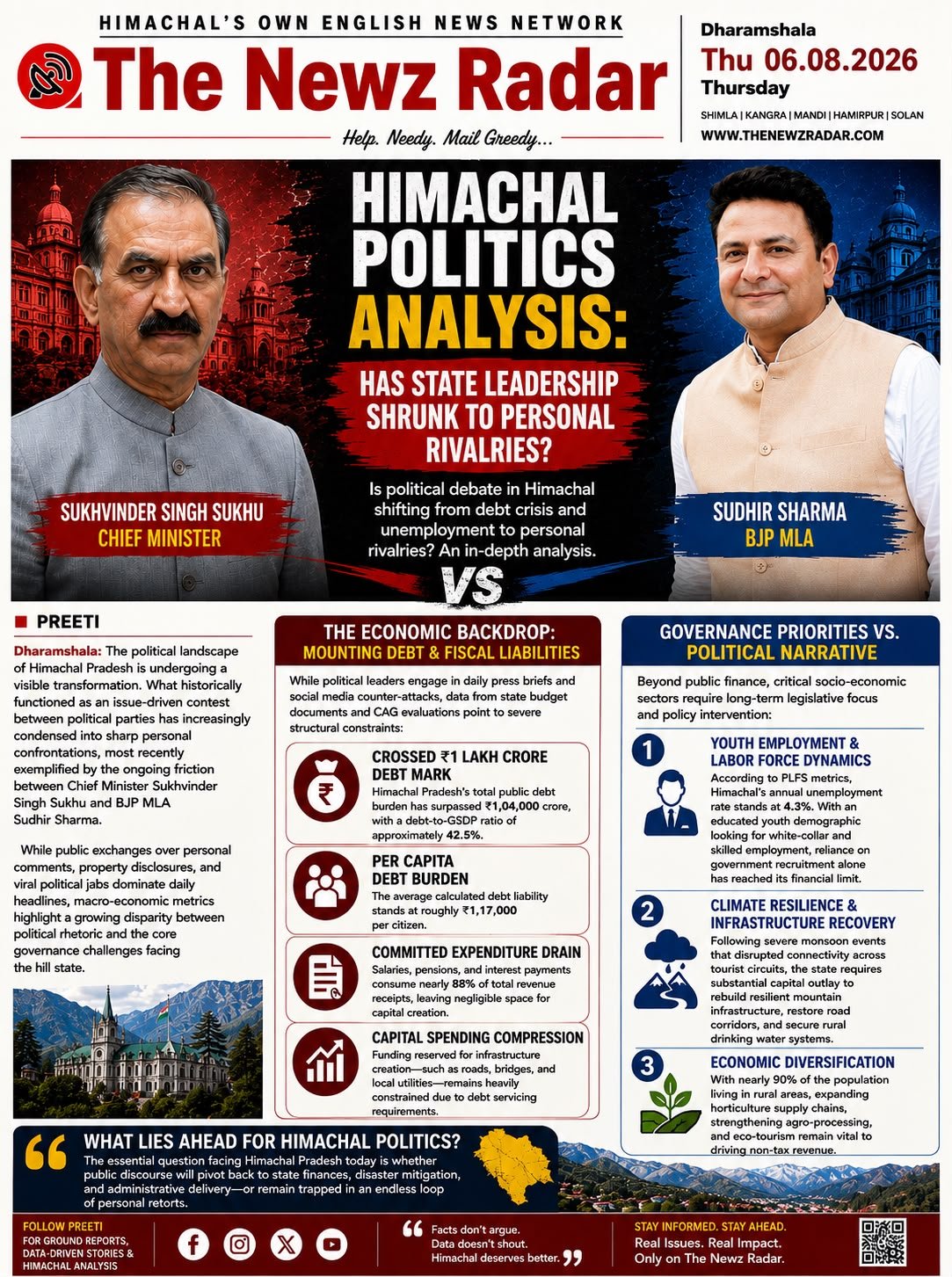
DHARAMSHALA — The political landscape of Himachal Pradesh is undergoing a visible transformation. What historically functioned as an issue-driven contest between political parties has increasingly condensed into sharp personal confrontations, most recently exemplified by the ongoing friction between Chief Minister Sukhvinder Singh Sukhu and BJP MLA Sudhir Sharma.
While public exchanges over personal comments, property disclosures, and viral political jabs dominate daily headlines, macro-economic metrics highlight a growing disparity between political rhetoric and the core governance challenges facing the hill state.
The Economic Backdrop: Mounting Debt and Fiscal Liabilities
While political leaders engage in daily press briefs and social media counter-attacks, data from state budget documents and Comptroller and Auditor General (CAG) evaluations point to severe structural constraints:
- Crossed ₹1 Lakh Crore Debt Mark: Himachal Pradesh’s total public debt burden has surpassed ₹1,04,000 crore, with a debt-to-GSDP ratio of approximately 42.5%.
- Per Capita Debt Burden: The average calculated debt liability stands at roughly ₹1,17,000 per citizen.
- Committed Expenditure Drain: Salaries, pensions, and interest payments consume nearly 88% of total revenue receipts, leaving negligible space for capital creation.
- Capital Spending Compression: Funding reserved for infrastructure creation—such as roads, bridges, and local utilities—remains heavily constrained due to debt servicing requirements.
Governance Priorities vs. Political Narrative
Beyond public finance, critical socio-economic sectors require long-term legislative focus and policy intervention:
- Youth Employment & Labor Force Dynamics
According to Periodic Labour Force Survey (PLFS) metrics, Himachal’s annual unemployment rate stands at 4.3%. With an educated youth demographic looking for white-collar and skilled employment, reliance on government recruitment alone has reached its financial limit. - Climate Resilience & Infrastructure Recovery
Following severe monsoon events that disrupted connectivity across tourist circuits, the state requires substantial capital outlay to rebuild resilient mountain infrastructure, restore road corridors, and secure rural drinking water systems. - Economic Diversification
With nearly 90% of the population living in rural areas, expanding horticulture supply chains, strengthening agro-processing, and eco-tourism remain vital to driving non-tax revenue.
What Lies Ahead for Himachal Politics?
The essential question facing Himachal Pradesh today is whether public discourse will pivot back to state finances, disaster mitigation, and administrative delivery—or remain trapped in an endless loop of personal retorts.