
Faculty, staff and others allegedly invested after company-linked events at Kamand; police case raises questions over how an investment scheme gained credibility inside IIT Mandi’s vicinity
Munish Sood
MANDI
A ₹35.05-lakh alleged fraud in the name of cryptocurrency trading has now opened a wider set of questions around an investment operation that was being promoted in and around Kamand, with the alleged participation of IIT Mandi Director Laxmi Dhar at a company-linked programme coming under scrutiny.
The Padhar police have registered a case under Section 318(4) of the Bharatiya Nyaya Sanhita in connection with allegations that investors were persuaded to put large sums of money into cryptocurrency trading on promises of substantial returns. The complaint refers to payments totalling ₹35.05 lakh and alleges that the money was not returned.
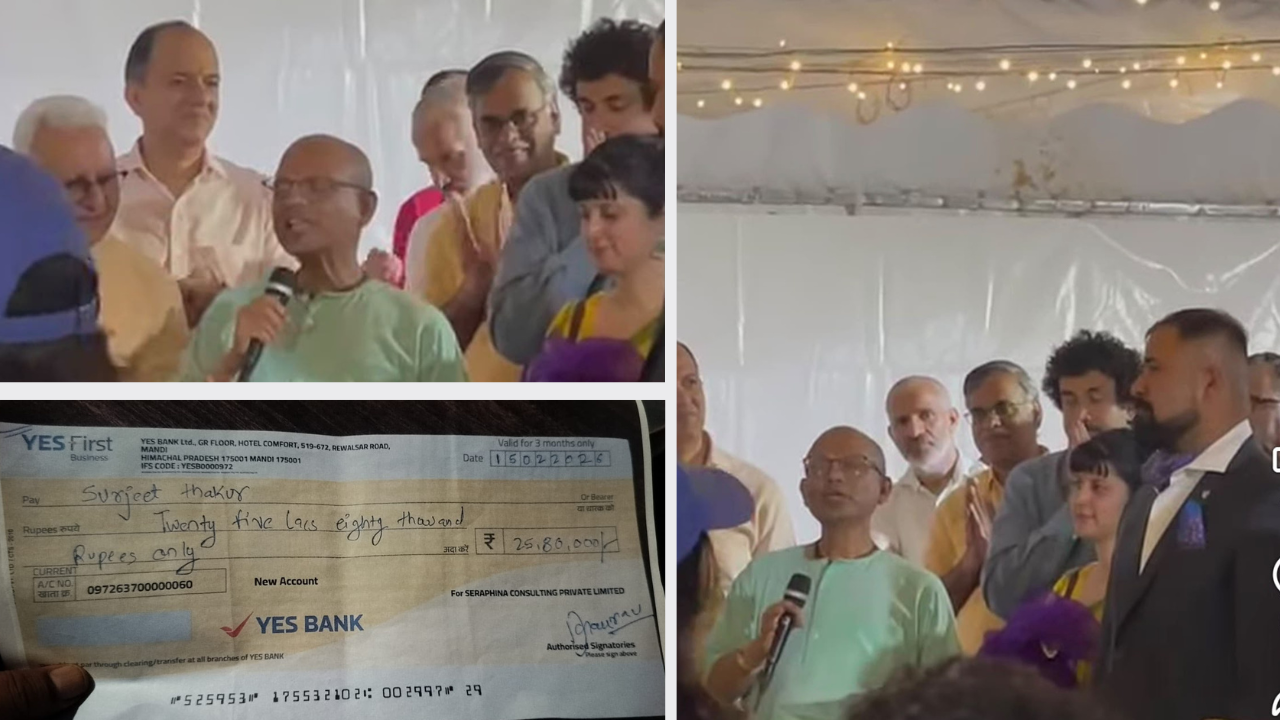
The controversy has gained another dimension after a video circulating on social media allegedly shows IIT Mandi Director Laxmi Dhar participating in a programme associated with the company. In the video, the Director is purportedly seen holding a microphone, while claims relating to investment in the company and a possible 100 per cent return within a year are allegedly being discussed.
The authenticity, complete context and date of the video have not been independently established and remain matters for verification.
Why the Director’s presence matters
The police complaint does not name the IIT Mandi Director as an accused. Nor does the complaint, by itself, establish that the Director promoted, endorsed or benefited from the alleged investment scheme.
But the alleged presence of the head of one of the country’s premier technical institutions at a company-linked event raises a legitimate public-interest question: did the association with IIT Mandi officials or the institutional setting contribute to creating confidence among potential investors?
According to the allegations emerging around the case, the company’s programmes and its apparent association with people connected with IIT Mandi were used by some persons as a source of credibility while encouraging others to invest.
The claims are particularly significant because the alleged investors reportedly included people working within or around the IIT Mandi campus, including security personnel, employees, faculty members and local shopkeepers.
If established, the issue would go beyond an individual financial dispute and raise questions about the manner in which private investment-related activities were conducted in the vicinity of a premier educational institution and whether institutional association was perceived by investors as an implicit assurance.
₹35.05 lakh transferred in October
According to the police complaint, complainant Surjeet Thakur of Tikri Mushehra alleged that he came into contact with Gaurav Anil Dhote in October 2025 and was encouraged to invest in cryptocurrency trading.
The complaint states that the complainant transferred ₹31.05 lakh through online transactions into accounts allegedly linked to the accused and paid another ₹4 lakh in cash, taking the total alleged investment to ₹35.05 lakh.
The complaint records transactions made on October 9, October 24, October 27 and October 31, 2025.
The complainant allegedly received assurances that his money would be traded through BTC/USD live trading and returned with profits. Documents on company letterhead and security cheques were also allegedly provided.
According to the complaint, communications and video calls continued between October 2025 and January 2026, with repeated assurances regarding repayment.
The situation allegedly changed when the complainant sought return of his principal amount. He claims that the money was not returned.
From investment promise to police complaint
The complaint further alleges that on January 10, 2026, when the complainant went to an office at Kamand seeking his money, he was allegedly abused and threatened.
He subsequently approached the police, seeking investigation and recovery of his money.
The case was registered on January 17, 2026.
Questions now extend beyond one investor
The ₹35.05-lakh complaint is only one part of the larger questions emerging from the controversy.
Investigators will have to establish how the investment operation functioned, how many people deposited money, the total amount collected, where the funds were transferred, whether genuine cryptocurrency trading took place and what happened to the money subsequently.
Equally important is the question of the alleged IIT connection.
What exactly was the event shown in the circulating video? In what capacity was the IIT Mandi Director present? Was the company formally associated with IIT Mandi in any way? Were investment claims made at the event? And, crucially, did any IIT faculty or employees invest money after attending or learning about such programmes?
These questions require documentary evidence and independent verification rather than conclusions based solely on a social-media video.
For IIT Mandi, the controversy therefore presents an uncomfortable institutional question: when the head of a premier academic institution is seen at an event linked to a private investment operation, what safeguards exist to ensure that such an appearance is not interpreted by employees, faculty members or members of the public as an endorsement of the business or its financial claims?
At present, however, the police case concerns the alleged financial transaction and does not establish any criminal liability on the part of the IIT Mandi Director.
The investigation will have to determine the actual nature of the company’s operations, the flow of funds, the role of the persons named in the complaint and whether any wider network of investors or promoters was involved.
What began as an alleged ₹35.05-lakh crypto investment fraud has consequently raised a much broader question in Kamand: how did an investment scheme acquire enough credibility for people to put substantial amounts of money into it—and what role, if any, did the perceived association with IIT Mandi play in creating that confidence?