

TNR News Network
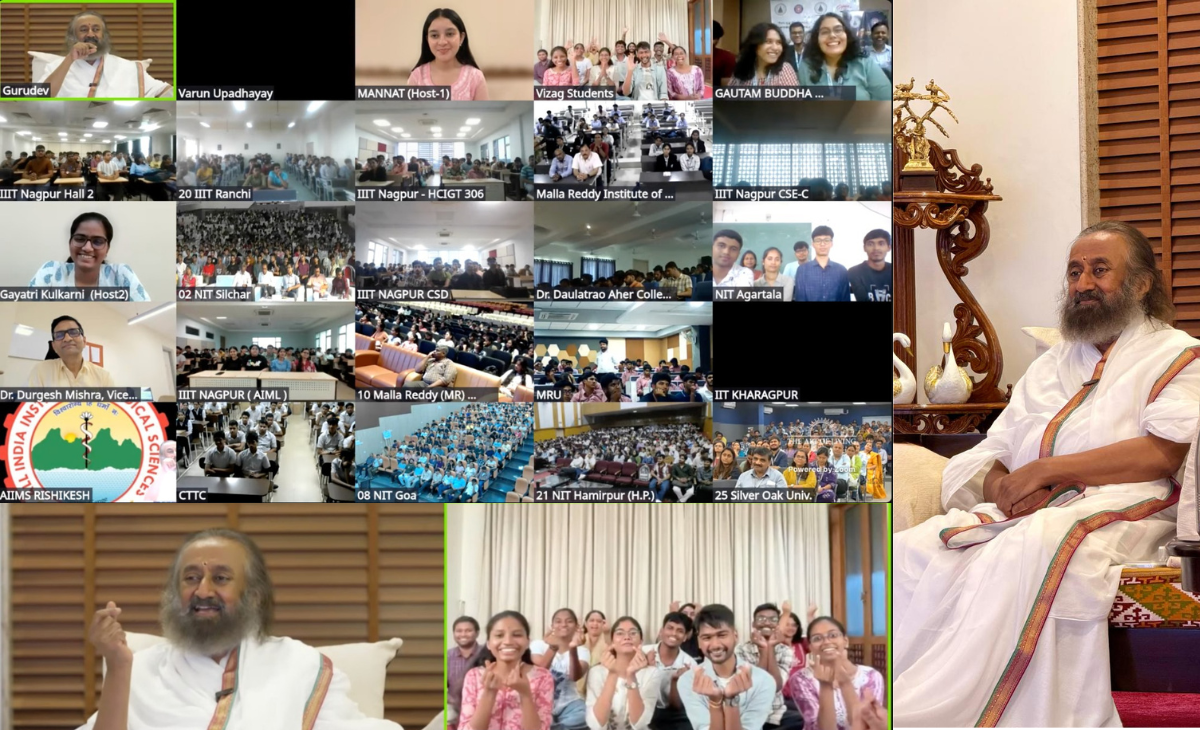
In an engaging and heartfelt interaction today, thousands of first-year students from more than 1,300 higher-education institutions across India, including IITs, IIMs, NITs, and AIIMS, connected with global humanitarian and spiritual leader Gurudev Sri Sri Ravi Shankar.
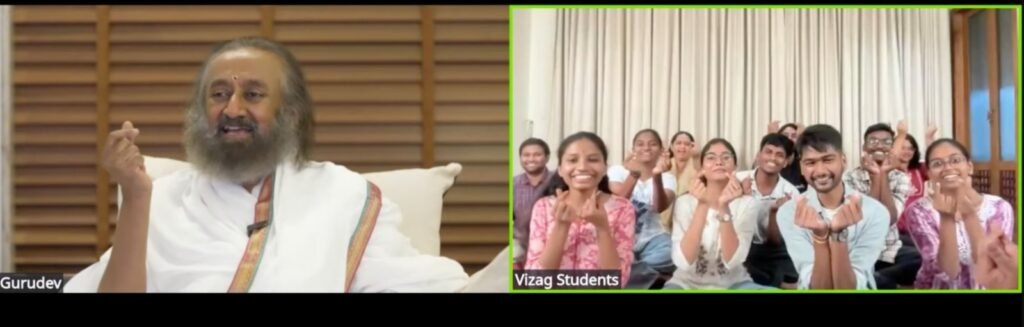
They put everything on the table, from the meaning behind the popular Korean heart emoji to the spiral of thoughts that keeps many young minds awake at 2 a.m.
When students asked whether to choose situationships or soulmates, Gurudev shot back with a question: “Put yourself in the shoes of the other person. Would you like it if you chose someone as your soulmate and they only chose to see you as a situationship? What would you choose then?” Another student from Kashmir spoke about experiencing a sense of meaninglessness despite everything seemingly being “okay” in life. Gurudev responded with warmth, observing that her question echoed a struggle faced by young people across the world, and pointed to something as simple and intimate as the breath as a way to move beyond loneliness and rediscover a sense of purpose.
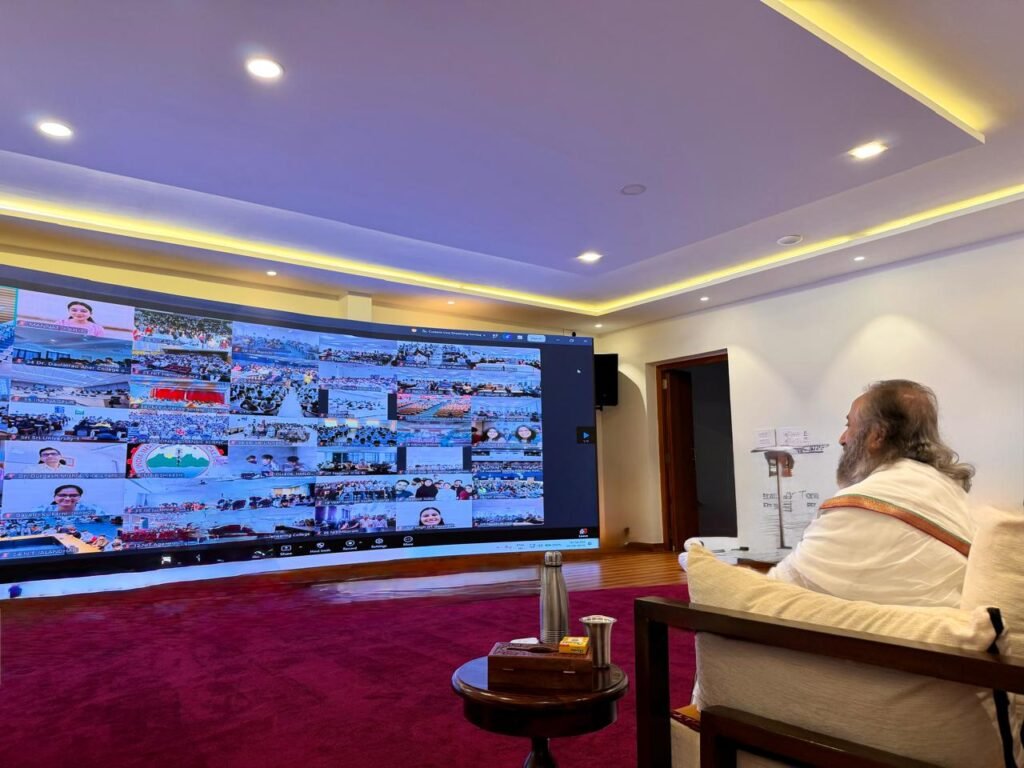
The interaction took place during the 7th edition of the National Induction Programme, organised by the Art of Living’s Youth Desk, bringing together a generation navigating the paradox of being more connected than ever, and yet often searching for belonging, meaning and a sense of inner steadiness.
But what remained with many in the audience was Gurudev’s unique curiosity, disarming wit and willingness to learn and engage with a generation that is increasingly known for asking tough questions. He urged the students not to lose the qualities that make youth vibrant in the first place: “Stay mischievous. This is the sign of youth.” But, he added, “You’ll have to be dynamic and mischievous, but your mischief shouldn’t cause pain to others.”
Calling the students “the real wealth of this world”, Gurudev reminded them of the extraordinary potential they carry. “Wherever in the world you find top performers, there is one Indian in that, at least one,” he said, pointing to young Indians making their mark across engineering, medicine, computer science, fashion and hospitality. Yet, beyond achievement, he stressed what he saw as an even more important quality for navigating life: “What is needed is a resilient personality.”
That resilience, he suggested, is not the absence of failure or doubt, but the ability to keep moving despite them. “Even those who fail in the beginning, later on, become great entrepreneurs. That is why you should have confidence in yourself,” he said. And when it comes to uncertainty about one’s choices, he offered another perspective: “There is nothing wrong having doubt, but don’t let it sink too much into you and become your own personality.”
The question of attention became particularly relevant in a generation accustomed to short-form content and constant digital stimulation. “Attention deficiency syndrome is very common today,” Gurudev observed. “Before, the attention span was 40 minutes, 50 minutes. Today, it is only 30 seconds.” His answer was to help young people regain their inner balance. “When they feel free from stress from inside, they have a lot of energy. Their attention also is much better.”
He also brought his trademark humour to some of the more difficult emotions young people grapple with. “Have some humor in life,” he said, reminding students that anger often becomes a punishment we inflict on ourselves. His advice was simple: when anger rises, take a few deep breaths, turn around-and turn the situation into humour.
On social media and the age of AI, Gurudev urged students to bring discernment to the endless stream of content they consume. “Whatever comes on social media, don’t believe everything is true. A lot of it is fake, AI-driven
”
And for those navigating FOMO, relationships and the pressure to keep up, he offered an unexpectedly simple definition of friendship: “A good friend is the one with whom you talk and come out of your FOMO. You live in JOMO and give others FOMO,” he said drawing a cheer from the crowd.
Perhaps the most enduring thread through the interaction was his insistence that young people need not become less ambitious, less questioning or less adventurous.