

Dr. Amrik Singh Thakur
Prime Minister Narendra Modi’s annual practice directly addresses this psychological gap. By positioning the Head of Government at the tactical front-lines during Diwali, the state shifts its role from an administrative overseer to an empathetic entity. The Prime Minister’s border Diwali visits function as a dual-action mechanism: internally, they reinforce the morale of front-line personnel through direct accessibility; externally, they signal strategic readiness, territorial integrity, and civil-military alignment.
Every civilization tells itself who it is through the festivals it keeps and the places in which it keeps them. The Sacred Sentinel’s Flame: Deciphering the Geo-Strategic and Socio-Cultural Doctrine of Bharat Prime Minister, Shri Narendra Modi’s Border Diwali Pilgrimages For over two centuries of modern Bharat history, executive leadership engagement with defense personnel was largely confined to formal parades, high-level strategic reviews, and ceremonial state visits.
However, since assuming office in 2014, the Prime Minister of Bharat, Shri Narendra Modi, has established an unbroken administrative tradition: dedicating the festival of Deepawali to the security forces deployed at the nation’s most precarious frontiers. Spanning the sub-zero glaciers of Siachen to the dense forests of Bastar, and from the maritime expanses of the Arabian Sea aboard INS Vikrant to the desert reaches of Longewala, this annual practice transcends symbolic political gestures. This twelve-year continuum (2014–2026) functions as a strategic instrument of statecraft, psychological reassurance for front-line forces, a public endorsement of national security doctrines, and a catalyst for indigenous economic and operational self-reliance (Atmanirbharta).
In the traditional socio-political discourse of Bharat, Diwali represents the victory of Dharma over Adharma, light over darkness, and structural harmony over chaos. The ritualistic lighting of the Diya (earthen lamp) symbolizes family unity, domestic comfort, and spiritual renewal. For military and paramilitary forces stationed at extreme posts, seasonal celebrations often highlight isolation from family and community life. Prime Minister Narendra Modi’s annual practice directly addresses this psychological gap. By positioning the Head of Government at the tactical front-lines during Diwali, the state shifts its role from an administrative overseer to an empathetic entity. This practice creates a dual-action mechanism: internally, it reinforces the morale of front-line personnel through direct accessibility; externally, it signals strategic readiness, territorial integrity, and civil-military alignment across all operational domains.
The journey began in 2014, when Prime Minister Narendra Modi celebrated his first Diwali as Prime Minister with troops stationed at the Siachen Glacier in Jammu & Kashmir Leh Ladakh, the world’s highest and coldest active battlefield. This initial visit set the precedent for prioritizing front-line welfare over conventional state protocols. In 2015, the Prime Minister visited the historic 1965 war battlefields at Khasa, Dograi, and Asal Uttar in Punjab, linking modern operational preparedness directly with historic battle honors and war memorials. Continuing this pattern in 2016, he traveled to the high-altitude border outposts of Sumdo and Chango in Himachal Pradesh, engaging with the Indo-Tibetan Border Police (ITBP) and Dogra Scouts to demonstrate defensive readiness following the Uri counter-terror operations.
As the tradition expanded, each chosen location addressed specific operational security dynamics. In 2017, the Prime Minister spent Deepawali in the Gurez Valley of Jammu & Kashmir along the highly sensitive Line of Control (LoC), reinforcing civil-military stability in forward counter-infiltration zones. In 2018, he visited Harsil in the Garhwal Himalayan sector of Uttarakhand, engaging with Army and ITBP troops to focus attention on remote northern border infrastructure. Following the structural governance changes and post-Article 370 reorganization in 2019, Prime Minister Modi celebrated Diwali with an operational LoC brigade in Rajouri, Jammu & Kashmir, signaling institutional stability and operational resolve. In 2020, amid ongoing standoff dynamics along northern borders, he visited Longewala in the Thar Desert of Rajasthan—the site of the historic 1971 armored victory delivering a clear anti-expansionist doctrine from the western border.
The subsequent years further broadened the operational scope of these festive visits across diverse defense branches. In 2021, the Prime Minister returned to the LoC at Nowshera in Jammu & Kashmir, a historical defense point of the Rajouri sector, to highlight tactical modernizations, surgical strike capabilities, and personal personnel resilience. In 2022, he celebrated Diwali with troops in Kargil, Ladakh, on the mountain warfare battlegrounds of the 1999 conflict, positioning robust national defense capabilities as an essential precondition for economic growth and domestic peace. In 2023, he traveled to the remote high-altitude outpost of Lepcha in Sikkim near the Line of Actual Control, reaffirming infrastructure expansion, winter stocking readiness, and high-altitude surveillance capabilities. In 2024, the Prime Minister extended this outreach to complex marshy and coastal sectors by celebrating with troops at Sir Creek in the Kutch region of Gujarat, highlighting border security across amphibious operational environments.
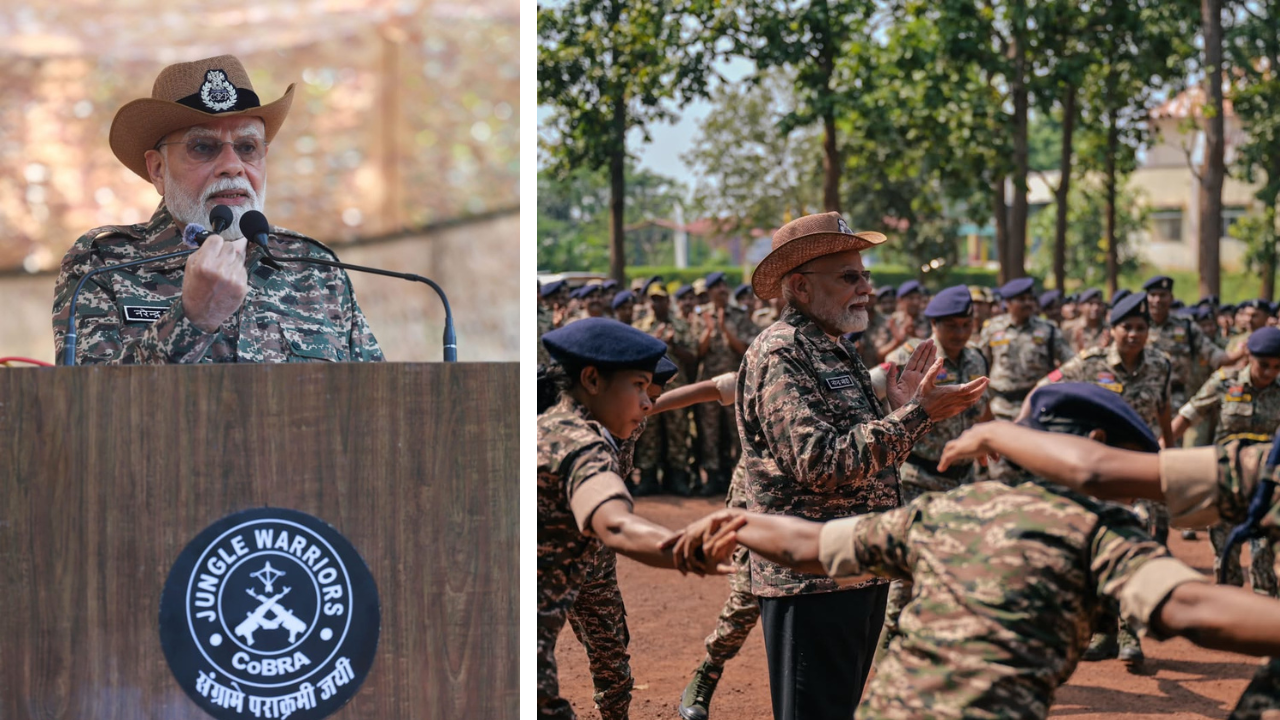
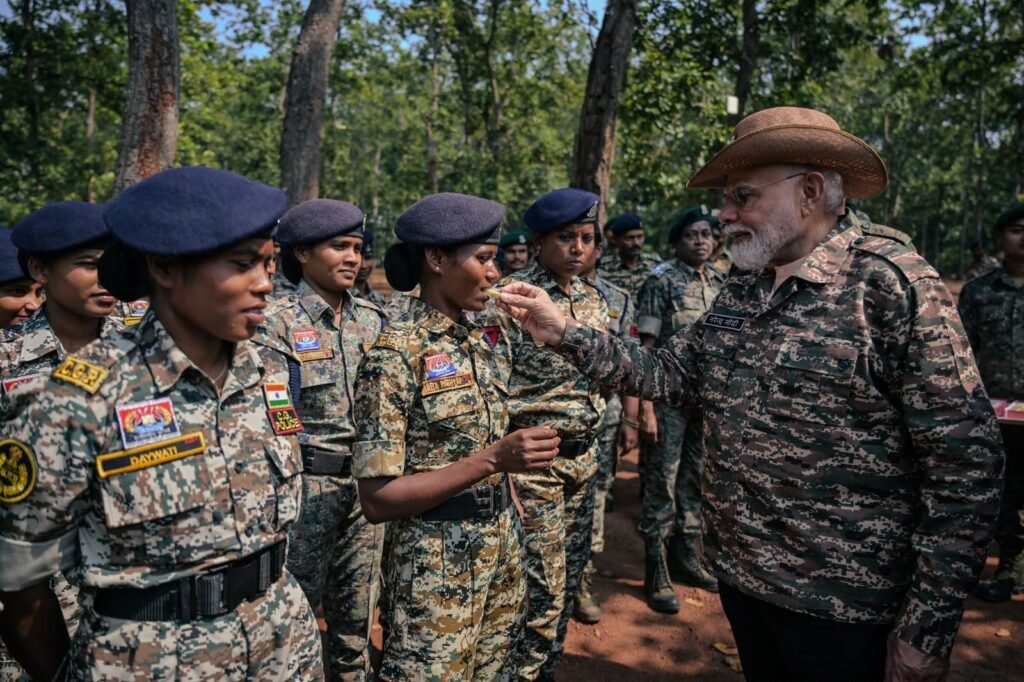
The evolution of this annual tradition reached major structural milestones in 2025 and 2026 by incorporating blue-water maritime security and internal security consolidation. In 2025, Prime Minister Narendra Modi celebrated Diwali in the Arabian Sea off the Goa coast aboard INS Vikrant, India’s first indigenously constructed aircraft carrier. This visit centered Atmanirbhar Bharat in defense manufacturing, emphasizing blue-water naval dominance and maritime security across the Indian Ocean Region. In 2026, demonstrating that the Prime Minister’s priority remains spending this vital festival among troops safeguarding the nation, he celebrated Diwali deep in the forests of the Bastar region in Chhattisgarh. Joining Central Reserve Police Force (CRPF) jawans, CoBRA battalions, and state police personnel in a region that has successfully transitioned away from Naxalism Left-Wing Extremism (LWE), this visit marked a shift in internal security operations toward LWE reduction, civic integration, and regional peace.
From an academic statecraft perspective, these visits operate across four distinct analytical pillars. First, they provide human-centric command and morale enhancement. Modern defense research emphasizes that technological superiority cannot substitute for high combat morale. By sharing festive meals (sweets), participating in Sainik Sammelans, and directly addressing jawans in extreme environments, the Prime Minister establishes a direct line of communication that bypasses bureaucracy, reduces operational isolation, and humanizes top-level command structures. Second, the visits deliver strategic deterrence and geopolitical signaling. Whether stationed at high-altitude glaciers, western desert posts, or blue-water naval assets, the presence of the Head of Government reaffirms national resolve and territorial integrity.
Third, these visits catalyze border infrastructure under initiatives like the Vibrant Villages Programme. Forward posts are no longer treated as isolated outposts, but as primary defense communities. Direct executive focus accelerates all-weather road connectivity, mountain tunneling, digital networks, and winter logistics support for both security personnel and resident border populations. Fourth, the expansion into regions like Bastar demonstrates the reclamation of internal security landscapes, transitioning state focus from counter-insurgency to sustainable development and democratic integration.
Prime Minister Narendra Modi’s twelve-year+ practice of spending Diwali with defense personnel across mountains, deserts, marshlands, open seas, and dense forests has developed into a strategic administrative model. It demonstrates how leadership presence can simultaneously boost operational morale, emphasize defense self-reliance, and signal strategic posture to external and internal observers. By spending the festival of light alongside those who guard the nation’s borders, the state systematically reinforces its commitment to national defense, sovereignty, and the welfare of its armed forces.
Dr. Amrik Singh Thakur