
Dr. Amrik Singh Thakur
India’s declaration of a Naxal-free nation by 31 March 2026 marks a strategic watershed, but the deeper ideological infrastructure — the urban intellectual networks that sustained Left-Wing Extremism for decades — demands an equally rigorous policy response.
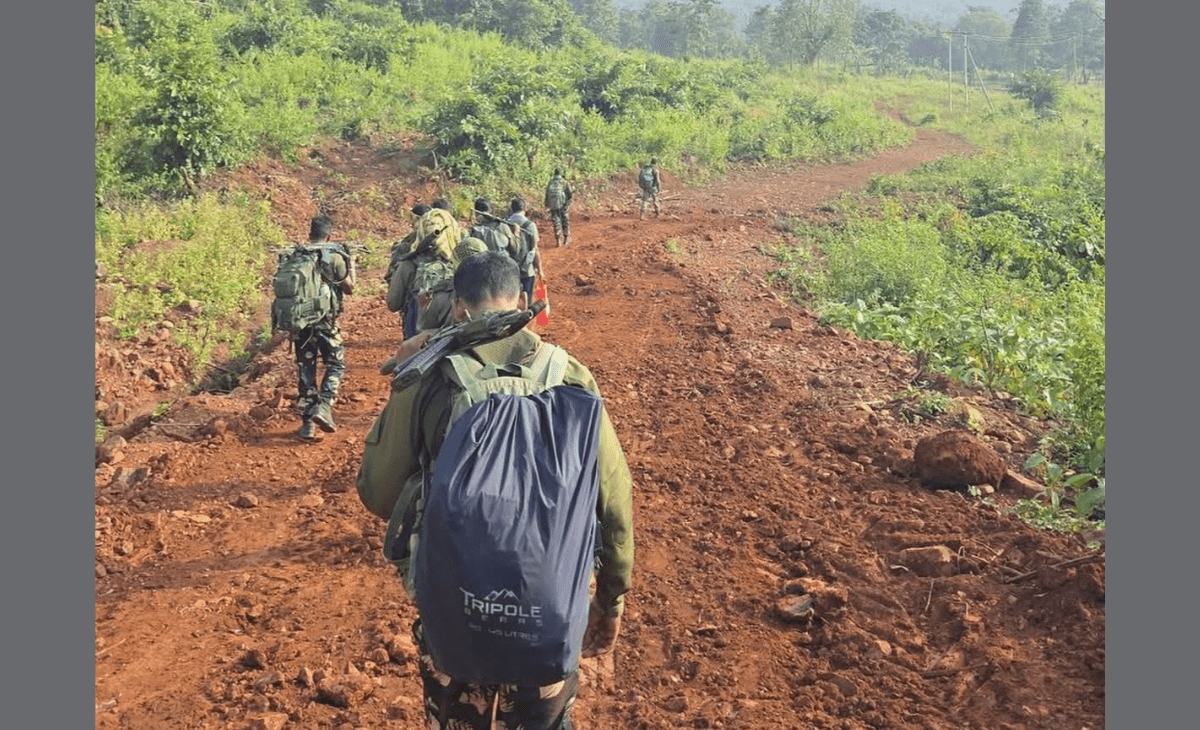
On 31 March 2026, India crossed a threshold that security analysts had long considered improbable within a single generation’s political tenure. Home Minister Amit Shah’s declared deadline — that the country would be free of Naxalism by this date — was met not with the fanfare of a press conference alone, but with the quiet, hard-won reality of a dramatically altered ground situation in Chhattisgarh’s Bastar region. The number of Naxal-affected districts, which once stretched across a formidable ‘Red Corridor’ from Andhra Pradesh to Nepal, has been reduced from 12 to a residual 6. This is not an accident. It is the outcome of a decade of coordinated, multi-layered state action.
The elimination of Nambala Keswara Rao — alias Basavraj — the Secretary General of the CPI (Maoist), stands as the most consequential single operational success in this campaign. An engineering graduate from Warangal’s Regional Engineering College who entered the movement in the 1970s, Basavraj was no ordinary cadre. He was the movement’s strategic brain — trained in LTTE guerrilla tactics, a master bomb-maker, the architect of the 2010 Dantewada ambush that claimed 76 CRPF jawans, the 2013 Jhiram Ghati massacre that killed 27 including senior Congress leaders, and a string of high-casualty operations that defined Maoist tactical doctrine. His elimination after a 70-hour cordon operation across four districts, involving District Reserve Guard, STF, and joint units, was the culmination of intelligence persistence over years, not months. It left the organisation in a structural leadership vacuum from which it has not recovered.
Why Poverty Did Not Cause Naxalism — Naxalism Caused Poverty
A durable myth has long surrounded Left-Wing Extremism in India: that it is the inevitable product of poverty, tribal exclusion, and state neglect. This framing, while politically convenient for its propagators, inverts the actual causal chain. In Bastar, Naxal cadres systematically burned schools, clinics, and rural bank branches, then presented the resulting development vacuum as evidence of state indifference. The strategy was deliberate: manufacture the grievance, then weaponise it. Developmental deficits in Maoist-held territories were not a precondition of insurgency — they were its product. Governance could not enter where armed groups controlled access.
What actually turned the tide was a convergence of four factors: sustained security operations backed by granular intelligence networks; the aggressive dismantling of the Maoist funding ecosystem, which ran through a syndicate involving contractors, bureaucrats, and political intermediaries; a rehabilitation architecture that offered surrendering cadres — including Renu, Radhika, and Sanjay, who wrote a poignant letter in the Gondi language urging remaining comrades to return — a credible path back to civilian life; and above all, political will at the highest level that did not waver across electoral cycles. When surrendered Naxals themselves become the most persuasive voices for demobilisation, the movement’s ideological hold has been broken at its roots.
The Unfinished Agenda: Urban Naxalism and the Intellectual Ecosystem
Yet it would be strategically premature to conclude that the defeat of armed Maoism in the forests of Chhattisgarh represents the defeat of the ideological project that sustains it. As seasoned intelligence analysts have long argued, the armed cadre in the jungle is merely the kinetic arm of a far more sophisticated urban support structure. The Elgar Parishad case and subsequent arrests brought to public attention a network of academics, lawyers, activists, and NGO operatives who provided the political cover, legal defence, international advocacy, and courier services that kept the armed movement operational. The movement’s urban infrastructure operated with remarkable sophistication, exploiting the institutional spaces of universities, human rights forums, and civil society organisations to generate legitimacy and resources.
The policy challenge here is considerably more complex than deploying security forces. The constitutional framework that protects free expression and academic freedom is also the framework within which ideological subversion operates. The answer cannot be the blunt instrument of suppression, which would validate the Maoist narrative of state repression and hand it a propaganda victory. The answer requires precision: targeted legal prosecution where material support to violence can be demonstrated, institutional safeguards against foreign-funded advocacy that operates against national security interests, and — crucially — a rigorous public intellectual counter-narrative that challenges Maoist historiography on its own terms in universities, media, and civil discourse.
The Policy Imperative Going Forward
The declaration of a Naxal-free India must be accompanied by a second phase of consolidation that is as carefully planned as the security operations preceding it. Bastar’s forests need schools, health infrastructure, and economic connectivity — not as charity, but as the permanent displacement of the political vacuum that Maoism exploited. The Gondi-language letter written by surrendered cadres to their former comrades is a more powerful demobilisation instrument than any security bulletin; such community voices must be institutionally supported and amplified.
Simultaneously, the state must resist the temptation of complacency. Ideological movements do not die with their armed wings. They reorganise, rebrand, and find new institutional hosts. The intellectual ecosystem that celebrated Maoist violence as revolutionary resistance will not disband simply because Basavraj is dead and the Red Corridor has shrunk. India’s security policy must be sophisticated enough to distinguish between legitimate dissent — which democracy requires — and structured support for violent insurrection, which no democracy can afford to ignore.
31 March 2026 is a date that Bastar has earned through decades of suffering and the sacrifice of hundreds of security personnel and civilian lives. It deserves to be honoured not merely as a political milestone but as a renewed obligation — to ensure that the silence which has finally replaced the sound of gunfire in these forests is the silence of peace, not the silence before the next storm.“Gareebi ke kaaran naksalwad nahin faila, naksalwad

Dr. Amrik Singh Thakur
Director Center for Tibetan Studies
Central University of Himachal Pradesh