

By Pallavi Katoch
The Perfect Picture vs. The Real Struggle
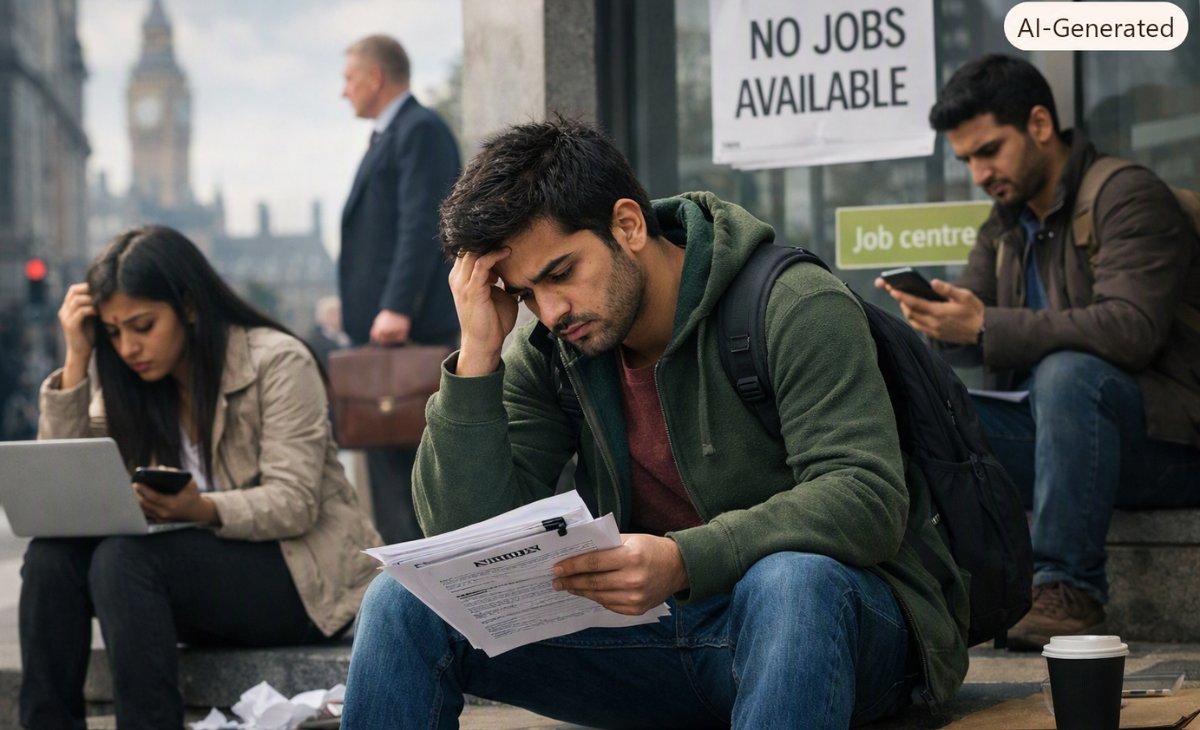
Every year, thousands of Indian students pack their bags for the United Kingdom, chasing degrees, global exposure and the promise of a better future. Social media paints this journey in soft light — campus coffee, graduation gowns, a “settled abroad” life. But according to Indian students currently studying in the UK, the picture on the ground looks very different, particularly when it comes to something as basic as finding a part-time job.
One such voice is Yashvi Bhandari, an Indian student currently pursuing higher education in the United Kingdom, who has been using her Instagram platform to talk openly about the financial and logistical reality of student life abroad — a reality she says rarely makes it into the glossy narrative sold to aspiring students back home.

“One of the biggest challenges we face today is finding part-time employment,” Yashvi said. “Many students arrive with the expectation that they will be able to support themselves through part-time work, but the reality is often very different.”
A Tightening Job Market
Her account is not an isolated complaint. Under UK student visa rules, international students are permitted to work only up to 20 hours per week during term time — a legal cap that was never designed to be generous, but one that has become even harder to reach in practice.
The UK’s part-time and graduate job market has tightened considerably in recent years, driven by a slower hiring environment and rising competition for entry-level and casual roles — the kind of jobs, retail, hospitality, delivery, that international students typically rely on. Reports over the past two years have repeatedly flagged record levels of competition per vacancy in the UK job market, squeezing out exactly the demographic that depends on part-time income the most: students living away from home for the first time.
The consequence, Yashvi said, is a widening gap between expectation and survival. “Despite applying for hundreds of jobs, many students remain unemployed for months, making it difficult to manage rent, tuition fees, and daily living expenses,” she said.
Not a Warning Against Studying Abroad
Importantly, Yashvi is careful to frame her message as one of preparation, not discouragement. “My intention is not to discourage students from studying abroad,” she said. “Studying in another country offers valuable education, global exposure, and personal growth.”
Her concern, she said, is that students and families are making a life-altering financial decision without fully accounting for the risk. “Students and their families should make this decision with complete awareness. They should research the current job market, understand the financial responsibilities involved, and avoid assuming that a part-time job will be easy to secure.”
She also pushes back gently on the assumption that studying abroad is automatically the superior path. “India also offers many excellent educational and career opportunities, so every student should make an informed choice based on facts rather than assumptions,” she said.
Raising Awareness, One Reel at a Time
Yashvi has been documenting these realities on her Instagram page, @bhandariyashviii, where she shares first-hand accounts aimed at students and parents currently weighing the decision to study in the UK.
Her message, at its core, is less a warning and more a call for due diligence — research the job market before you land, understand the true cost of living, and build a financial cushion rather than a financial gamble. As she put it: awareness does not break a dream. It only makes it stronger.
(This article is based on inputs shared directly by Yashvi Bhandari.)

Pallavi Katoch