

Munish Sood
Mandi
In a landmark development set to redefine the future of Himalayan infrastructure and water security, Himachal Pradesh has moved to the centre of India’s strategic hydropower and river-linking vision after the Government of India approved the ambitious ₹2,352 crore Chenab–Beas Link Tunnel Project in the high-altitude tribal region of Lahaul-Spiti Valley.
The massive engineering initiative is being described as one of the most strategically significant river-diversion projects undertaken in the Himalayan region in recent years and is expected to elevate Himachal Pradesh’s role in India’s future energy, water and climate resilience architecture.
Himachal at the Heart of India’s Himalayan Water Strategy
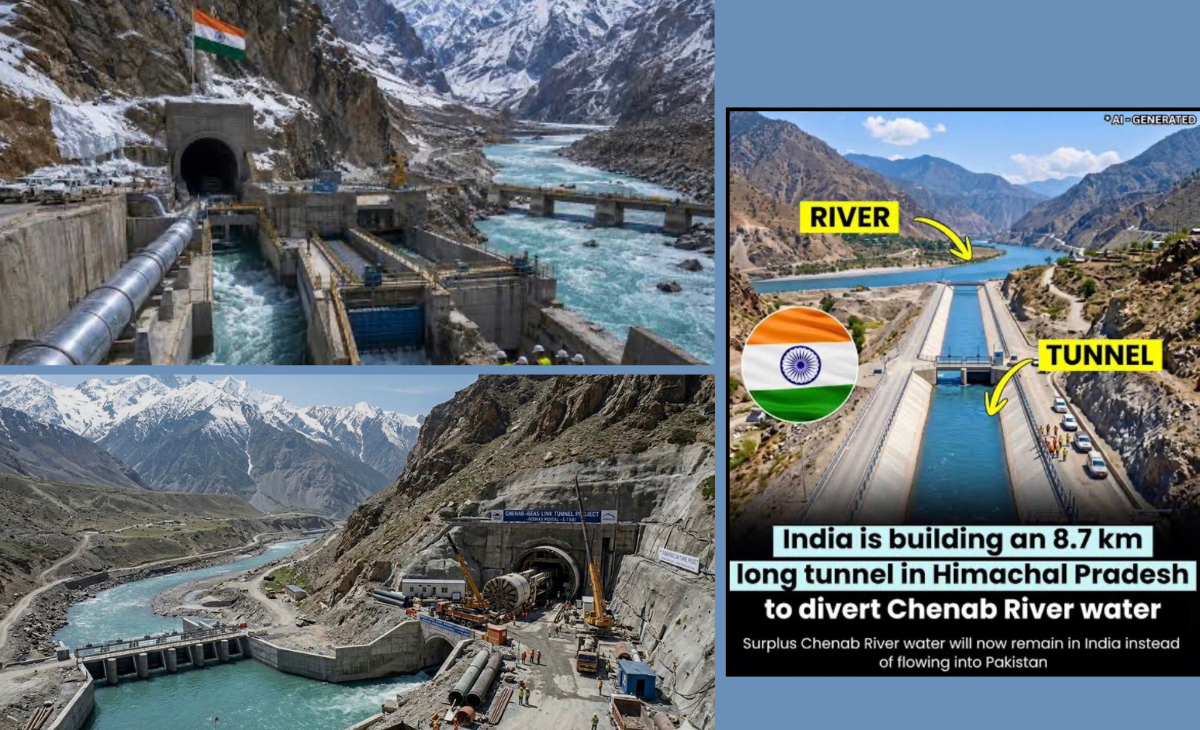
The project involves the construction of an 8.7-kilometre tunnel that will divert surplus water from the Chandra River, a tributary of the Chenab, into the Beas basin. The diversion point is strategically located near Koskar village, upstream of the north portal of the iconic Atal Tunnel.
Officials say the project is designed not only to optimise river water utilisation but also to strengthen irrigation systems, increase hydropower potential and improve long-term water security across northern India.
For Himachal Pradesh, however, the project represents far more than infrastructure.
Experts believe the initiative could transform the state into a critical hub of India’s future hydro-engineering network, bringing large-scale investment, advanced tunnelling technology, employment generation and strategic national importance to the remote tribal belt of Lahaul-Spiti.
Engineering Marvel in the High Himalayas
The first phase of the project includes the construction of a 19-metre-high barrage along with the underground tunnel system cutting through the rugged Himalayan terrain.
The challenging geography and extreme climatic conditions make the project one of the most technically demanding infrastructure ventures currently underway in India’s mountain regions.
Being executed by National Hydroelectric Power Corporation, the initiative is expected to showcase India’s growing expertise in high-altitude hydro-engineering and tunnel construction.
Infrastructure observers say the project could place Himachal Pradesh alongside some of the world’s most significant mountain water-management corridors.
Strategic Importance Beyond Hydropower
The Chenab–Beas link project has gained additional geopolitical significance following India’s decision to place the Indus Waters Treaty in abeyance after the Pahalgam terror attack.
Analysts view the fast-tracking of Himalayan river projects as part of India’s broader push to maximise the utilisation of waters from western rivers that remained underutilised for decades.
Within this larger framework, Himachal Pradesh is rapidly emerging as a strategically vital state in India’s water diplomacy and renewable energy roadmap.
Economic and Developmental Boost for Himachal Pradesh
Beyond national strategy, the project is expected to generate substantial economic benefits for Himachal Pradesh.
Local stakeholders anticipate improved connectivity, increased tourism activity around the Atal Tunnel region, employment opportunities for local youth and long-term infrastructure development in tribal and border areas.
Experts also believe the project could attract future investments in hydropower, climate-resilient infrastructure and mountain engineering research in the state.
With the Himalayas increasingly becoming central to climate adaptation and water-resource planning, Himachal Pradesh is positioning itself as a major player in India’s sustainable development strategy.
Himachal’s Rising National Profile
The approval of the Chenab–Beas Link Tunnel Project marks another milestone in Himachal Pradesh’s growing prominence in national infrastructure planning.
From hosting one of the world’s highest road tunnels to becoming a key node in India’s hydro and water-security ambitions, the state is steadily emerging as a strategic Himalayan powerhouse.
Simultaneously, India has also initiated the ₹268 crore sediment bypass tunnel project at the Salal Dam aimed at improving sediment management, enhancing hydropower efficiency and extending the operational life of one of the key hydroelectric installations in the Chenab basin.
Together, the Himachal Pradesh Chenab–Beas link initiative and the Salal Dam modernisation project represent a major shift in India’s Himalayan water and energy strategy — combining infrastructure, renewable energy, climate resilience and strategic resource management at an unprecedented scale.
As work begins on these transformative projects, the Himalayas are rapidly emerging not only as India’s ecological lifeline, but also as the centrepiece of its future energy security and strategic infrastructure vision.