
Preeti
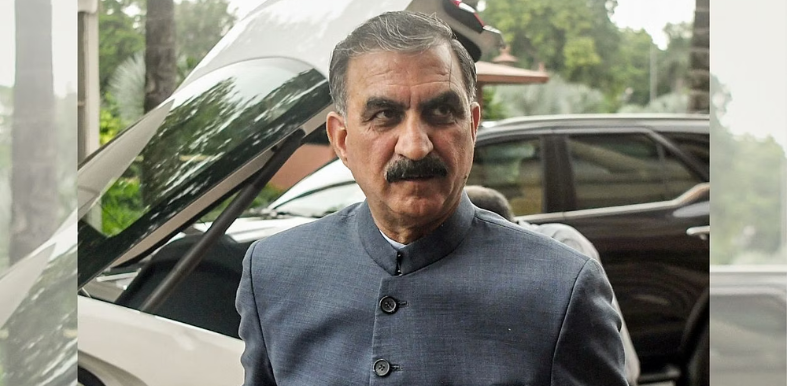
Shimla — When Sukhvinder Singh Sukhu took the oath as Chief Minister, his opening gambit was more than just a campaign slogan: “We will bring change.” While most politicians use “change” to describe a shift in power, Sukhu has spent his tenure attempting something far more surgical—a shift in the system.
For a leader forged in the fires of grassroots student politics and organizational struggle, the diagnosis was clear: power is irrelevant if the machinery remains broken. His mantra, “Unless the system changes, the lives of the people won’t,” is now moving from rhetoric to a high-stakes administrative reality.
The Diagnostic Revolution: A ₹213 Crore Bet
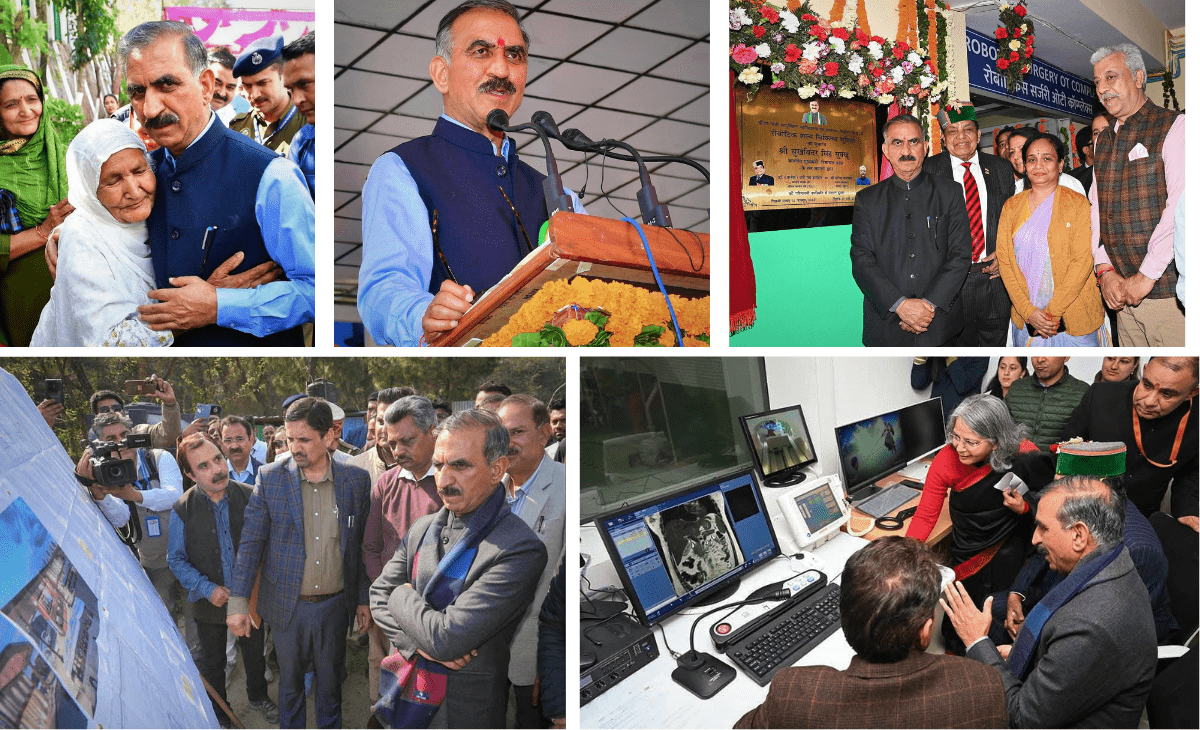
The most visible frontier of this “Systemic Change” (Vyavastha Parivartan) is the state’s healthcare backbone. The government has greenlit a massive ₹213.75 crore investment to drag Himachal’s medical infrastructure into the 21st century.
This isn’t just about new paint on hospital walls. The roadmap includes:
- High-Resolution MRI & Advanced CT Scans: Aiming to end the “medical exodus” where locals travel to Chandigarh or Delhi for basic diagnostics.
- Robotic Surgery Centers: Already operational in Tanda and Chamiana (Atal Institute), bringing metro-city precision to the hills.
- Digital Radiography & Smart Labs: Integrating a seamless imaging archive system to digitize patient records.
Slicing the Bureaucracy: The Great Cadre Divide
Perhaps the boldest technical move was the administrative “divorce” between the Directorate of Medical Education (DME) and the Directorate of Health Services (DHS).
By separating these cadres, Sukhu has effectively ended decades of administrative overlap. The goal is surgical precision: let educators focus on training future doctors, and let public health officials focus on delivery.
This structural split aims to streamline promotions, fix accountability, and accelerate decision-making—removing the “bureaucratic fog” that often stalls hospital management.
The Leader’s Edge: Decisive or Disruptive?
Sukhu’s style is being described as fast-paced and uncompromising. Supporters laud his “quick-fire” decision-making as the only way to shock a sluggish system into motion.
However, this pace hasn’t come without friction. Critics and the Opposition have raised flags over:
- Fiscal Discipline: Questioning the long-term sustainability of high-budget reforms.
- Unilateralism: Some view his “direct” style as bypassing traditional political consensus.
- Policy Reversals: Debates over lottery policies and the practical impact of new announcements remain heated.
The Verdict: Institutionalizing the Future
The true test of Sukhu’s “Change Model” won’t be the ribbon-cutting ceremonies, but institutionalization. For these reforms to outlast a single term, they must transition from a “Leader’s Vision” to “Standard Operating Procedure.”
If Sukhu succeeds in making data-driven decisions and administrative transparency the new norm, he won’t just be remembered as a Chief Minister who won an election—he will be remembered as the architect who rebuilt the Himachal machine.
The foundation is laid. The budget is allocated. Now, the clock is ticking on whether the “System” will adapt to Sukhu, or if the “System” will eventually wear him down.