
Rajkumar Chaudhary
Gaggal
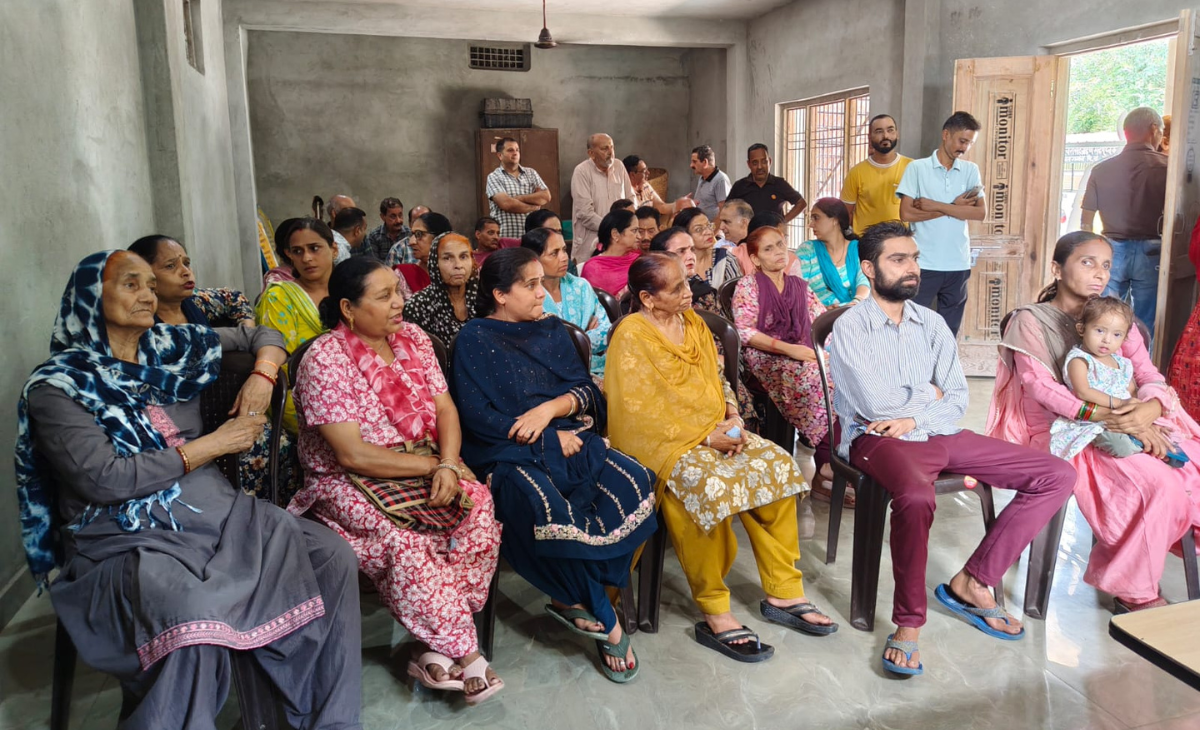
The simmering discontent among families affected by the proposed expansion of Gaggal Airport has reached a boiling point. In a tense meeting held at the Gaggal Panchayat, dozens of families voiced their frustration, warning the government and administration against forcibly evicting them without proper compensation, rehabilitation, and resettlement. Their message was clear: “If the government has the courage, let them try to empty our homes.”
Families Fear Losing Their Homes and Livelihoods
For many residents, the airport expansion project is not just about infrastructure—it is about survival. Families who have lived in the area for decades now face the prospect of losing their homes, shops, and small businesses. While the government has promised development and modernization, affected families argue that their futures are being sacrificed in the process.
Several residents pointed out that not all families are being offered rehabilitation and resettlement (R&R) benefits. Particularly, those living on government land or in structures built informally are being excluded from compensation packages. This has sparked widespread anxiety. “We have lived here for generations. If our houses are demolished, where will we go? Who will take responsibility for our children’s future?” asked one villager during the meeting.
Anger Against Political Leaders
The meeting also became a platform for expressing anger against political parties. Villagers accused both the ruling Congress and the opposition BJP of ignoring their plight. “Politicians talk about development, but they do not listen to the voices of ordinary families who are being uprooted. They should come here, stand among us, and explain what will happen to our lives,” said another resident.
The sentiment reflects a growing distrust of political promises. While leaders highlight the benefits of a longer runway and increased air connectivity, locals argue that the human cost of the project is being brushed aside. “Development cannot come at the cost of destroying families,” one speaker declared, drawing loud applause from the gathering.
The Demand for a Clear Policy
Affected families have demanded that the government announce a clear and transparent policy before any eviction takes place. They insist that no family should be displaced without guaranteed housing, financial compensation, and livelihood support. “We are not against development. But development must include us, not exclude us,” said a local representative.
The demand highlights a broader issue in infrastructure projects across India: the lack of comprehensive rehabilitation frameworks. While land acquisition laws exist, many families living on government land or without formal titles often fall through the cracks, leaving them vulnerable to eviction without support.
A Warning of Collective Resistance
The meeting ended with a strong warning. Villagers declared that if their interests were ignored, they would organize and resist eviction collectively. “We will not allow our homes to be demolished without justice. If the government tries to force us out, we will raise our voices together,” said one elder, his words echoed by many others in attendance.
This warning signals the possibility of escalating protests in the region. Already, small demonstrations have taken place, but the tone of the latest meeting suggests that resistance could intensify if the government proceeds without addressing concerns.
The Larger Context: Development vs. Displacement
The Gaggal Airport expansion project is part of Himachal Pradesh’s push to improve connectivity and boost tourism. A longer runway would allow larger aircraft to land, potentially increasing tourist inflow and economic activity. However, the project also requires significant land acquisition, affecting hundreds of families and businesses.
This tension between development and displacement is not unique to Kangra. Across India, infrastructure projects often spark similar conflicts. While governments argue that such projects bring long-term benefits, affected communities frequently feel marginalized, excluded from decision-making, and inadequately compensated.
Experts note that successful infrastructure development requires balancing growth with social justice. “Projects must be planned with people at the center. Compensation, rehabilitation, and livelihood support are not optional—they are essential,” said a policy analyst familiar with land acquisition issues.
Voices of the People
During the meeting, several personal stories highlighted the human impact of the expansion. One shopkeeper explained that his family had run a small business for over 25 years, supporting his children’s education. “If my shop is demolished, I lose everything. The government talks about compensation, but what about the years of effort we put into building our lives?” he asked.
Another woman described her fear of being left homeless. “We are not against the airport. But if they take our house, they must give us another place to live. Otherwise, we will be on the streets,” she said, her voice trembling with emotion.
The Road Ahead
As tensions rise, the government faces a difficult challenge. On one hand, the expansion project is seen as vital for regional development. On the other, ignoring the demands of affected families risks sparking unrest and damaging public trust.
Officials have so far maintained that compensation and rehabilitation will be provided according to existing policies. However, the exclusion of families living on government land remains a sticking point. Unless addressed, this issue could become the focal point of resistance.
Conclusion
The Gaggal Airport expansion has become more than a development project—it is now a test of governance, fairness, and accountability. For the families facing eviction, the stakes are nothing less than their homes, livelihoods, and futures. Their message to the government is defiant yet simple: “Do not uproot us without justice.”
As the situation unfolds, the coming weeks will reveal whether the government chooses confrontation or compassion. For now, the voices of Gaggal’s families ring loud and clear, demanding that development must never come at the cost of dignity.