
Munish Sood
Mandi
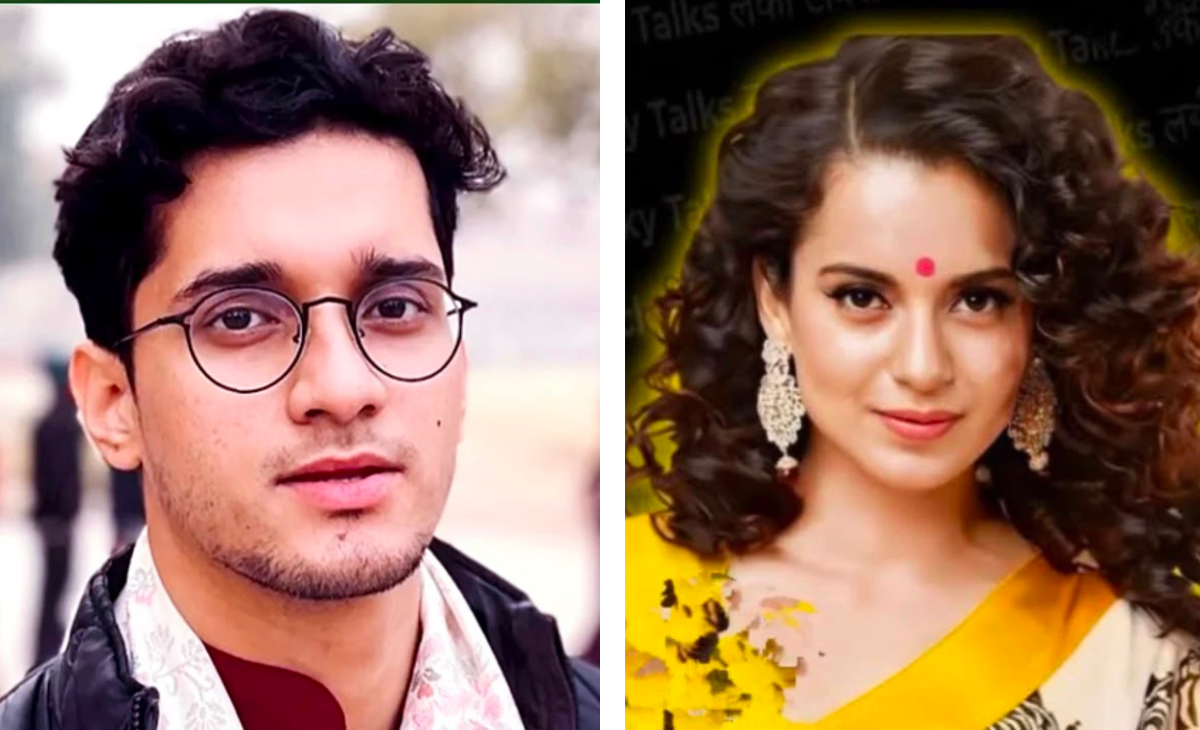
A political controversy surrounding BJP MP from Mandi and Bollywood actress Kangana Ranaut has intensified, with a sharp exchange of personal attacks between her and Cockroach Janta Party (CJP) spokesperson Saurav Das over the ongoing debate surrounding Gen Z protesters.
The controversy began after Kangana Ranaut reacted to videos of recent protests led by CJP, a student-led political outfit that has been at the forefront of demonstrations over the alleged NEET-UG paper leak. Criticising the language and conduct of some protesters, Kangana described them as “Generation Gutter.” She said the videos reflected a disturbing decline in public discourse and questioned the upbringing of those using abusive language during the demonstrations.
Her remarks quickly triggered a political backlash.
Responding to Kangana’s comments, CJP spokesperson Saurav Das claimed that the BJP MP was “not taken seriously even within her own party” and alleged that both Gen Z and Gen Alpha had rejected her views. He accused her of making provocative statements instead of addressing the concerns raised by students.
Kangana responded strongly through social media, calling Das “jobless” and “useless.” Highlighting her own achievements, she remarked that by the time she was his age, she had already won two National Film Awards and established herself as one of the country’s leading actors.
As the controversy gathered momentum, Kangana released another video clarifying her stand. She maintained that her criticism was aimed at the abusive and vulgar language used by a section of protesters and not at an entire generation. She argued that disagreement with the government is a democratic right, but public protests should not descend into obscenity and personal abuse.
The verbal duel has since evolved into a larger political flashpoint, reflecting the increasingly polarised nature of public discourse on social media. While supporters of Kangana have defended her remarks as a call for civility in public protests, critics have accused her of unfairly stereotyping an entire generation and diverting attention from the substantive issues raised by protesting students.
With neither side showing any signs of backing down, the exchange continues to dominate political discussions online, underscoring how ideological disagreements are increasingly turning into personal confrontations in India’s digital political landscape.