

“Some people don’t need the world to change who they are. Sometimes, the world simply needs to learn how to understand them.”
Himani Sharma
One of the most beautiful portrayals of autism in recent years came through the South Korean drama Extraordinary Attorney Woo. The series follows Woo Young Woo, a brilliant lawyer on the autism spectrum who possesses an extraordinary memory and exceptional intelligence. Rather than presenting autism as something tragic or portraying the protagonist as someone who must overcome her identity, the writers chose a far more meaningful approach. They invited the audience to step into her world.
Instead of asking, “Why is she different?” the series gently asks, “What if the world looks different through her eyes?” Every courtroom scene, every social interaction and every personal struggle reminds viewers that autism is not merely a diagnosis but a unique way of experiencing life. The drama does not shy away from the difficulties autistic individuals face, yet it equally celebrates their intelligence, honesty, resilience and humanity. It teaches an important lesson that being different does not mean being less.
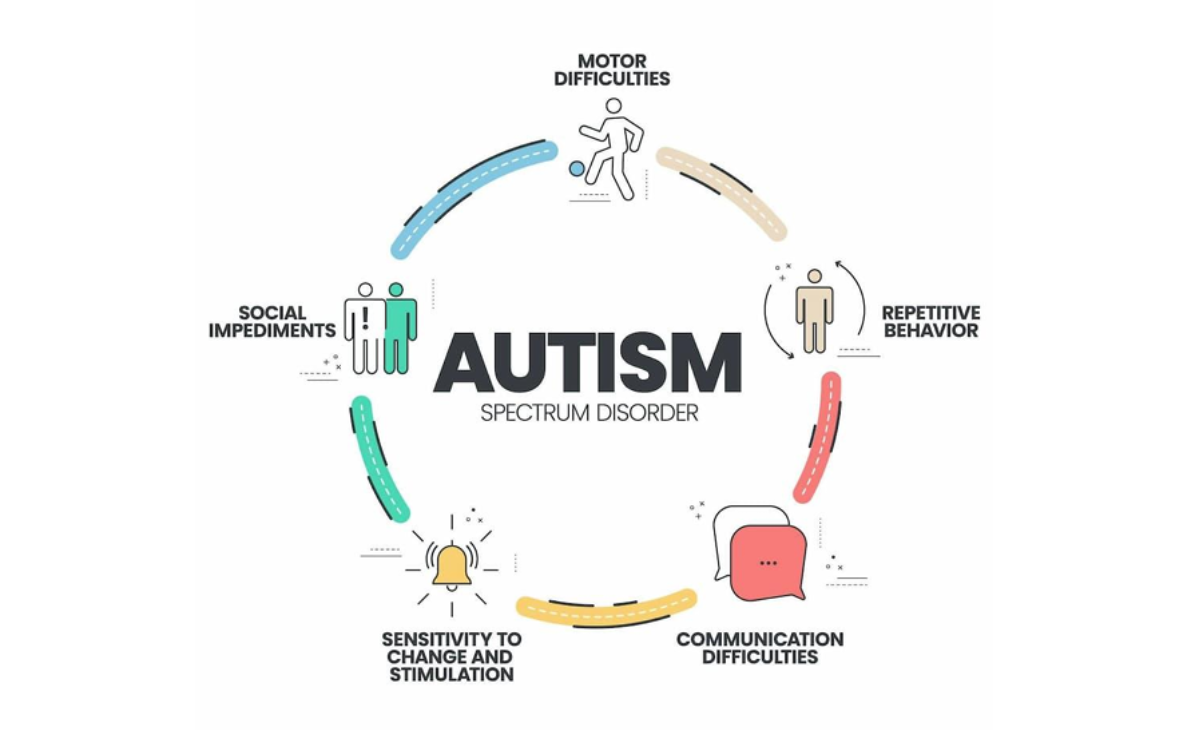
That message extends far beyond television. In reality, millions of autistic individuals live among us, navigating a world that was largely designed for minds that function differently from theirs. Autism, or Autism Spectrum Disorder (ASD), is one of the most misunderstood neurological conditions in the world. It is not a disease, an illness or something that needs to be cured. Rather, it is a lifelong neurodevelopmental condition that influences how an individual communicates, processes information, interacts with others and perceives the environment around them.

Autism is not a limitation on a person’s worth or potential. It is simply another way for the human brain to develop. The word “spectrum” is perhaps the most important part of understanding autism. It reminds us that no two autistic individuals are exactly alike. Some communicate fluently, attend university and build successful careers, while others require significant support in their daily lives. Some possess extraordinary talents in mathematics, music, science or art, while others express their creativity in quieter ways.
Every autistic person has their own strengths, challenges, interests and personality. Autism cannot be reduced to a stereotype because every individual experiences it differently. Scientists believe autism develops because of a complex interaction of genetic and environmental factors that influence early brain development. It is present from birth, although its characteristics may become more noticeable as a child grows. Contrary to a longstanding myth, extensive scientific research has repeatedly confirmed that vaccines do not cause autism.
Autism is simply a natural variation in the way the brain develops and functions. One of the greatest challenges for autistic individuals is that they often experience the world in ways that neurotypical people rarely imagine. The human brain constantly filters information from the environment, deciding which sounds, lights or sensations deserve attention.
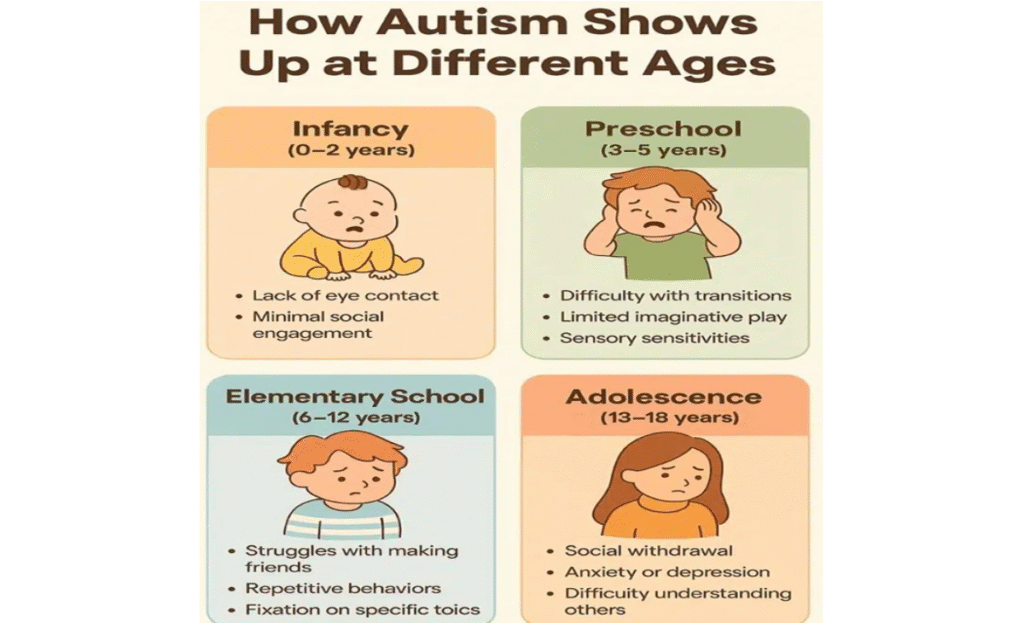
For many autistic individuals, this filtering process works differently. Imagine entering a crowded shopping mall where every conversation sounds equally loud, fluorescent lights seem painfully bright, perfumes become overpowering and even the texture of your clothes feels irritating. While others continue shopping comfortably, your brain struggles to process every sensation simultaneously. What appears to be an ordinary environment for most people can quickly become overwhelming and exhausting for someone with autism.
Communication is another area where autistic individuals may face unique challenges. Communication is much more than speaking; it includes understanding facial expressions, tone of voice, gestures, body language and implied meanings. Many autistic individuals interpret language literally. Sarcasm, idioms or indirect hints that most people understand automatically may feel confusing because autistic minds often process language with remarkable precision and logic. This difference is not a sign of lower intelligence or a lack of empathy. It is simply a different style of communication that values clarity and honesty over unspoken social rules.
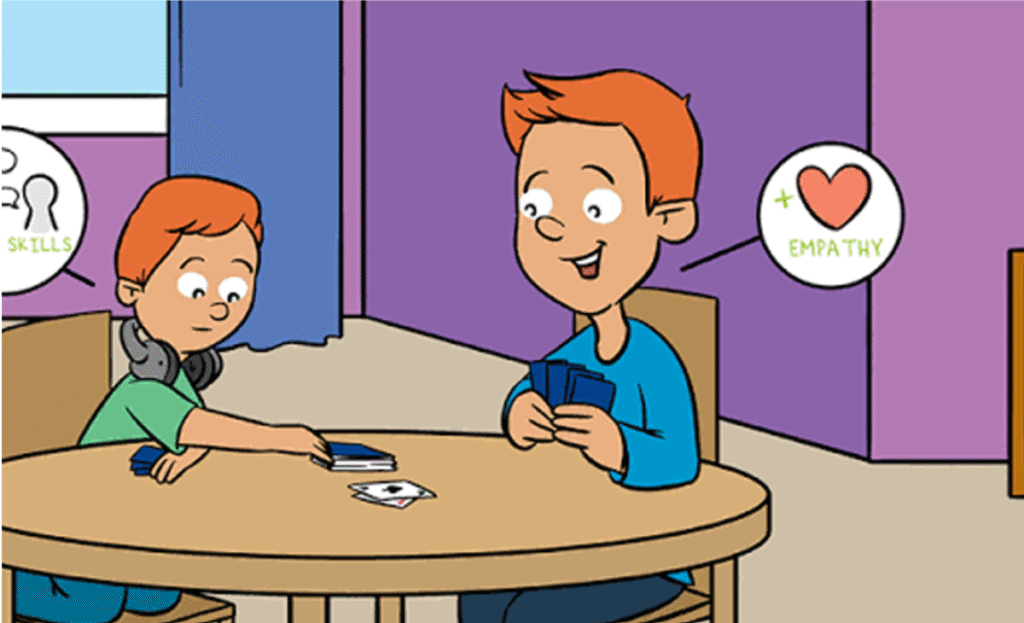
Social interaction can also be difficult, not because autistic individuals lack the desire for friendships, but because they often struggle to understand social expectations that others seem to learn naturally. Knowing when to join a conversation, interpreting another person’s emotions or recognising subtle social cues can require immense concentration. Imagine being expected to play a game without ever being taught its rules. That is how many social situations feel for autistic individuals.
Despite this, many deeply value meaningful relationships and long for genuine human connection. Perhaps one of the least understood aspects of autism is masking. From an early age, many autistic children and adults learn that their natural behaviours are viewed as unusual. To avoid bullying, criticism or rejection, they begin hiding those behaviours.
They force themselves to maintain eye contact despite discomfort, suppress repetitive movements that help them regulate emotions, memorise conversation patterns and imitate the behaviour of those around them. While masking may help them appear socially accepted, it often comes at an enormous emotional cost. Living every day while constantly pretending to be someone else can lead to anxiety, depression and autistic burnout. Behind a smile that appears effortless may lie overwhelming exhaustion.
Daily life itself presents countless invisible obstacles. Activities that many people complete without a second thought—travelling on public transport, attending school, participating in group discussions, making phone calls or coping with unexpected changes in routine—can demand extraordinary mental effort from an autistic person. Their challenges are often invisible, making it easy for others to misunderstand or dismiss them.
What society sometimes labels as “overreacting” is often an individual doing their best to cope with an environment that feels unbearably overwhelming. Yet autism is not defined solely by its challenges. It also brings extraordinary strengths that deserve equal recognition. Many autistic individuals possess remarkable attention to detail and notice patterns that others overlook. They often develop deep knowledge in subjects they are passionate about, dedicating themselves with incredible focus and determination.
Their logical thinking, creativity and unique perspectives have contributed significantly to fields such as science, technology, engineering, mathematics, literature, music and art. Their minds approach problems differently, and it is often this difference that leads to innovation. Another beautiful quality commonly found among autistic individuals is authenticity.
Many value honesty above social expectations. They are less likely to engage in superficial conversations or hidden intentions, preferring sincerity and directness. Their loyalty to family and friends is often profound, and although they may express emotions differently, they experience love, joy, fear and compassion just as deeply as anyone else. The misconception that autistic people lack emotions could not be further from the truth. They often feel intensely, even if they communicate those feelings in ways that others may not immediately recognise.
Unfortunately, the greatest struggle many autistic individuals face is not autism itself but the world’s inability to understand it. Society often judges behaviours without asking what lies behind them. A child covering their ears during a loud celebration may be called difficult instead of being recognised as someone experiencing sensory overload. An adult who avoids eye contact may be perceived as disrespectful rather than someone communicating in the way that feels most comfortable. These misunderstandings create barriers far greater than autism ever could.
Families, educators and communities have the power to transform these experiences. A little patience, acceptance and willingness to understand can make an enormous difference. Schools that accommodate different learning styles allow autistic children to thrive. Workplaces that value neurodiversity discover employees with remarkable dedication, precision and creativity. Communities that choose empathy over judgment become places where autistic individuals no longer feel pressured to hide who they truly are. Extraordinary Attorney Woo captured this message beautifully.
It reminded audiences that autism is not merely a collection of symptoms listed in a medical textbook. It is the story of human beings who dream, laugh, struggle, succeed, fall in love, experience disappointment and contribute meaningfully to the world. Woo Young Woo’s greatest challenge was never her autism; it was convincing others to see beyond it. Her brilliance was not extraordinary because she was autistic. It was extraordinary because she was allowed to be herself.
Perhaps that is the lesson autism offers all of us. Intelligence, kindness and humanity cannot be measured by how closely someone resembles the majority. The world does not need every mind to think alike. It needs different minds to work together, challenge perspectives and remind us that diversity is one of humanity’s greatest strengths. Autism is not a broken version of being human. It is another beautiful way of being human. And perhaps, like Extraordinary Attorney Woo gently teaches us, the most extraordinary thing we can do is not ask autistic individuals to fit into our world, but instead make our world large enough to welcome theirs.
Himani Sharma