
Munish Sood
Sundernagar
In a part of Sundernagar often overlooked in the city’s everyday rush, a simple message took on a deeper meaning on Sunday: clean air, clean surroundings and a life free from drugs are not privileges—they are rights that must reach every neighbourhood.
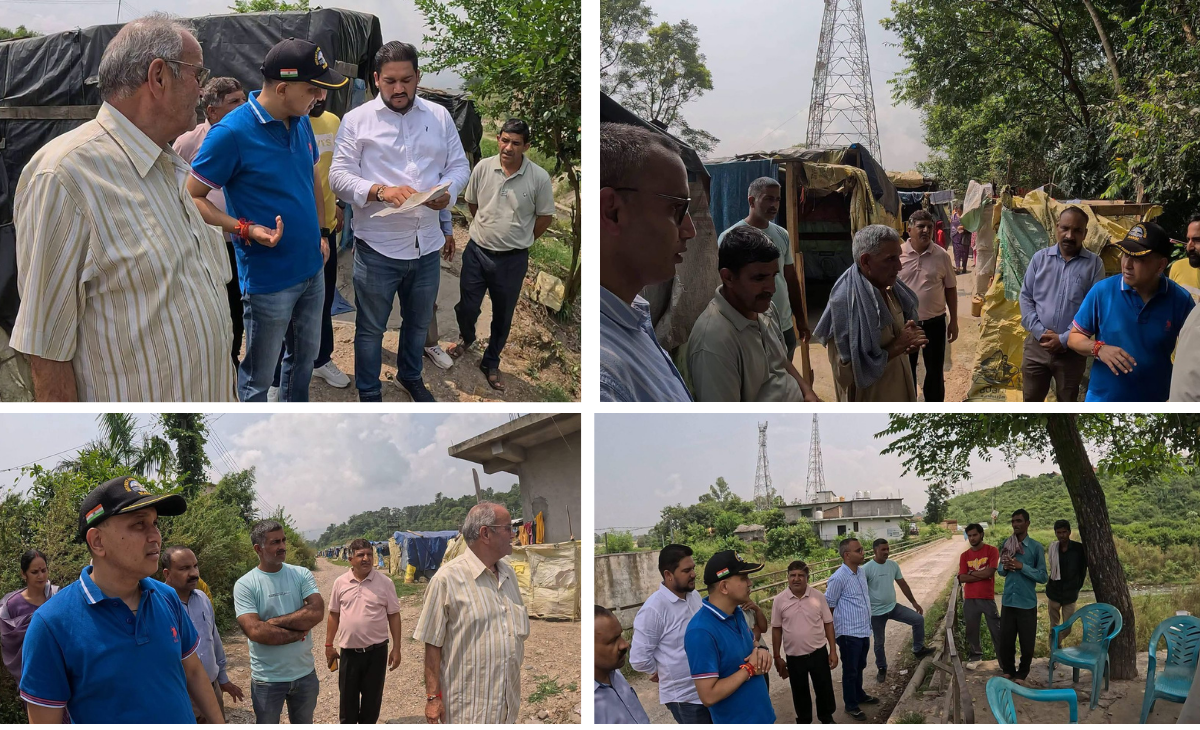
Under the “Swachh Hawa aur Nashamukt Sundernagar” campaign, Sub-Divisional Magistrate (SDM) Sundernagar Amar Negi visited slum settlements near the BSNL Exchange and the bus stand, stepping beyond office corridors to speak directly with residents living in some of the town’s more vulnerable communities.
Accompanied by Dr Dharmesh Sharma, founder of Krayash Charitable Trust, Negi interacted with residents, heard their concerns and inspected the conditions on the ground. The visit placed the spotlight on an issue that often remains invisible in conversations about urban development—the environmental and social challenges faced by people living in informal settlements.
Rather than limiting the campaign to public announcements, the administration sought to take its message directly to the communities that need it most.
Residents were urged to keep their homes and surroundings clean, avoid dumping waste in the open and refrain from activities such as burning garbage that contribute to air pollution. The emphasis was also placed on keeping young people away from drugs and encouraging healthier lifestyles.
For the administration, however, cleanliness cannot be achieved simply through enforcement.
“A clean and healthy Sundernagar cannot be built by the administration alone. It requires the active participation of every citizen,” the SDM said, stressing that public cooperation is central to creating a healthier urban environment.
The visit also carried a message for property owners in slum areas. Negi personally interacted with both residents and landlords and assessed sanitation conditions. Landlords were directed to ensure proper cleanliness and sanitation within their premises and surrounding areas. Officials were also instructed to take action under the applicable rules in cases of non-compliance.
But the larger message of the campaign goes beyond garbage and sanitation.
In densely populated settlements, where environmental conditions, public health and social vulnerabilities can intersect, access to a clean and safe living environment becomes particularly important. By taking the campaign into these settlements, the administration has attempted to frame cleanliness not merely as a municipal obligation but as a matter of community health, dignity and collective responsibility.
The campaign also seeks to address another challenge that cuts across economic and social boundaries—drug abuse. Residents, particularly young people, were encouraged to stay away from intoxicants and embrace a healthy lifestyle.
The administration says the objective is to ensure that the message of clean air, cleanliness and a drug-free society does not remain confined to the city’s main roads and public spaces, but reaches every settlement and every section of society.
The significance of Sunday’s outreach lies precisely there: in taking governance to the doorstep of communities that are often spoken about, but less often spoken with.
As Sundernagar looks towards a cleaner and healthier future, the campaign’s success will ultimately depend not only on official inspections or directives, but on whether its message becomes part of everyday life—from the way waste is handled outside a home to the choices made by a young person about his or her future.
A cleaner city begins with cleaner surroundings. A healthier society begins with healthier choices. And a truly inclusive city is one where that message reaches everyone.