
Subhash Mahajan
Chamba
Two separate incidents near Chamba headquarters caused panic among commuters and residents but fortunately resulted in no loss of life. Both accidents, occurring within hours of each other, highlighted the vulnerability of transport and infrastructure in the hilly terrain, though quick reactions and sheer luck prevented tragedy.
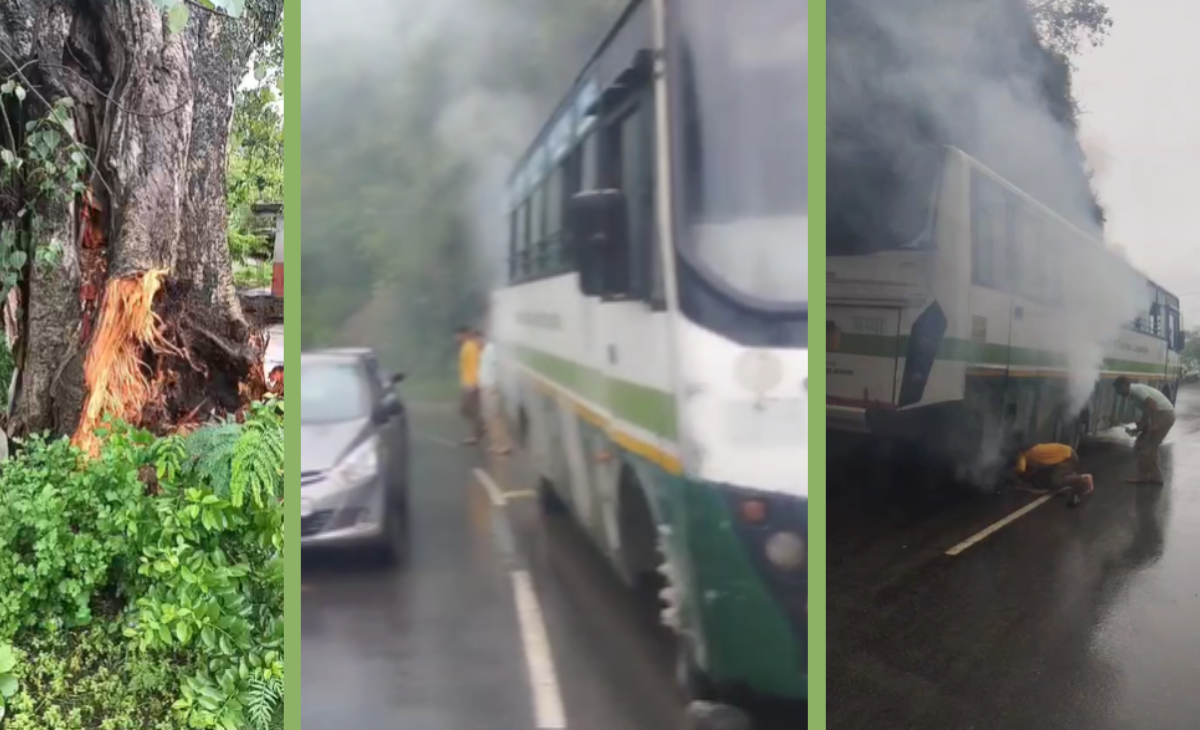
The first incident took place approximately 23 kilometers from Chamba, near Hamal. An HRTC bus traveling towards Chamba suddenly began emitting thick smoke from its rear section. Eyewitnesses reported that the smoke was so intense it quickly engulfed the vehicle, creating a frightening situation for passengers inside. Alarmed by the sudden eruption, passengers abandoned their belongings and rushed out of the bus to safety. The driver managed to bring the bus to a halt, but the sight of the massive smoke cloud left many shaken.
Passengers later recounted the terrifying moments, describing how the dense smoke made it difficult to breathe and created fears of a fire outbreak. Some even left behind personal items in their haste to escape. Authorities are investigating the cause of the smoke, with preliminary reports suggesting a possible mechanical fault. The incident has raised questions about the maintenance of public transport vehicles operating in the region’s challenging terrain.
The second accident occurred closer to Chamba headquarters, about 9 kilometers away in Phulgat. A massive tree, weakened by natural wear and tear, suddenly broke and collapsed onto a parked vehicle. The impact was so severe that the vehicle was lifted nearly five to six feet off the ground before crashing back down. The car sustained significant damage, with its roof and body badly crushed under the weight of the tree.
Residents in the area rushed to the scene, fearing casualties. Miraculously, no one was inside the vehicle at the time of the collapse, sparing lives but leaving behind extensive financial damage. The incident has sparked concerns about roadside safety, particularly in areas where old or unstable trees pose risks to vehicles and pedestrians.
Local authorities confirmed that while both accidents caused considerable material losses, no injuries or fatalities were reported. Officials emphasized that these incidents serve as reminders of the unpredictable hazards in hilly districts, where transport systems and natural surroundings often intersect in dangerous ways.
The twin accidents have prompted calls for stricter safety measures. In the case of the HRTC bus, residents urged the transport department to conduct regular inspections and ensure that buses are fit for service, especially given the heavy reliance on public transport in rural and semi‑urban areas. For the tree collapse, locals demanded that forest and municipal authorities carry out routine checks on roadside vegetation to prevent similar accidents.
Experts note that such incidents, though not uncommon in mountainous regions, can be mitigated with proactive measures. Regular vehicle maintenance, better monitoring of roadside conditions, and swift emergency response systems are crucial to safeguarding lives and property.
For the passengers of the HRTC bus and the owner of the damaged car, the day was one of shock and relief. While financial losses were significant, the absence of casualties was seen as a blessing. Community members expressed gratitude that both accidents ended without tragedy, but also voiced frustration at recurring safety lapses.
As Chamba continues to grow as a hub of tourism and local commerce, ensuring safe and reliable transport infrastructure remains a pressing priority. The incidents at Hamal and Phulgat underscore the urgent need for vigilance, preparedness, and accountability in protecting both residents and visitors in the region.