

Munish Sood
Sarkaghat
At a time when rising input costs are making conventional farming increasingly challenging, a progressive farmer from Khnot village in Himachal Pradesh’s Sarkaghat subdivision has demonstrated that natural farming can be both profitable and sustainable.
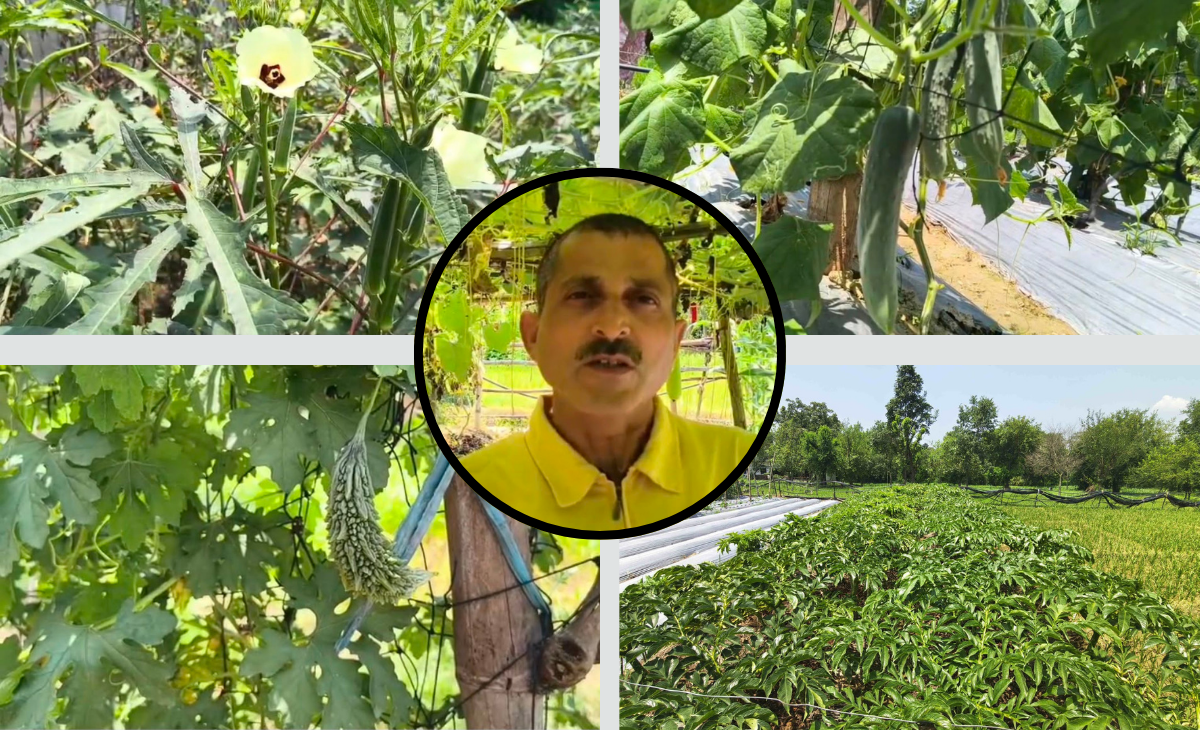
Sunil Kumar, a resident of Khnot village in Gopalpur block, has transformed his nearly two-bigha holding into a thriving model of diversified agriculture, earning between ₹1.5 lakh and ₹2 lakh annually through chemical-free cultivation. His farm now produces a wide range of vegetables, cereals and horticultural crops, proving that small landholdings can generate substantial income when managed efficiently.
The farmer attributes his success to reduced cultivation costs and improved soil productivity after shifting away from chemical fertilizers and pesticides. Instead, he relies on natural farming techniques using indigenous cow-based bio-inputs, which have helped restore soil health while reducing dependence on expensive external inputs.
In a significant boost to his earnings, Sunil introduced strawberry cultivation last year as an experimental crop. With an investment of around ₹15,000, the venture fetched nearly ₹70,000 in returns, leaving him with an estimated net profit of about ₹50,000. Encouraged by the results, he continues to diversify his farm with crops including tomato, capsicum, okra, cucumber, pumpkin, bottle gourd, bitter gourd, ginger, colocasia, elephant foot yam, maize and wheat.
Officials associated with the agriculture sector said government-backed natural farming initiatives are helping farmers adopt eco-friendly cultivation practices by providing financial assistance for indigenous cows, cattle shed improvements and essential equipment required for preparing bio-inputs.
Sunil believes natural farming offers benefits beyond higher profits. “The biggest gain has been healthier soil and chemical-free produce,” he said, adding that natural pest management methods have made farming environmentally sustainable while ensuring safer food for consumers.
He expressed hope that more farmers would embrace natural farming, saying the shift could strengthen rural livelihoods, reduce production costs and promote long-term agricultural sustainability across the state.