

Staff preferences emerge clearly after the government’s cadre restructuring in health services
TNR News Network
Dharamshala:
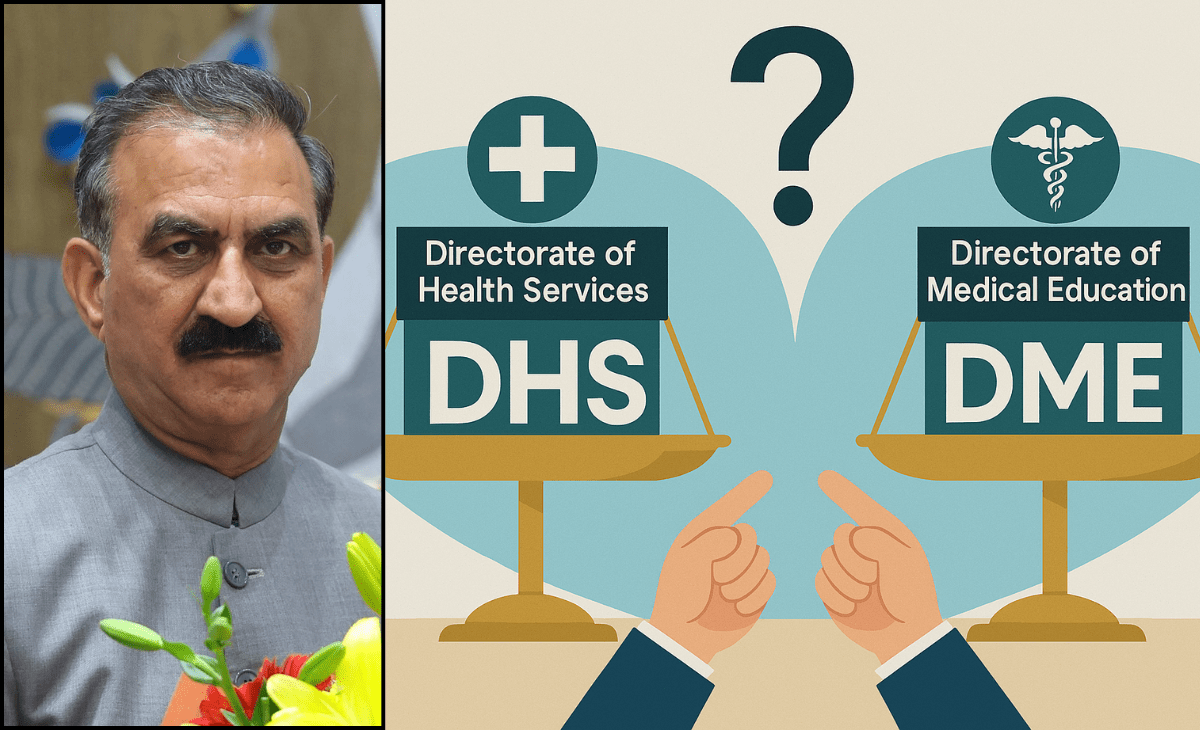
The Himachal Pradesh government’s decision to restructure health service cadres appears to be yielding insightful results. In a major administrative reform aimed at improving the efficiency and accountability of the state’s healthcare system, employees were recently given the option to choose between the Directorate of Health Services (DHS) and the Directorate of Medical Education (DME).
According to official figures, 14,573 employees (74.44%) have opted to remain with the Health Services Directorate, while only 5,002 employees chose the Medical Education Directorate. The eligible staff included nurses, paramedics, clerical personnel, radiographers, OT assistants, drivers and Class-IV workers.
The overwhelming preference for DHS reflects that most employees wish to stay connected with direct public health delivery rather than academic or administrative roles. The Sukhvinder Singh Sukhu government has described this bifurcation as one of the most significant steps in its two-year health reform agenda.
The move is also being linked to the state’s broader plans to modernize hospital infrastructure, replace outdated medical equipment, and enhance diagnostic capacity across large government hospitals.
Rationale behind the reform
A senior health department official described the cadre split as a strategic move aligned with the government’s efforts to strengthen medical infrastructure and improve service delivery across Himachal Pradesh. The reform, officials say, is designed to ensure that both directorates work in specialized, clearly defined domains for maximum efficiency.
Key Benefits of the Cadre Division
• Targeted Recruitment: Separate hiring drives will now be conducted for both directorates. This will help address skill mismatches and fill long-standing staff shortages, particularly in medical colleges, where 40-50% of posts have remained vacant in some departments.
• Clear Accountability: With well-defined work roles, employees can be held accountable for specific outcomes such as patient care standards and diagnostic turnaround times.
• Enhanced Specialisation and Career Growth: Staff under the DME will focus on teaching and college administration, while those under the DHS will work in public health, disease surveillance, and emergency services, allowing for more specialised skill development.
• Improved Quality of Care: Freed from academic and administrative duties, the DHS can now focus more directly on service quality and patient outcomes.
Challenges in implementation
Experts have cautioned that while the reform is ambitious, its success depends on robust implementation. Without a transparent transfer policy, strong anti-corruption safeguards and effective monitoring mechanisms, the reform could risk creating new administrative pressures instead of resolving existing inefficiencies.
To mitigate these challenges, the government will need to design a comprehensive roadmap, including clear transfer rules, phased recruitment timelines, adequate budgets for staff training, and independent oversight of health services.
As the reform unfolds, the government hopes that this cadre division will lead to more responsive, transparent, and patient-oriented healthcare, a vital step toward strengthening Himachal Pradesh’s public health system.