

TNR Investigation-Part 5
Sourabh Sood
Shimla:
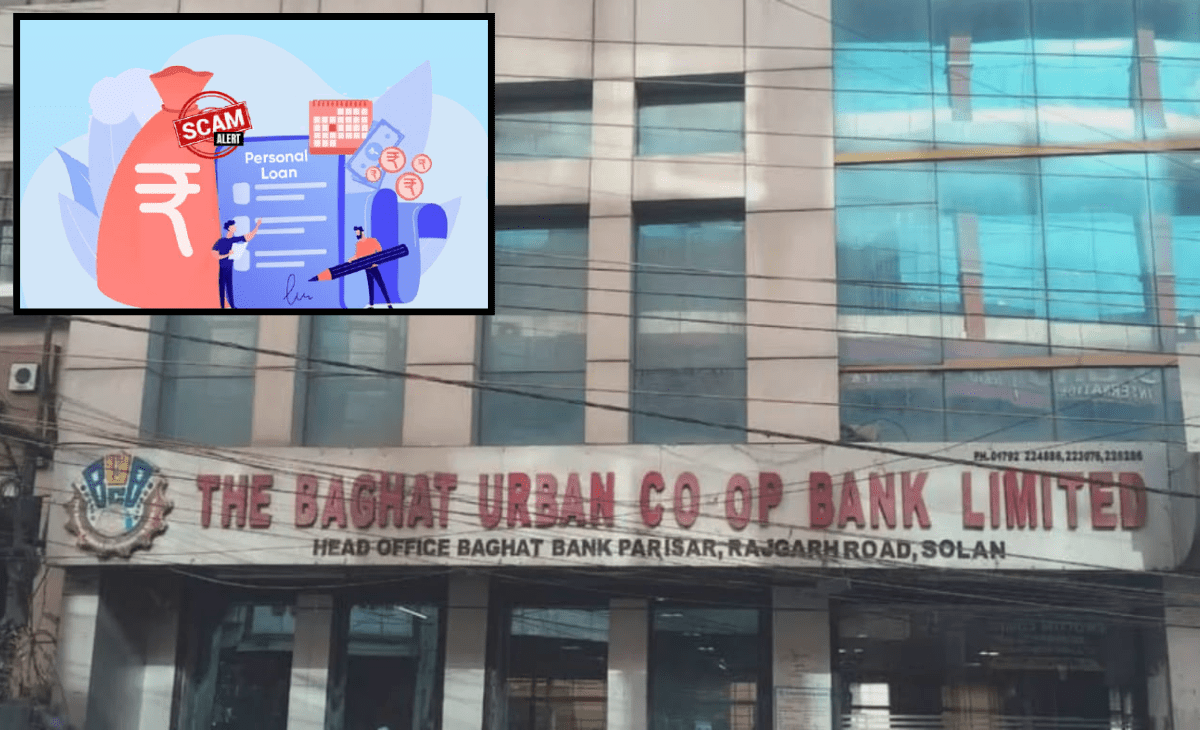
As the investigative series into the Baghat Urban Cooperative Bank collapse continues, the most uncomfortable truth now starts to emerge: the crisis was not caused by borrowers alone but shaped and strengthened by the people inside the system who were supposed to prevent it.
The files, notes and testimonies show that the collapse was made possible because officials, valuers and board members acted in ways that allowed fraud, inflated valuations and irregular decisions to go unchecked for years. What appears today as a financial disaster is actually the final result of a long chain of compromises made inside the bank’s own structure.
The first layer of this chain was the loan-processing machinery. Many loan files clearly reveal that branch officials knowingly passed weak proposals without proper verification. In several cases, income statements and property papers were accepted without modern checks or field visits.
A few former employees, speaking on the condition of anonymity, said that objections raised by the staff were often overruled by seniors who had “instructions from above”. This created an environment where loan officers slowly stopped questioning anything, because doing so invited pressure, transfers or direct reprimand.
Value of property was marked much higher
The next major role was played by property valuers. Almost every troubled loan shows the same pattern, the value of the property was marked much higher than the actual market price. These inflated valuations formed the backbone of large loans. Valuers submitted reports showing land and buildings worth two or three times their real worth. These reports were rarely challenged and no second opinion was ever taken.
It is now clear that the valuers were not independent experts but part of a tightly connected circle that benefited from the flow of big loans. Without their support, many of these loans would never have been approved.
Above the valuers and the officials sat the bank’s Board of Directors and this is where the strongest influence becomes visible. The Board, often filled with individuals backed by political groups or government nominations, had the final authority to approve or reject loans.
Many sanction decisions, even for crores of rupees, were taken in meetings that lasted only a few minutes. Internal notes show that when officials tried to highlight risk or weak collateral, their comments were brushed aside. In some files, it is written clearly that the sanction was made “as per direction of Board members”, a phrase that insiders say was commonly used whenever political pressure shaped financial decisions.
Certain borrowers were repeatedly protected
The Board’s role becomes even more concerning when you see how certain borrowers were repeatedly protected. Accounts that should have been declared NPAs long ago were restructured again and again. Penal interest was waived.
Repayment schedules were extended without any supporting documents. Some accounts were kept artificially “standard” only because the Board did not want to show rising default numbers. These interventions did not just encourage borrowers to delay payments, but directly contributed to the bank’s downfall because each restructuring pushed the problem further into the future while increasing the eventual loss.
Auditors, internal inspection teams also responsible
Meanwhile, auditors and internal inspection teams also share responsibility for the crisis. Several audit reports mention issues only in polite language, without naming the real severity.
Observations that should have triggered immediate action were diluted in the final summaries. Insiders say some auditors had long-standing relationships with Board members and avoided highlighting anything that could create trouble. A few of the most alarming cases — such as dual loans on the same property, were not flagged strongly enough, allowing the practice to continue in more accounts.
Regulatory oversight from outside the bank also appears to have been weak. RBI inspections did note rising NPAs, but no strong corrective measures were enforced. The Registrar of Cooperative Societies, who has significant authority over cooperative banks, did not step in aggressively despite early-warning signs.
This allowed the internal system to continue functioning with the same loopholes and the same people for years. By the time regulatory bodies intervened seriously, the situation had already crossed the point of repair.
Bank struggles to meet RBI’s deadlines
Today, as the bank struggles to meet RBI’s deadlines and recover even a fraction of its lost money, the role of these insiders stands out clearly. The crisis was not just a failure of borrowers, but of the institutions and individuals responsible for monitoring, evaluating and safeguarding public money.
The files show a network where loans were processed carelessly, valuations were inflated deliberately, sanctions were influenced politically and audits were softened diplomatically. Together, these actions created a financial environment where fraud was not an exception but a routine practice.