

More than 3,300 hectares affected, losses exceed ₹82 lakh as prolonged dry spell fuels wildfire crisis across the Himalayan state
Munish Sood
Mandi
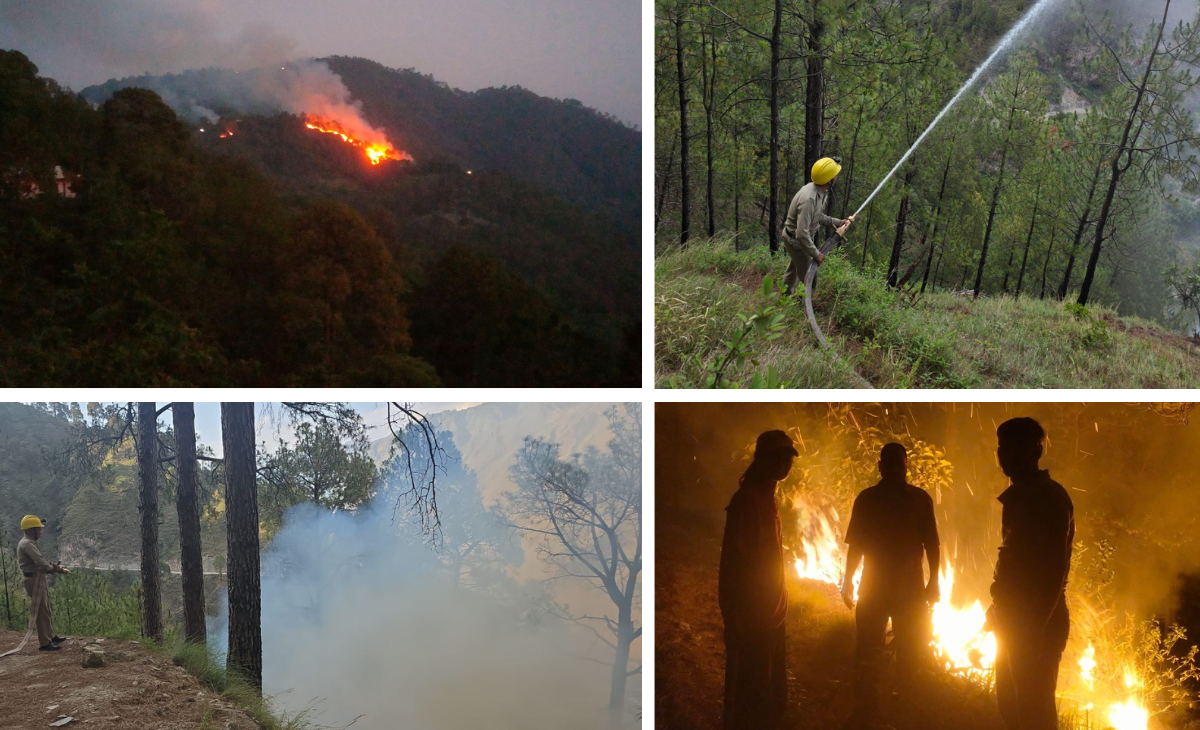
Forest fires sweeping across Himachal Pradesh have once again highlighted the growing vulnerability of the state’s forests and the mounting challenges facing authorities tasked with protecting them. Despite substantial investments in forest fire management, large swathes of forest land continue to be ravaged by flames, raising concerns over preparedness and long-term mitigation measures.
According to official data, Himachal Pradesh has recorded 263 forest fire incidents so far this season, affecting more than 3,328 hectares of forest area. Preliminary estimates place the damage at over ₹82 lakh, making it one of the most severe wildfire seasons in recent years.
Among all forest circles, Mandi has emerged as the worst-affected, accounting for 87 fire incidents, the highest in the state. More than 513 hectares of forest land in the Mandi Circle have been damaged, with estimated losses nearing ₹18 lakh.
Within the district, the impact has been particularly severe in the Katoula, Kotli, Drang, Mandi and Panarsa forest ranges. The Mandi Forest Division alone reported 30 fire incidents, affecting over 183 hectares of forest area, including significant stretches of natural forests. Panarsa recorded the highest financial losses within the division, while Katoula and Panarsa each saw nearly 67 hectares of forest land scorched by fire.
The crisis extends beyond Mandi. Forest fire incidents have also been reported from Dharamshala, Nahan, Shimla and Solan circles. Shimla recorded the largest area affected, with more than 1,570 hectares damaged by fire.
The gravity of the situation was underscored in Solan district, where a major forest fire in the Sari area spread dangerously close to an Indian Air Force station. The situation became so critical that the Air Force had to deploy helicopters to assist firefighting operations, highlighting the scale and intensity of the threat.
The widespread destruction comes despite financial support under central forest fire management programmes. Environmental experts believe the recurring incidents underscore the need for stronger prevention mechanisms, improved surveillance, greater community participation and climate-resilient forest management strategies.
Forest fires not only destroy vegetation but also devastate wildlife habitats, degrade soil quality, reduce biodiversity and threaten vital water sources in the fragile Himalayan ecosystem. With prolonged dry spells and changing climatic conditions becoming increasingly frequent, experts warn that such incidents could become more intense and widespread in the years ahead.
Responding to the situation, Mandi Divisional Forest Officer (DFO) Vasu Doegar told News Radar that the department’s field staff has been working relentlessly to contain the fires and that most incidents have been brought under control.
“Continuous dry conditions and the absence of rainfall have significantly aggravated the situation. In several locations, even reaching the affected sites on foot is extremely difficult, making firefighting operations far more challenging,” Doegar said.
He added that the Forest Department has been receiving strong support from local communities as well as the Fire Services Department. “Our priority is to minimise damage to forest wealth and ensure that fires are controlled at the earliest possible stage,” he said.
As forest fires continue to flare up across the state, the numbers paint a troubling picture. The recurring wildfire crisis is rapidly emerging as one of Himachal Pradesh’s most pressing environmental challenges, threatening not only its forests but also the ecological security of the Himalayan region.