
From Una to Mandi and finally Kapurthala, SDM Smritika Negi’s persistent efforts helped reconnect a woman with her family after years of separation
Munish Sood
Mandi: For nearly five years, Mamta/Manju had lived with an unanswered question—where were her family, and would she ever find her way back to them?
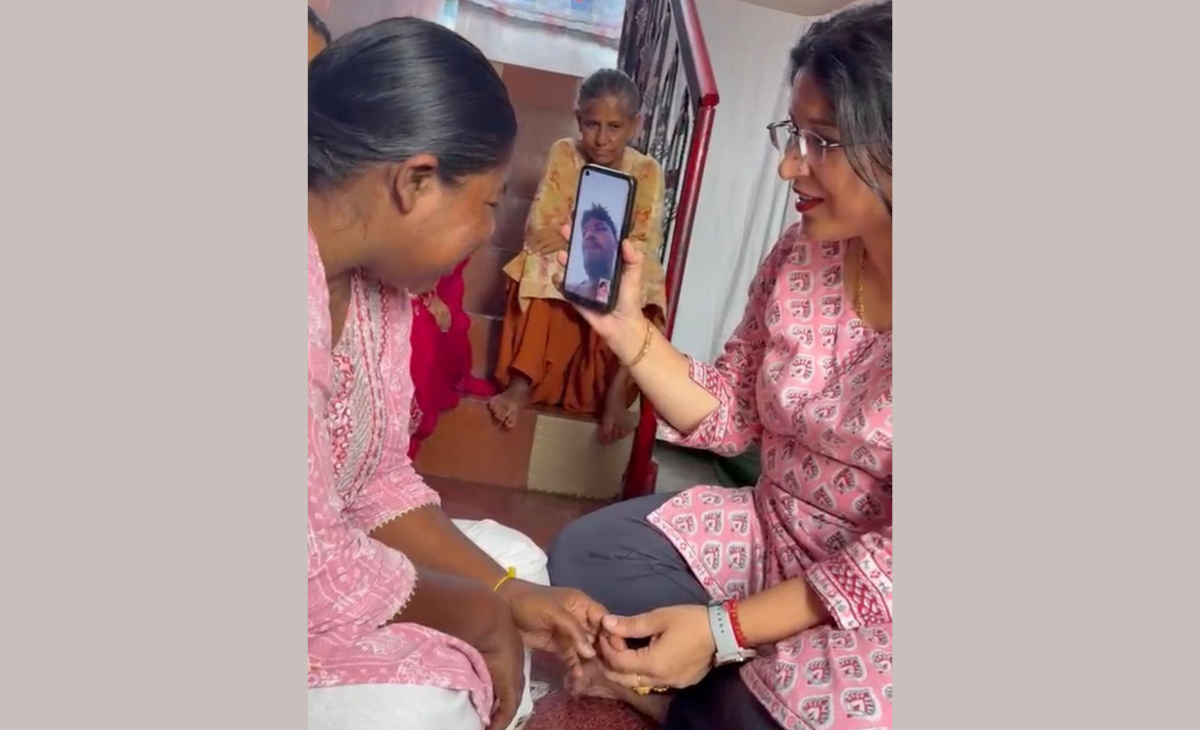
That long wait finally took an emotional turn when she was connected with her family in Kapurthala, Punjab, through a video call, bringing an end to years of uncertainty and separation.
The reunion became possible largely through the personal initiative and sustained efforts of SDM Balh Smritika Negi, who took up the family-tracing exercise and worked to connect the scattered pieces of information available about Mamta.
Mamta, around 32, was found in Una district of Himachal Pradesh on May 30, 2021. With difficulties in communication and recalling details about her past, establishing her identity and locating her family was far from easy.
She was subsequently placed under institutional care at Swadhar Greh (Women), Chalakkha, Lunapani, Mandi, where she received care, counselling and support.
Over time, she was able to provide some details about herself. She identified her father as Gernail Singh and her mother as Paramjeet Kaur, and said that she had three brothers and a sister. She spoke Punjabi and gave an address in Nawa Pind, Kushth Ashram, Kapurthala, Punjab.
But these fragments of information were not enough to immediately bring her family back into her life.
It was at this stage that SDM Smritika Negi stepped in and pursued the matter with determination. Instead of allowing the case to remain confined to institutional records, efforts were made to verify the information and establish links in Punjab.
The search eventually began yielding results.
Dr. Ruma Devi and Dr. Parminder Singh played a crucial role in Punjab in tracing the family and establishing contact with them, while CDPO Jitender Saini, Sabita Chanda of India Cares and others extended support during the process.
For Mamta, however, the real moment came when the efforts finally translated into a familiar voice and familiar faces on a video screen.
During the video call, Mamta was able to see and speak with her family in Kapurthala. After years of separation, the simple act of hearing the voices of her own people turned into an intensely emotional moment for everyone involved.
For those who had worked on the case, it was more than just a successful tracing exercise. It was the culmination of years of uncertainty and a reminder that behind every institutional case file is a human being with a history, relationships and a family waiting somewhere.
Mamta’s journey—from being found alone in Una, to receiving care in Mandi, and eventually being connected with her family in Kapurthala—also highlights the importance of persistence in family-tracing cases where communication and memory make the task particularly difficult.
For SDM Smritika Negi, the effort was ultimately about ensuring that Mamta was not defined merely by the circumstances in which she was found, but was given an opportunity to reconnect with the people she had been separated from for years.
The video call may have been only a first step, but for Mamta and her family, it carried the weight of five long years.
From Una to Mandi, and finally to Kapurthala—the journey of Mamta/Manju has turned from one of separation into one of hope, reconnection and the possibility of returning home.