
Munish Sood
Mandi
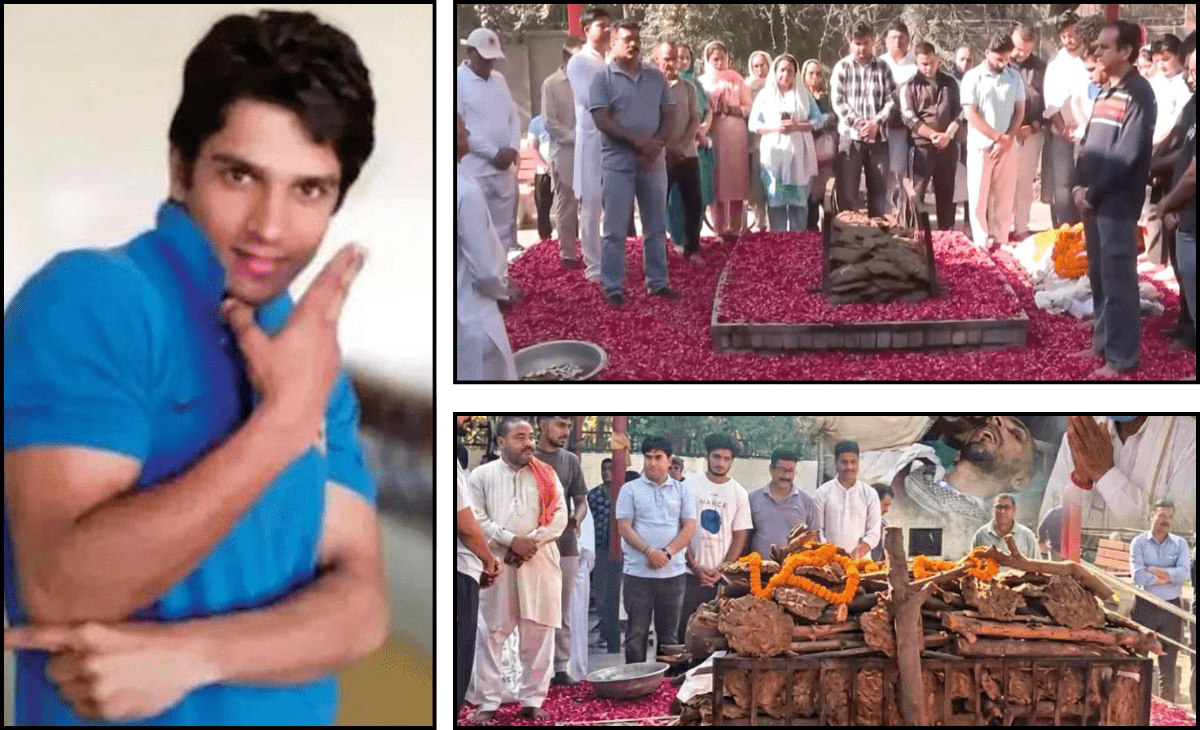
In an emotional farewell at the Green Park crematorium in South Delhi on Wednesday morning, 32-year-old Harish Rana—originally from the Pachhad region of Kangra district in Himachal Pradesh—was laid to rest, bringing an end to a 13-year-long, painful journey that had come to symbolize both suffering and dignity.
Harish passed away on March 24, 2026, at 4:10 PM at AIIMS, New Delhi, after being granted passive euthanasia in a landmark decision by the Supreme Court of India on March 11. His case is being seen as one of the first of its kind in the country, setting a precedent in end-of-life care guided by legal, ethical, and medical safeguards.
A bright B.Tech student at Panjab University, Chandigarh, Harish’s life changed tragically in 2013 on Raksha Bandhan, when he fell from the fourth floor of his paying guest accommodation while speaking to his sister. The accident left him with severe brain damage and quadriplegia, pushing him into a permanent vegetative state. For the next 13 years, he remained completely dependent on life support systems, including a tracheostomy for breathing and a gastrojejunostomy tube for nutrition, with no meaningful recovery.
After years of exhausting every possible treatment—his father Ashok Rana even selling their home to continue care—the family approached the Supreme Court, seeking a dignified end to his suffering. Following approval, Harish was admitted on March 14 to the palliative care unit at AIIMS’ Dr BR Ambedkar Institute Rotary Cancer Hospital.
A multidisciplinary medical team led by Dr Seema Mishra, comprising experts in neurosurgery, palliative medicine, onco-anesthesia, and psychiatry, oversaw the delicate process. In line with the court’s directions, life-sustaining measures, including artificial nutrition, were gradually withdrawn under strict supervision, ensuring he remained free from pain and distress until his final breath.
In a deeply humane decision, Harish’s family chose to donate his lungs, both kidneys, and corneas—offering a new lease of life to six patients. Even in loss, they created hope.
Before the final rites, his father, with folded hands, made a heart-wrenching appeal: “Please don’t cry… let my son go in peace.” The words left everyone present overwhelmed with emotion.
From the serene hills of Himachal to a hospital bed in Delhi, Harish Rana’s journey reflects the strength of a family, the weight of difficult choices, and the quiet power of compassion. In death, he did not just find peace—he gave life.