
PWD, Urban Development handed to two other ministers during eight-day Brazil visit; key question is whether the same arrangement was followed during earlier foreign trips
Munish Sood
Shimla: The temporary redistribution of two key portfolios held by Himachal Pradesh minister Vikramaditya Singh during his foreign visit has triggered a political question that the government will find difficult to sidestep: Why now?
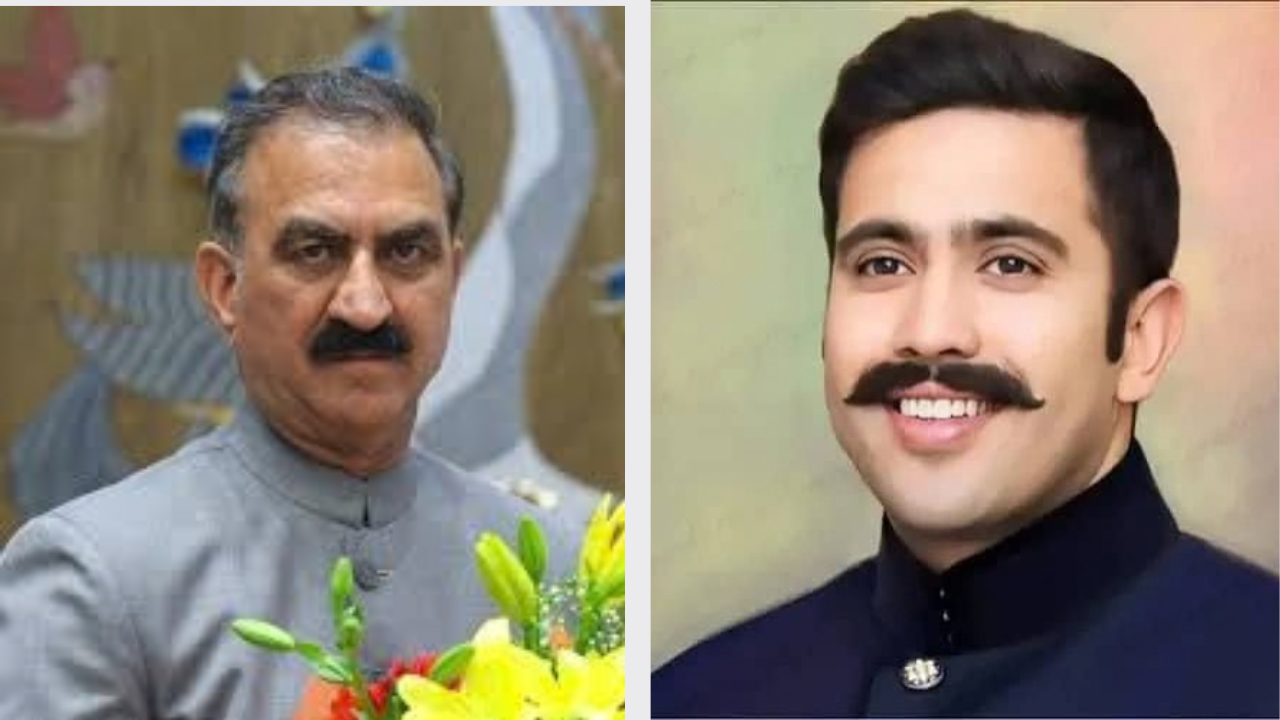
As Vikramaditya Singh left for Brazil on September 20 for an eight-day visit, the state government assigned the temporary charge of the Public Works Department to Rural Development Minister Anirudh Singh and Urban Development to Rajesh Dharmani until his return on September 28.
The government has justified the arrangement as an administrative measure to ensure that official work and important files do not remain pending during the minister’s absence.
But politically, the issue goes beyond the eight-day arrangement.
The central question being raised within political circles is whether this has been the standard practice of the Sukhu government whenever a Cabinet minister travels abroad.
Was the same rule followed earlier?
Several ministers in the Himachal Pradesh government have undertaken foreign visits in the past for official programmes, conferences, study tours and other engagements.
That raises a straightforward question for Chief Minister Sukhvinder Singh Sukhu:
When other ministers went abroad, were their departments also formally handed over to other Cabinet colleagues for the duration of their absence?
If the answer is yes, the government can point to a consistent administrative practice.
If the answer is no, then another question naturally follows:
What was different this time?
The government can settle the matter simply by placing on record the arrangements made during previous foreign visits of ministers.
The issue is particularly relevant because the present arrangement concerns two of the most significant departments in the state.
Why PWD and Urban Development matter
The Public Works Department is one of the government’s most important arms in a hill state, dealing with roads, bridges and major infrastructure projects. Urban Development, meanwhile, covers crucial issues relating to urban planning, civic infrastructure and local bodies.
Their temporary allocation, therefore, has attracted considerably more political attention than an ordinary administrative arrangement.
The government order does not indicate any permanent change in the allocation of these portfolios. The additional charges are linked to Vikramaditya Singh’s absence.
Yet the timing has generated speculation because the departments have been entrusted to two ministers who have previously been involved in public political exchanges with Vikramaditya Singh.
That history, by itself, does not establish that the present decision was politically motivated. But it explains why the order has acquired a political dimension.
The question is about precedent, not personalities
The controversy can be settled without political rhetoric.
The government only needs to answer three questions:
Was the charge of a Cabinet minister’s departments transferred to other ministers during earlier foreign visits?
If yes, was the same procedure followed consistently?
If not, what specific administrative reason required the transfer of Vikramaditya Singh’s portfolios this time?
These questions assume greater significance because the visit is for only eight days.
If the objective was simply continuity of government business, the government will have to explain whether the same mechanism was considered necessary in comparable situations earlier.
A new administrative precedent?
The latest development could eventually establish a new precedent in the functioning of the state Cabinet.
If ministers travelling outside the state or country are henceforth routinely relieved of their departmental charge for the duration of their absence, the present decision could be viewed as the beginning of a formal administrative practice.
But if such a mechanism has not been consistently followed in the past, the government faces an obvious political question over why it was considered necessary in this particular case.
For the moment, the government maintains that the arrangement is temporary and intended to ensure uninterrupted disposal of official work.
The political debate, however, is unlikely to end there.
Eyes now on September 28
Vikramaditya Singh is scheduled to return to Himachal Pradesh on September 28. What happens after his return will indicate whether the controversy remains limited to an eight-day administrative arrangement or develops into another point of friction within the ruling Congress.
For now, however, the most pointed question is not who got Vikramaditya Singh’s departments.
It is much simpler:
Why was this arrangement required now—and was the same rule followed when other ministers travelled abroad?
The answer rests with the Chief Minister and the government.