
Walnuts, sacred durba grass and seasonal offerings return to homes as the hill district marks the transition from monsoon to autumn
Munish Sood
Mandi
The smell of freshly prepared traditional delicacies, baskets of walnuts in the markets and the familiar sight of durb grass are bringing back the unmistakable festive mood to Mandi as the hill district prepares to celebrate Sair on Thursday.
Far more than a seasonal festival, Sair is an old cultural tradition through which generations of Mandi families have welcomed the change of season, expressed gratitude for the harvest and sought blessings for health, happiness and prosperity.
The district administration has declared September 17, 2026, as a local holiday on the occasion of Sair.
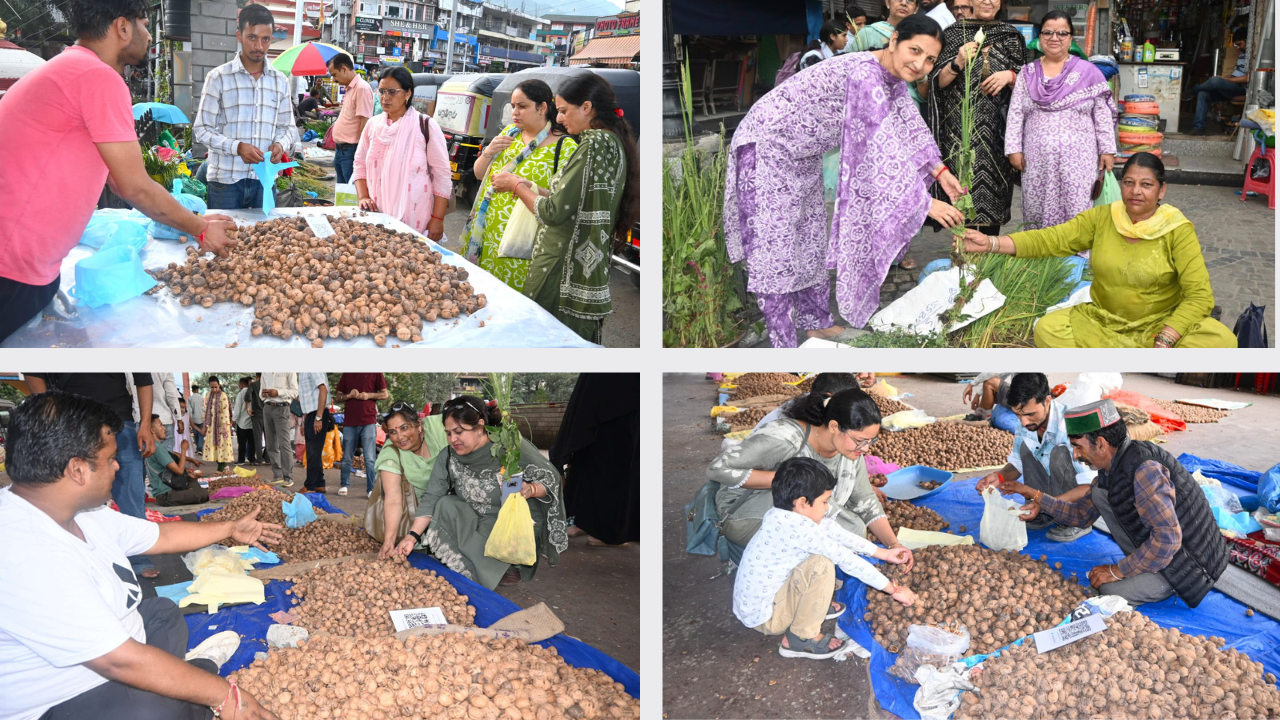
On Wednesday, the eve of the festival, Mandi’s markets remained busy as families made last-minute purchases of walnuts, pethu and other items traditionally used in Sair worship. For many families, these preparations are themselves part of the festival — a ritual repeated year after year and passed down from grandparents to children.
When the harvest enters the home
Sair arrives as the rains begin to retreat and the agricultural landscape of the hills starts preparing for the next phase of the year. Traditionally, the festival has been closely linked with the arrival of new seasonal produce and the completion of important agricultural activities.
In many homes, seasonal produce is placed before the family deity during the traditional Sair puja. Maize, paddy, sesame, galgal, walnuts and other locally available produce form part of the offerings in different areas.
The symbolism is simple but profound: the first share of the harvest belongs to the divine, before it reaches the family kitchen.
The festival also traditionally marks the beginning of agricultural activities associated with maize and paddy harvesting and grass cutting in rural areas.
A walnut, a blade of grass and a blessing
Perhaps the most intimate tradition associated with Sair is the exchange of walnuts and durb among family members and relatives.
Children and younger members approach elders with durb and walnuts and seek their blessings. The elders, in turn, bless them for good health, prosperity and happiness.
In that small exchange lies the heart of Sair.
There are no elaborate ceremonies required. A few walnuts, a handful of sacred grass and the blessings of an elder become a way of connecting one generation with another.
For children, walnuts have traditionally also meant play. In several rural parts of Mandi, the festival has long been associated with walnut games, giving the day a playful character alongside its religious and family traditions.
The taste of Sair
Food gives the festival another distinctive identity.
Homes traditionally prepare special dishes using locally available ingredients, turning the Sair celebration into a family feast. Traditional preparations and seasonal delicacies are shared among relatives, adding warmth to a festival that is essentially rooted in the home and community.
For older generations, the preparations often bring back memories of a time when festivals were marked not by commercial celebrations but by courtyards filled with family members, home-cooked food and rituals followed without a written rulebook.
A tradition that refuses to fade
Modern lifestyles may have changed the way festivals are celebrated, but Sair continues to retain its place in Mandi’s cultural calendar.
Its strength lies precisely in its simplicity. It connects the fields with the family, the harvest with gratitude and children with their elders.
As Mandi prepares to celebrate Sair on Thursday, walnuts will change hands, durb will be offered with prayers and traditional dishes will bring families around the same table.
For a district celebrated for its rich cultural heritage, Sair is a reminder that some traditions survive not because they are formally preserved, but because every generation chooses to celebrate them once again.