
Shimla
The Himachal Pradesh government’s decision to reintroduce state-run lotteries after nearly three decades has triggered a wave of political and social debate across the hill state. The move, framed as a fiscal survival strategy to ease mounting public debt, revives a practice banned in the late 1990s following widespread social distress linked to gambling losses among low-income families.
Officials describe the initiative as a modernized, technology-driven system featuring barcoded tickets and digital monitoring to ensure transparency. The administration argues that the lottery will serve as a non-tax revenue source, help curb illegal gambling, and create employment through authorized retail networks.
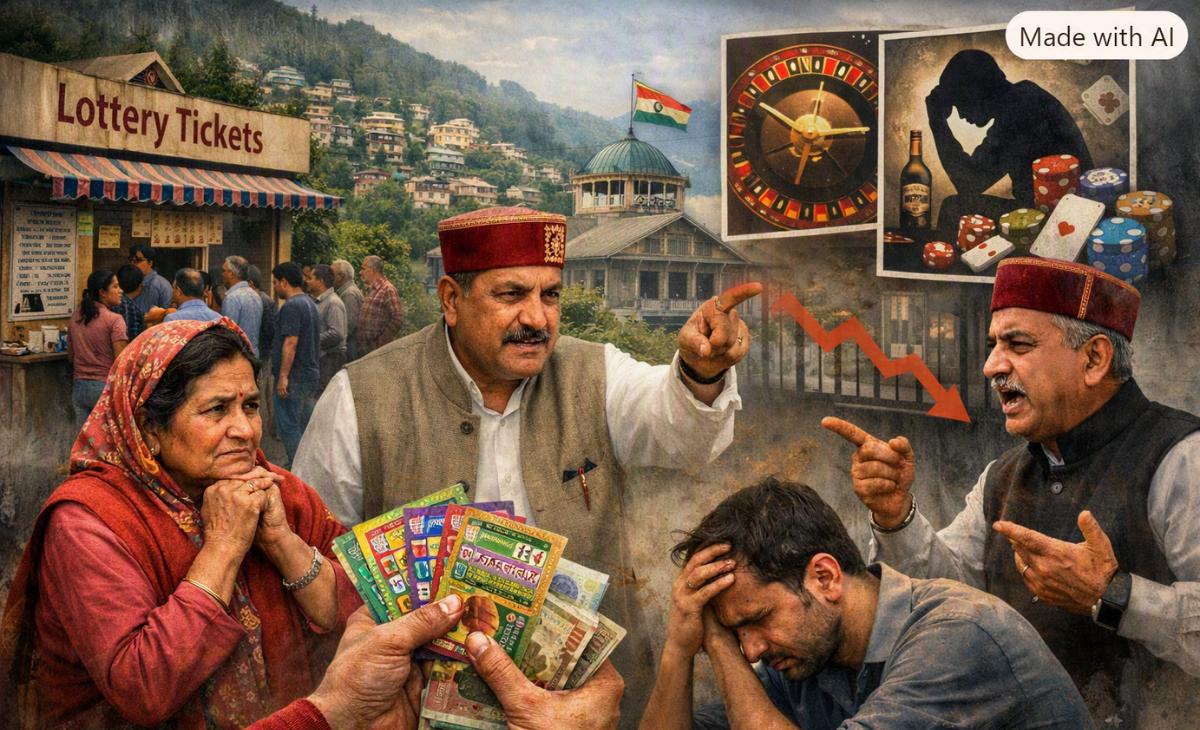
However, economists and social activists warn that the revival could reignite financial instability among vulnerable households. Critics call lotteries a regressive revenue tool that disproportionately affects daily wage earners and rural families, potentially leading to addiction and domestic conflict.
Former Chief Ministers Jai Ram Thakur and Prem Kumar Dhumal have condemned the move, accusing the government of prioritizing short-term revenue over social welfare. Thakur said previous governments resisted such measures to protect family stability, while Dhumal labeled the decision “a threat to the state’s moral fabric.”
Public sentiment remains divided. While some urban traders view the policy as a pragmatic fiscal step, rural communities and women’s groups fear it will erode social trust and repeat the painful consequences that led to the original ban.