
Munish Sood
MANDI:
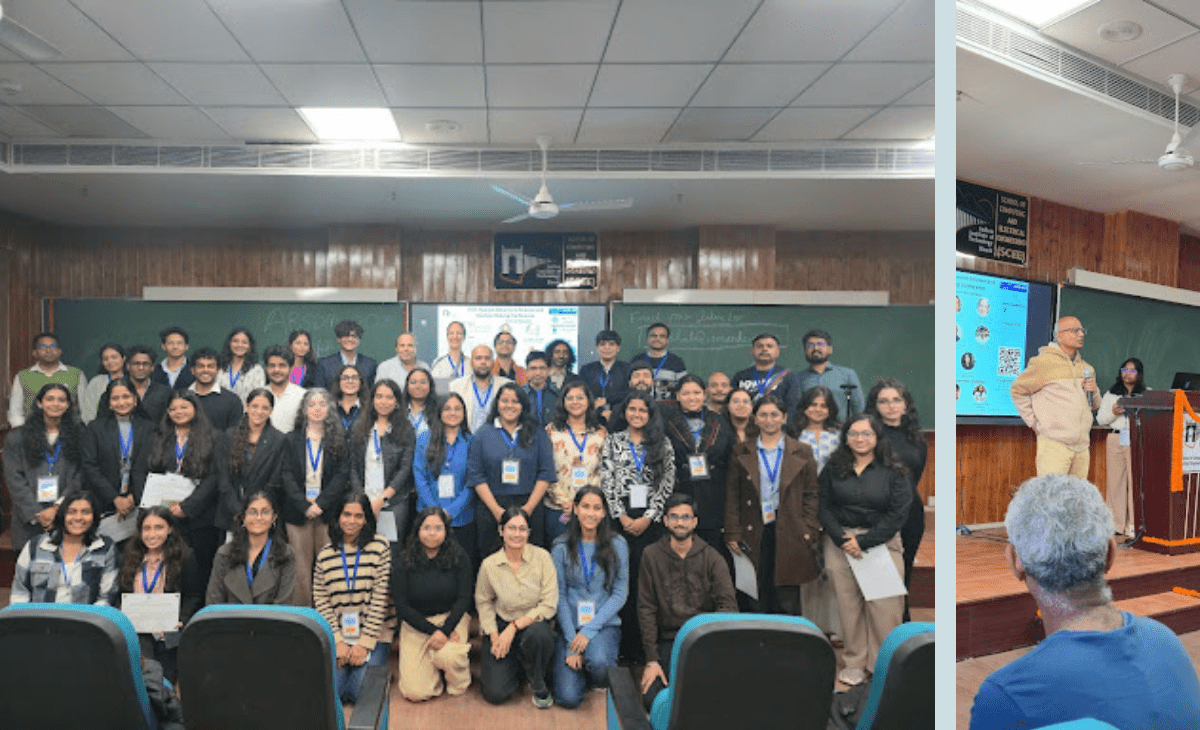
The Indian Institute of Technology (IIT)-Mandi hosted the Applied Behavioural Sciences and Decision-Making Conference (ABSDM-2025), bringing together leading researchers, academicians and practitioners from India and abroad to deliberate on emerging research in behavioural science, cognitive modelling and decision-making.
The two-day international conference served as a key interdisciplinary platform to examine how human behaviour, cognition and technology intersect in real-world decision processes. Scholars discussed the growing relevance of behavioural insights in addressing complex challenges such as climate change, public policy formulation and the responsible deployment of emerging technologies.
The ABSDM-2025 was jointly organised by Prof Varun Dutt (IIT-Mandi) and Prof Sumitava Mukherjee (IIT-Delhi), with support from the TATA Trust Project led by Prof KV Uday. The conference emphasised the application of behavioural science research beyond theory, focusing on practical solutions and policy relevance.
The conference was inaugurated by Prof Laxmidhar Behera, Director of IIT-Mandi, who underlined the critical role of behavioural and decision-making research in shaping the future of artificial intelligence, education systems and sustainable development. He highlighted the need for integrating human-centred approaches into technological and policy frameworks.
A key highlight of the conference was the keynote address by Prof Joachim Meyer, Celia and Marcos Maus Professor of Data Sciences at Tel Aviv University. His address focused on the interaction between humans and decision-support algorithms in high-stakes domains such as healthcare, defence and transportation. Drawing from empirical models, he shared insights on improving trust, transparency, and effectiveness in algorithm-assisted decision-making.
The inaugural session also featured remarks from Prof Arnav Bhavsar, Chair of the Indian Knowledge System and Mental Health Applications (IKSMHA) Centre; Prof Shubhajit Roy Chowdhury, Chair of the Centre for Human-Computer Interaction; and Prof KV Uday, Chair of the Centre for Climate Change and Disaster Management at IIT Mandi.
The ABSDM-2025 included thematic sessions on behavioural interventions for environmental sustainability, cognitive biases, human-AI interaction, organisational behaviour and real-world applications of drift diffusion models. More than 30 research papers and poster presentations reflected the depth and diversity of applied behavioural science research. Interactive roundtable discussions and open house sessions explored how behavioural research can inform public policy, climate action and technology design.
The conference concluded with a general body meeting, during which participants discussed the formation of a Society for Applied Behavioural Science and Decision Making aimed at strengthening research collaboration, education, outreach, and future conference planning.
As a complementary academic initiative, IIT-Mandi also organized the 7th Winter School on Cognitive Modelling (WSCM 2025) under the aegis of the IKSMHA Centre, supported by grants from the TATA Trusts and the Indian Knowledge Systems (IKS) Division, Ministry of Education. The winter school brought together experts and students from psychology, neuroscience, computer science and engineering to engage with recent advances in cognitive modelling and brain sciences.