
Pallavi Sharma
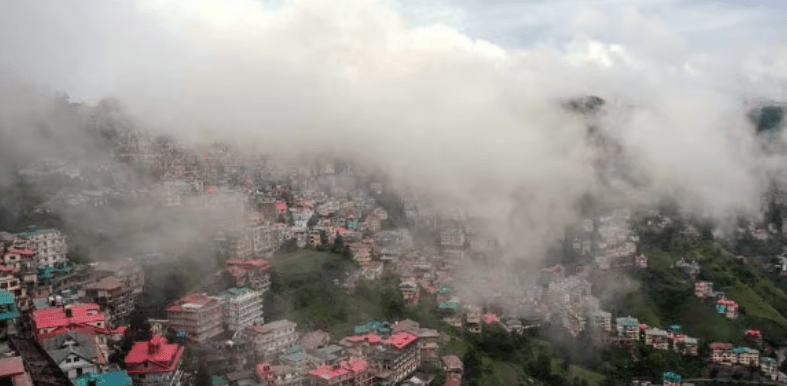
DHARAMSHALA: A prolonged dry spell stretching over two-and-a-half months finally showed signs of breaking in parts of Himachal Pradesh this week, but the state continues to reel under near-drought conditions. Even as the New Year has begun, many hills that are usually draped in white at this time of year still appear stark and dark, reflecting the severity of the rain and snow deficit.
Light snowfall was reported on Thursday in high-altitude areas, including Rohtang Pass, Dhauladhar range, Atal Tunnel and parts of Lahaul-Spiti. In the plains, Bilaspur and Una received light rain, offering brief relief from intense cold and dryness. However, the Meteorological Department has forecast clear weather and bright sunshine across the state for the next five days, with Friday already seeing sunny conditions statewide.
According to official data, December 2025 has gone down as one of the driest in over a century, underscoring the worsening water stress in the hill state.
December among driest in 124 years
Meteorological records show that Himachal Pradesh recorded just 0.1 mm of rainfall in December 2025, making it the sixth driest December since 1901. On average, the state receives around 38.1 mm of rain during the month, but this year’s rainfall was 99% below normal.
Earlier years with no December rainfall were 1902, 1907, 1925, 1939 and 1993, while the wettest December on record remains 1929 with 176 mm of rain.
The weather office said only three days in December saw scattered rainfall, while the rest of the month remained dry. Except for Lahaul-Spiti, which recorded a 99% deficit, the remaining 11 districts received virtually no rain during the month.
Farmers, orchardists worry as water stress deepens
The prolonged lack of post-monsoon precipitation has heightened concerns among farmers and apple growers, as well as over drinking water sources. From October 1 to December 31, Himachal received 69.7 mm of rain against a normal of 82.9 mm — a deficit of 16%. While October saw 173% excess rainfall, November recorded a 95% shortfall and December a massive 99% deficit.
Experts warn that continued dryness could impact winter crops, chill-hour accumulation for apple orchards, and recharge of natural springs, increasing the risk of drought-like conditions in the coming months.
Where rain and snow fell, and what lies ahead
In the past 24 hours, minimum temperatures largely remained stable, though some areas saw a dip of 2-4 degrees Celsius. The coldest temperature was recorded at Tabo in Lahaul-Spiti at minus 6.8°C, while the highest maximum temperature was 20.3°C at Bajaura in Kullu.
On Thursday, Kasol in Solan district recorded 16.2 mm of rain, followed by Karsog (5.1 mm), Jogindernagar (5.0 mm), Naina Devi (4.6 mm), Baggi (3.6 mm), Pandoh (3.5 mm), Salooni (2.3 mm) and Una (2.2 mm). Dharamshala also received light rainfall. In higher reaches, Koksar in Lahaul-Spiti reported 10.1 cm of snowfall, while Shilaroo (2 cm) and Jot (0.5 cm) saw light snow. Snow flurries were also observed in Kufri, Keylong and Narkanda.
The Met department has predicted clear weather from January 2 to 6, but has issued a yellow alert for fog and cold wave conditions in several parts of the state, even as hopes for widespread snowfall remain subdued.