
Dr. Amrik Singh Thakur
A Policy Editorial on Youth Governance, the Viksit Bharat Young Leader Dialouge Initiative, and the Architecture of a Transformed India
There is a number that India carries with quiet pride and considerable strategic weight: 28. That is the country’s median age a figure that places India among the youngest major economies on earth at precisely the moment when the global competition for talent, innovation, and economic leadership is at its most intense. With more than 65% of the population under 25, a working-age population expected to approach one billion by 2041, and a national vision Viksit Bharat 2047 that demands the highest quality of human capital this country has ever produced, the arithmetic of India’s demographic dividend is simultaneously its greatest opportunity and its most demanding responsibility.
The question is not whether India’s youth have the potential to drive this transformation. That question answers itself. The question the harder, more institutional, more structurally consequential question is whether the systems designed to prepare young people for this responsibility are actually designed with young people, or merely designed for them.
The Gap between Reality and Governance, Across India’s universities, colleges, and policy institutions, a persistent and troubling pattern repeats itself. Students attend. Students perform. Students graduate. But they rarely govern, rarely co-design, and rarely sit at the table where the decisions that shape their education and their futures are actually made.
Governance bodies are populated by administrators, senior faculty, and government nominees whose accumulated experience valuable as it is belongs to a world that today’s students will not inherit. Curriculum committees determine what engineers learn without engineering students present. Research agendas are set without asking the people most motivated to pursue them.
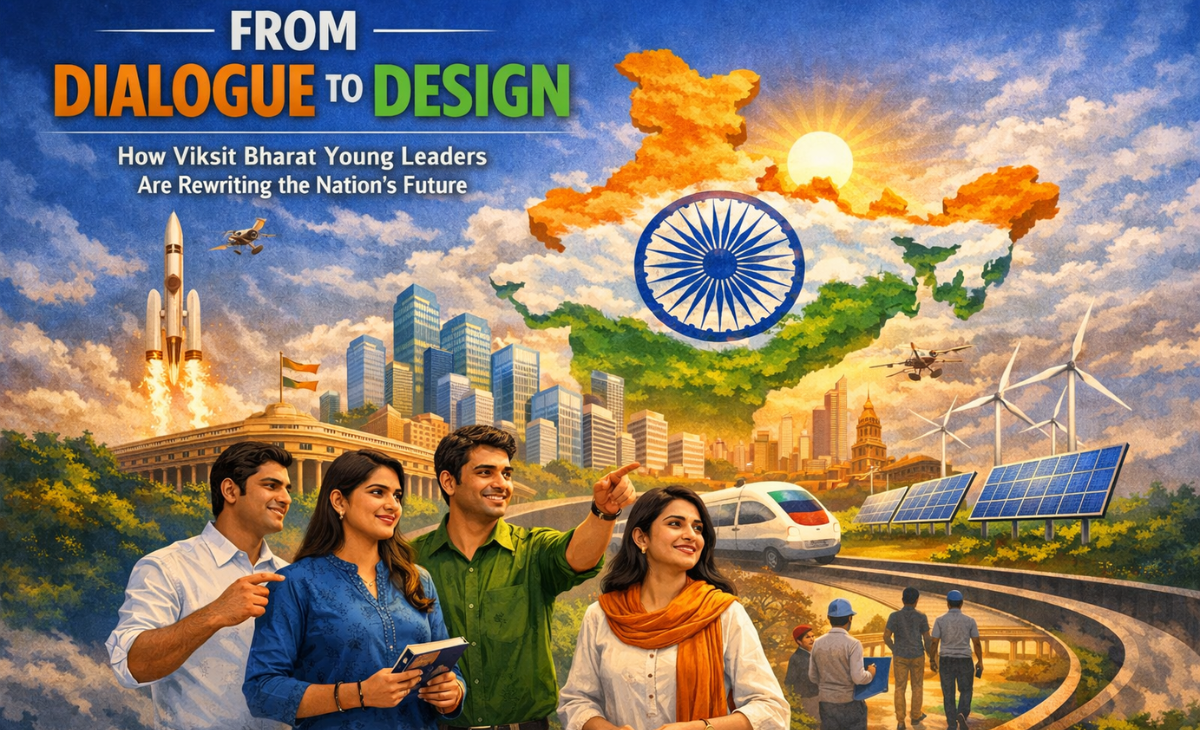
Viksit Bharat Young Leader Dialouge- Where Dialogue Becomes Design, against this backdrop, the Viksit Bharat Young Leaders Dialogue held annually during the National Youth Festival and now expanding into its 2026 edition represents one of the most significant structural investments India has made in translating demographic potential into democratic participation. Viksit Bharat Young Leader Dialouge is not a youth consultation exercise. It is a merit-based, multi-stage platform through which young Indians between 15 and 29 years of age present concrete, actionable solutions to national challenges directly to the country’s highest leadership, including the Prime Minister.
The distinction matters enormously. India has no shortage of youth forums, student summits, and consultative panels where young voices are heard, acknowledged, and then respectfully set aside. Viksit Bharat Young Leader Dialouge is designed differently. Its selection process — encompassing essays, the Viksit Bharat Young Leader Dialouge quiz on the MY Bharat platform, and staged evaluations identifies not political affiliation or social connection, but genuine talent, innovative thinking, and commitment to public service.
Its four thematic tracks Cultural and Innovation, Viksit Bharat Challenge, Design for Bharat, and Hack for Social Cause are structured around real national problems in agriculture, sustainability, digital economy, and social impact, demanding that participants arrive not with opinions but with solutions.
This is the shift from dialogue to design. From being heard to being consequential. The Diaspora Dimension and Global India, Particularly significant is Viksit Bharat Young Leader Dialouge Diaspora Youth Track, which brings young Indians from more than 22 countries into the national conversation about India’s development trajectory.
This inclusion reflects a sophisticated understanding of what Viksit Bharat 2047 actually requires: not merely the mobilisation of domestic youth potential, but the integration of global perspectives, international experience, and cross-cultural innovation into India’s development thinking. The Indian diaspora is among the most economically successful and intellectually productive communities in the world. Connecting its youngest generation to the national vision — and giving them a structured platform to contribute to it — builds a bridge between India’s domestic ambitions and its global presence that no foreign policy initiative alone can construct.
Universities Must Follow Where Viksit Bharat Young Leader Dialouge Leads, The logic of Viksit Bharat Young Leader Dialouge youth as architects rather than audiences, solutions rather than statements, merit over affiliation must now be embedded into the institutional fabric of Indian higher education. University governance bodies must create formal, consequential roles for student representatives in Academic Councils and curriculum committees. Co-designing education with students must become structural policy rather than occasional practice. Student-led innovation must receive dedicated resources, mentorship, and institutional recognition as a primary output of university life rather than an extracurricular afterthought.
The Sustainable Development Goals place youth participation at the heart of the 2030 agenda. National Education Policy 2020 has opened conceptual space for this transformation. Viksit Bharat Young Leader Dialouge has demonstrated that young Indians, when given a serious platform and a genuine audience, produce ideas worthy of national attention.
The Window That Will Not Stay Open, India’s demographic dividend is not permanent. It is a precisely timed window historically unprecedented, finite in duration, and irreversible once it closes. The young people filling India’s classrooms and competing for Viksit Bharat Young Leader Dialouge selection today will be at the peak of their professional capability in 2047. They are not the future of the Viksit Bharat vision. They are its present architects, waiting for the institutions around them to recognise that fact and act on it with the urgency it demands.
Bharat cannot transform if its youth remain at the margins of the decisions that define it. Viksit Bharat Young Leader Dialouge is proof that they need not. The question now is whether every institution in India university, ministry, governance body, and industry will build on that proof with the structural commitment it deserves.
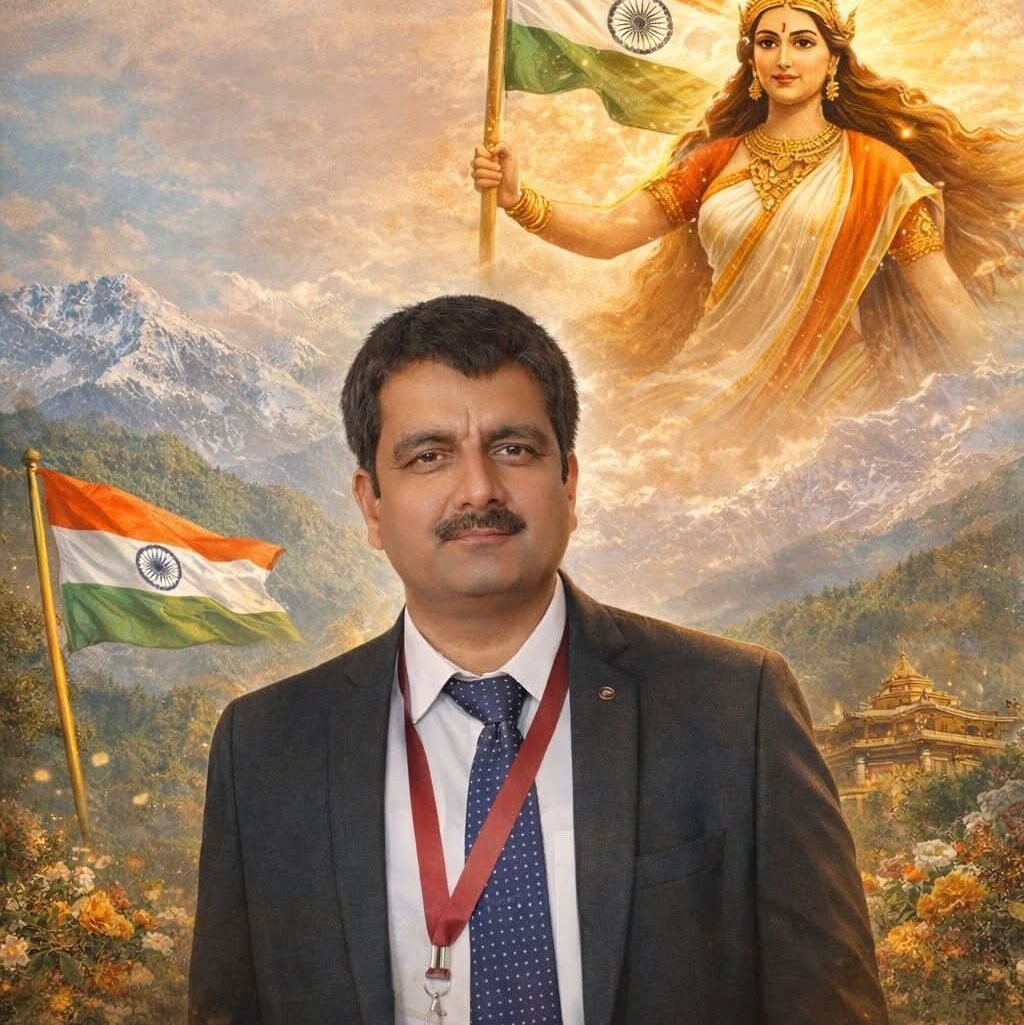
Dr. Amrik Singh Thakur
Director
Centre for Tibetan Studies Central University
of Himachal Pradesh Dharamshala 176215