
TNR Series – Part 8
Sourabh Sood
Shimla:
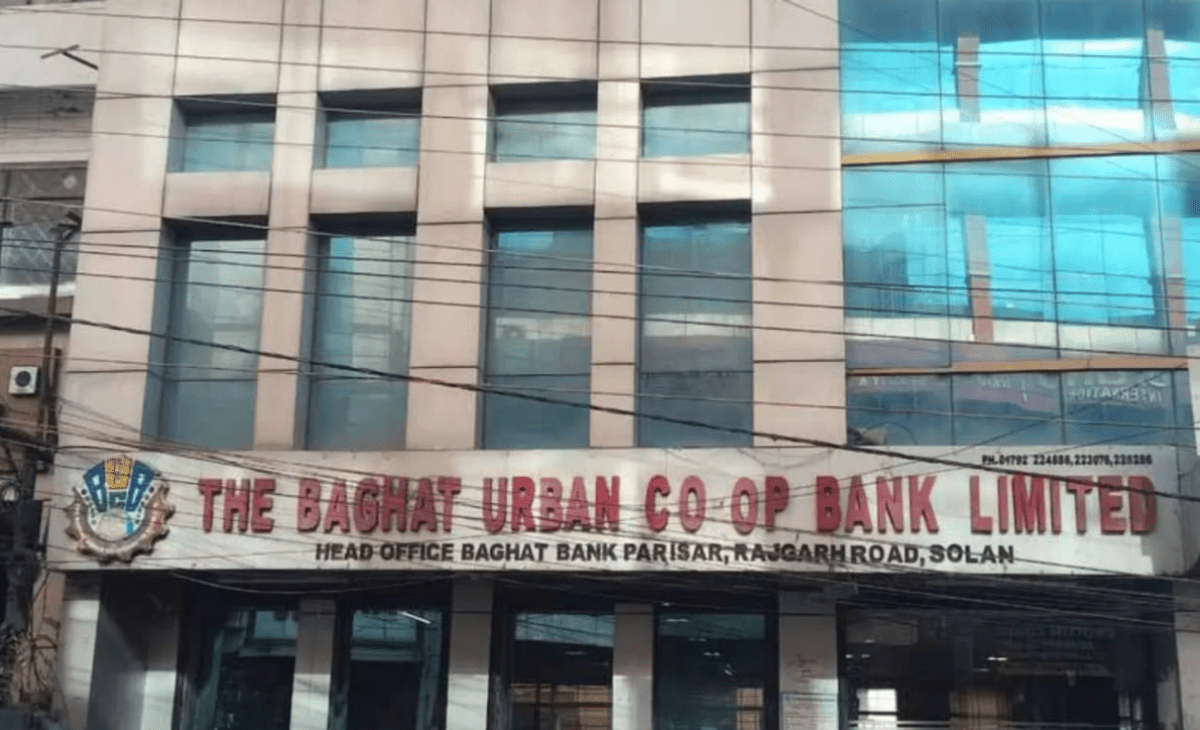
As the crisis inside the Baghat Urban Cooperative Bank becomes clearer with each passing week, the biggest question now staring at depositors, employees and regulators is what comes next. The institution is standing at a crossroads where every decision, whether by the RBI, Registrar, Board or the state government will determine whether the bank survives, collapses or is merged into another entity. The next few months will be the most decisive in its decades long history.
RBI may impose stricter restrictions
Inside the bank, the atmosphere is tense but strangely calm. Employees know that the RBI’s deadline is nearing and the recovery figures are nowhere close to expectations. With NPAs still hovering far above acceptable limits, the bank is running out of time to prove that it can stand on its own.
If the situation does not improve, the RBI may impose stricter restrictions, which could affect withdrawals, lending and the bank’s daily operations even further. The withdrawal limits, already a source of public frustration, could become tighter if financial health worsens.
Depositors want answers, not explanations
One of the most likely paths ahead is a deeper investigation, not just into borrowers but into the internal officials and board members who played a role in the collapse. There is growing pressure for FIRs, accountability and legal action. Depositors want answers, not explanations.
They want to know who allowed inflated valuations, who sanctioned risky loans and who benefitted from the political interference that shaped the bank’s decisions for years. If the authorities begin a formal inquiry, the findings may open a new chapter of consequences for those involved.
There is also talk within regulatory circles of a possible merger. Merging the bank with a stronger cooperative or commercial bank would protect depositors, but it would mean the end of Baghat Bank as an independent institution.
Such a move would require political consensus, financial guarantee and a complete restructuring of operations. While this option was unthinkable a few years ago, today it is one of the most realistic scenarios being considered quietly behind closed doors.
For depositors, the immediate future remains uncertain. Many hope that the government will intervene in some form, either through a financial support package or by pressuring the Board to speed up recoveries. But experts caution that public money cannot be used to cover private misconduct unless the guilty are held accountable first. Without meaningful recovery and strict action, no external intervention can ensure the long-term security of the institution. The stories of cooperative bank failures across the country show that trust, once broken, is difficult to rebuild.
Inside the bank, honest staff members find themselves in an impossible position. They must run daily operations, handle angry customers, respond to regulators and still perform internal duties related to recovery and documentation. They worry that if the bank collapses or merges, their job security will be uncertain. For many employees who spent their entire careers here, Baghat Bank is more than a workplace, it is part of their identity. Losing it would mean losing a part of their life’s work.
Meanwhile, many borrowers who regularly repaid their loans fear being caught in the storm created by others. They worry that stricter rules may make it harder for them to continue business smoothly, even though they never contributed to the crisis. Banks rely on trust and once that trust cracks, even honest customers get affected.
Recovery will depend on various actions
Looking ahead, the road to accountability will be long and complex. Recovery will depend on legal action, enforcement, valuation corrections and strengthened monitoring. The political influence that shaped the bank for decades must be removed from its functioning if the institution is to survive. Regulators may insist on structural reforms, new leadership and stricter internal controls as part of any revival plan.
The future of Baghat Bank now rests on whether the system chooses transparency over protection and truth over convenience. The public deserves answers and the depositors deserve their peace of mind. The bank can emerge from this crisis only if those responsible from the biggest defaulters to the officials who enabled them are held to account. Without that, the story of Baghat Bank will remain not just a financial tragedy but a warning for every cooperative institution in the country.