
Munish Sood
MANDI:
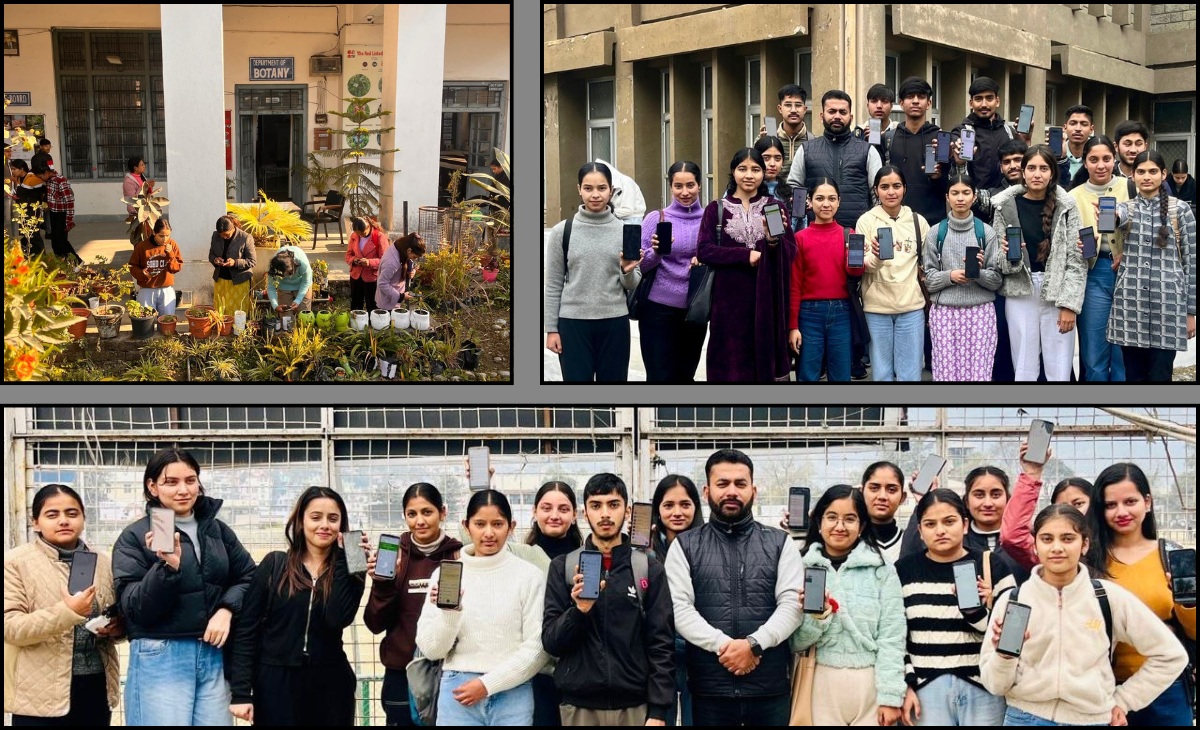
In a significant stride towards environmental research and experiential learning, the Department of Environment Science at Vallabh Government College (VGC) at Mandi in Himachal Pradesh has launched a comprehensive Campus Biodiversity Documentation Project to scientifically record the biological diversity within the college campus using mobile technology.
The initiative is being implemented through iNaturalist, a globally recognised citizen-science platform, and actively involves undergraduate students in field-based ecological observation, digital documentation and scientific data validation. Students are trained to capture geo-referenced photographic records of flora and fauna across the campus, which are then uploaded to the global database, contributing to international biodiversity monitoring and conservation efforts.
Welcoming the initiative, Vallabh Government College Principal Dr Sanjeev Kumar described the project as a strong example of outcome-based education and environmental responsibility. He said the programme effectively integrates classroom learning with hands-on scientific practice, while also sensitising students towards biodiversity conservation and sustainable environmental management.
The project has already recorded notable achievements. So far, 547 verified observations representing nearly 250 species have been documented, with active participation from 199 student contributors. The records span a wide range of taxonomic groups, including plants, mammals, birds, insects, fungi and reptiles, reflecting the ecological richness and natural diversity of the college campus.
Highlighting the academic and scientific significance of the initiative, project coordinator and Assistant Professor in the Department of Environment Science, Dr Manoj Thakur, said the project was conceptualised to introduce students to citizen science and contemporary biodiversity assessment tools.
He explained that through iNaturalist, students gain practical training in species identification, ecological surveying and ethical data reporting, while understanding how local-level observations contribute to global conservation science. He added that special emphasis was placed on accurate classification of cultivated and captive species to ensure data integrity and scientific reliability.
The quality of documentation carried out by students has also received international recognition, with several contributions being featured and appreciated in a global iNaturalist community video, underscoring the impact and credibility of the work.
The Department of Environment Science plans to continue the initiative on a long-term basis, aiming to develop a baseline biodiversity inventory of the campus. This database is expected to support future academic research, conservation planning and institutional environmental initiatives, while strengthening student engagement with real-world ecological monitoring and sustainability practices.