

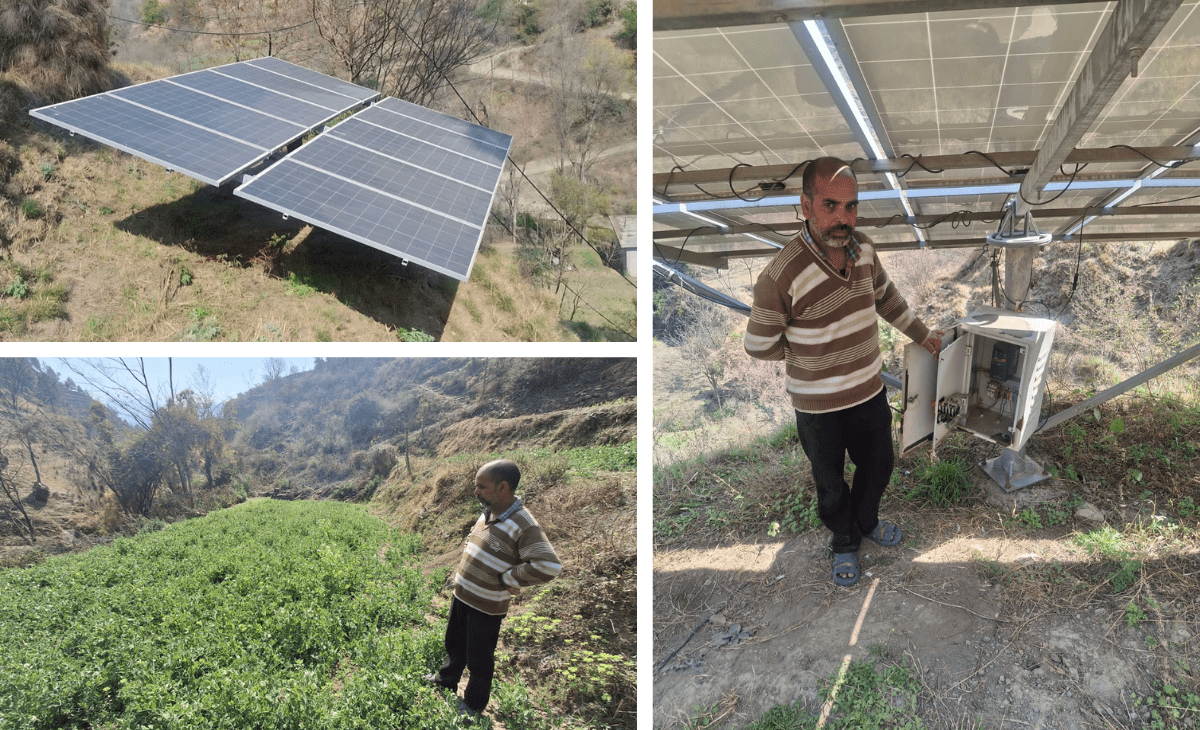
Farmer from Kamaksha village earns up to ₹4 lakh annually after adopting solar-powered irrigation and diversified crops
Munish Sood
Mandi
A farmer from Kamaksha village in the Karsog subdivision of Mandi district has transformed his once barren farmland into a thriving agricultural enterprise by adopting solar-powered irrigation and modern cropping practices. The initiative has significantly increased farm productivity and now generates an annual income of up to ₹4 lakh for the family.
Chhajju Ram Verma, who owns around 25 bighas of agricultural land, had long struggled with water scarcity. For years, cultivation depended largely on rainfall, limiting crop choices and resulting in low yields. The lack of reliable irrigation meant that large portions of the land often remained uncultivated.
The situation began to change after a solar power system was installed on the farm, enabling the operation of irrigation pumps and ensuring a steady supply of water to the fields. With a reliable irrigation facility in place, the farmer gradually expanded cultivation and shifted towards high-value crops.
Today, the once dry fields are producing a variety of seasonal vegetables including peas, tomatoes, capsicum and green chillies. In addition to vegetable cultivation, Chhajju Ram has also developed a plum orchard, creating an additional stream of income and improving the overall sustainability of the farm.
Improved irrigation and better crop management practices have significantly boosted productivity. According to the farmer, the farm now generates an annual income of approximately ₹3 to ₹4 lakh, marking a substantial improvement from earlier years when income remained uncertain and heavily dependent on monsoon rains.
The transformation has not only strengthened the family’s financial stability but has also enabled them to focus more on education and future opportunities for their children. Chhajju Ram says access to reliable irrigation has made farming more predictable and economically viable.
Agriculture experts note that the integration of renewable energy with farming practices is gradually emerging as a practical solution for farmers in water-scarce regions, particularly in hilly areas where electricity access and irrigation infrastructure often remain limited.
Chhajju Ram’s journey reflects how the adoption of innovative solutions and diversified cropping patterns can help farmers turn challenging conditions into sustainable livelihoods.
The solar power unit installed on the farm was supported under a government assistance programme, which covered a major portion of the installation cost, making the technology accessible to small farmers.