

5 others granted bail
S Gopal Puri
New Delhi:
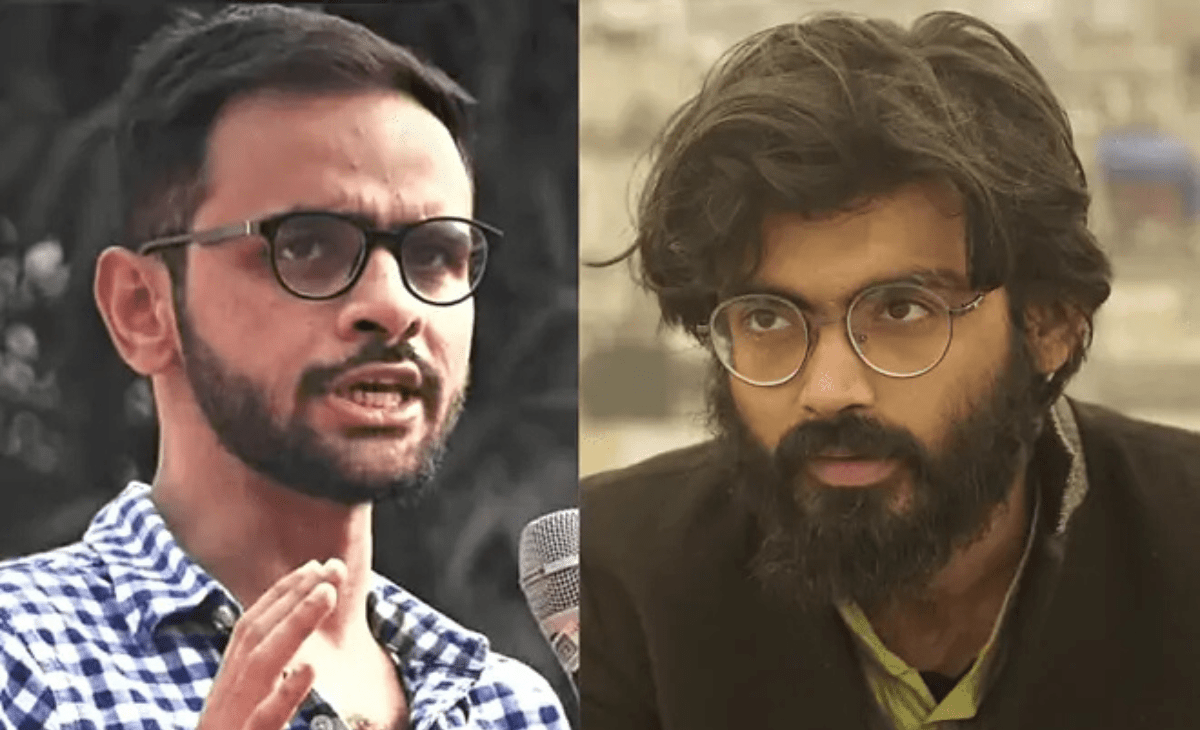
The Supreme Court on Monday refused to grant bail to student activists Umar Khalid and Sharjeel Imam in a case linked to the alleged larger conspiracy behind the February 2020 Delhi riots, citing material indicating the existence of a criminal plot. Both have been lodged in jail for over five years under the stringent Unlawful Activities (Prevention) Act (UAPA).
A bench led by Justice Aravind Kumar, while pronouncing the verdict, upheld the Delhi High Court’s order denying bail to the two accused. However, the apex court granted bail to five other co-accused — Gulfisha Fatima, Meeran Haider, Shifa Ur Rehman, Mohd Saleem Khan and Shadab Ahmed — taking into account the facts specific to their roles.
Khalid, Imam and the five others had approached the Supreme Court challenging the high court’s refusal to grant them relief in a case registered by the Delhi Police under the UAPA, alleging their involvement in a “larger conspiracy” behind the communal violence that erupted in northeast Delhi in February 2020.
Police cite well-planned pan-India conspiracy
According to the police, the acts attributed to the accused were not spontaneous protests but part of a well-planned, pan-India conspiracy aimed at destabilising the country. Investigators have claimed the alleged plot was designed to coincide with the official visit of then US President Donald Trump, with the objective of drawing international media attention and globalising opposition to the Citizenship Amendment Act (CAA).
The Delhi Police have maintained that the CAA issue was deliberately chosen as a “radicalising catalyst”, camouflaged under the banner of peaceful protest, and was part of a broader plan involving “economic strangulation” and a so-called “regime change” agenda.
The seven accused—Umar Khalid, Sharjeel Imam, Gulfisha Fatima, Meeran Haider, Shifa Ur Rehman, Md. Saleem Khan and Shadab Ahmed—have been booked under Section 13 of the UAPA, 1967, along with multiple provisions of the Indian Penal Code, including criminal conspiracy, sedition, promoting enmity between groups and making statements conducive to public mischief. The charges allege actions questioning the sovereignty, unity and territorial integrity of India.
Delhi riots clamed 53 lives
The riots, which broke out amid protests against the CAA and the proposed National Register of Citizens (NRC), claimed 53 lives and left over 700 people injured.
Meanwhile, the case has drawn international attention. Newly sworn-in New York’s first Muslim Mayor Zohran Mamdani recently wrote a letter expressing support for Umar Khalid. Separately, a group of US lawmakers has written to India’s Ambassador to the United States, Vinay Kwatra, urging a “fair and timely trial” for Khalid in accordance with international law.
Opposing bail, the Delhi Police described the 2020 violence as an “orchestrated, pre-planned and well-designed” attack on the Indian state, asserting that it was executed under the guise of peaceful protest and constituted a serious threat to national security.