
Dr. Amrik Singh Thakur
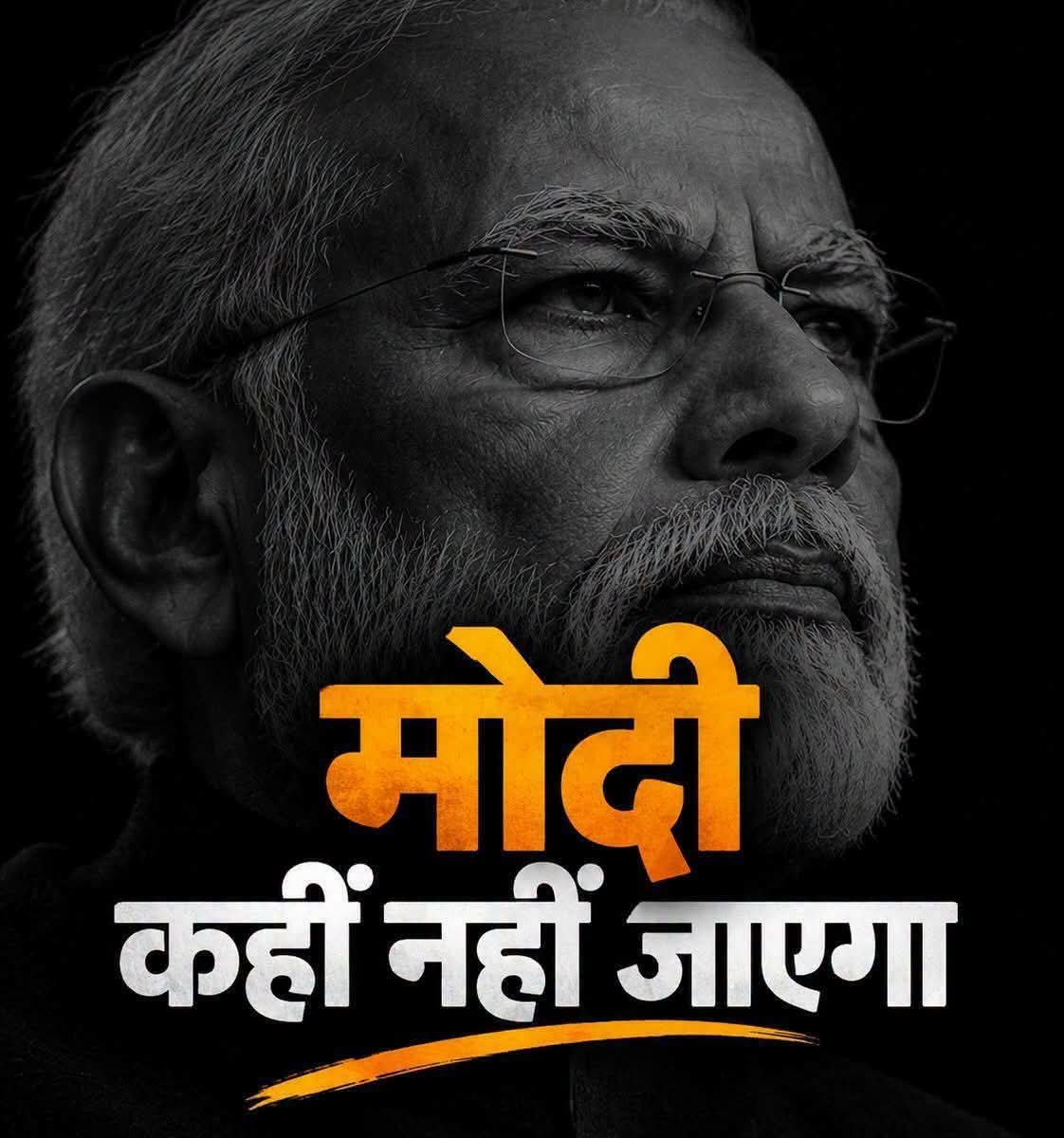
In the complex tapestry of global political economy, transformative leaders are judged not by the rhetorical eloquence of their speeches, but by the tangible, structural changes they imprint on the lives of their poorest citizens. For decades, traditional economic commentary viewed India through a lens of persistent poverty, bureaucratic inertia, and systemic leakages. Today, that narrative stands completely inverted. Under the stewardship of Honourable Prime Minister Shri Narendra Bhai Modi, a quiet, monumental revolution has swept across the length and breadth of the nation. The message echoing from the verdant fields of rural Bharat to the bustling digital hubs of urban India is resolute: Modi kahee nahi jaayega because his vision is deeply anchored in the lived reality of 1.4 billion people.
At the heart of this enduring political and socio-economic trust lies a comprehensive, human-centric development model colloquially known as holistic Modinomics. This strategy does not merely pursue top-down macro-economic growth; it deliberately builds bottom-up resilience. A recent landmark report by the World Bank brought this seismic shift into sharp international focus, revealing a statistic that stunned global policy-makers: India’s extreme poverty rate defined by the international benchmark of living on less than $2.15 a day has dramatically plummeted from 27.6% in 2011–12 to an astonishing 2.6%.
To understand the sheer magnitude of this achievement is to appreciate the silent liberation of over 300 million human beings. In little over a decade, a population larger than the entire United States has been safely lifted out of the suffocating abyss of dehumanizing penury. This is not a mere sterile metric recorded on institutional spreadsheets; it represents the greatest surge in human dignity and self-respect in the history of independent Bharat.
Historically, the true sting of extreme poverty was never limited to the physical pang of an empty stomach. It was an all-encompassing, generational trap defined by leaky thatched roofs during torrential monsoons, the humiliation of mortgaging ancestral land or meager family gold during medical emergencies, and lifelong submission to predatory local moneylenders. According to Engel’s Law in economics, when a household expends nearly all its income simply on basic sustenance, it signifies acute deprivation. Recent findings from the National Sample Survey Office (NSO) Household Consumption Expenditure Survey (HCES) demonstrate that, for the first time in Indian history, food expenditure has dropped to 46% of total household budgets in rural areas and 39% in urban centers. Indian citizens are no longer engaging in a daily battle for basic calories; they are allocating their hard-earned income toward education, healthcare, permanent housing, modern communication, and lifestyle enhancements. The historical chasm between rural and urban India is rapidly closing.
The foundational bedrock of this structural metamorphosis was laid with the launch of the Pradhan Mantri Jan Dhan Yojana. For decades, formal banking was an unreachable privilege for over half of India’s population due to lack of documentation or minimum balance requirements. By opening over 500 million zero-balance bank accounts, the government decisively shattered the corrupt intermediary ecosystem that historically siphoned off public welfare. Combined with digital identity (Aadhaar) and mobile connectivity, the JAM trinity enabled Direct Benefit Transfer (DBT). Whether it is the PM-Kisan Samman Nidhi empowering smallholder farmers, social security payouts, or daily wages, every single rupee now lands directly and transparently into the beneficiary’s bank account without leakage or middlemen.
Financial inclusion was subsequently paired with physical assets and social safety nets, radically altering the trajectory of rural life: Infant and Child Social Security: Initiatives like the Sukanya Samriddhi Yojana transformed the financial outlook for young girls, guaranteeing dedicated savings for education and securing infant social welfare from the very start of life.
Empowering Women and Families: The Pradhan Mantri Awas Yojana provided millions with concrete, permanent homes, shielding families from annual financial losses caused by damaged dwellings and granting poor households their first tangible real estate asset. Coupled with Ujjwala Yojana gas connections, electricity, and piped water under the Jal Jeevan Mission, the brutal physical labor traditionally borne by women was permanently eliminated.
Guarding the Vulnerable: To prevent families from sliding back into poverty, the government introduced a dual protective shield: free foodgrains for 800 million citizens through the PM Garib Kalyan Anna Yojana to eradicate hunger anxiety, and the Ayushman Bharat health protection scheme providing free medical coverage up to ₹5 lakh per family annually. Furthermore, Jan Aushadhi Kendras democratized access to high-quality, affordable generic medicines for all.
Youth Empowerment and Defense Forces: Through Skill India, millions of young Indians are equipped with market-relevant vocational training, aligning demographic potential with economic demand. Furthermore, targeted healthcare, housing, and financial security measures extended to armed forces personnel ensure that those protecting the nation’s borders enjoy absolute domestic stability.
This holistic empowerment has unleashed an aspirational wave across grassroots society. Today, a smallholder farmer, a daily-wage laborer, or a semi-urban artisan actively participates in the modern digital economy. Rural homes feature satellite dishes, color televisions, energy-efficient refrigerators, and two-wheelers parked in clean lanes.
This robust domestic reality provides the most logical explanation for India’s economic resilience. While major global economies struggle against supply chain disruptions, geopolitical conflicts, and inflationary pressures, India continues to chart a formidable growth rate exceeding 7.8%. The core engine of Indian growth is no longer confined to financial hubs or corporate indices; it is powered by hundreds of millions of newly empowered consumers entering the market. When millions of permanent homes are constructed, the demand cycles for cement, steel, bricks, and paint spin continuously. When electricity reaches every hamlet, appliances flood small-town markets. This immense domestic purchasing power has built an impenetrable fortress against global recessions.
Prime Minister Shri Narendra Modi’s governance paradigm demonstrates that when social welfare is tied to asset creation, technological transparency, and human dignity, the results are permanent and self-sustaining. The decline of extreme poverty to 2.6% is not an accident of circumstance—it is the triumphant narrative of a nation transitioning from helpless dependency to self-reliant dignity. It is precisely why his development model remains deeply cherished, proving beyond doubt that the architect of this historic transformation is seamlessly aligned with the future of India.
Dr. Amrik Singh Thakur