
Munish Sood
Mandi
The high-altitude town of Kaza came alive with colour, music and traditional rituals on Tuesday as the three-day state-level Ladarcha Fair opened with a grand procession, showcasing the unique religious and cultural heritage of Spiti and recalling the valley’s centuries-old links with the wider Trans-Himalayan region.
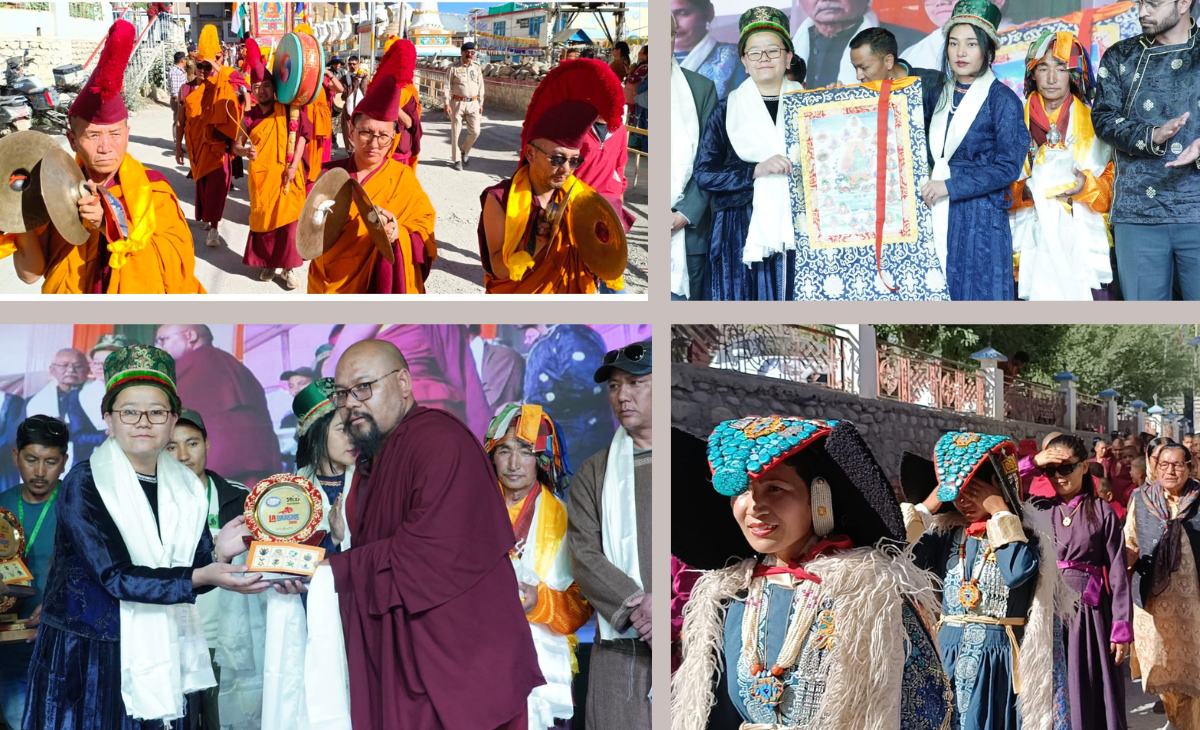
Lahaul-Spiti MLA Anuradha Rana joined the traditional procession from Kaza Gompa to the Ladarcha Fair ground. Lamas and Chomos from different monasteries, local residents, cultural groups and artistes participated in the procession, turning the opening of the historic fair into a vibrant display of Spiti’s Buddhist traditions and community life.
Rana formally inaugurated the fair by lighting a lamp before Lord Buddha. She said fairs and festivals were an integral part of the region’s rich cultural heritage and played an important role in strengthening brotherhood, social harmony and community bonds.
The opening ceremony was followed by traditional cultural performances, including Buchen and Tashi dances, which drew considerable interest from visitors. Women’s groups and self-help groups displayed local products at their stalls, while various government departments put up exhibitions highlighting their activities and schemes.
From a trade rendezvous to a cultural festival
The significance of Ladarcha, however, goes much deeper than its present-day celebrations.
Historically, Ladarcha was a major seasonal trading and barter fair in Spiti, where communities separated by some of the most difficult mountain terrain in the Himalayas came together during the short summer trading season.
The original Ladarcha ground was located near Chicham in upper Spiti, and the fair was traditionally held in July. Traders and communities from Spiti, Pin Valley, Ladakh, Tibet, Rampur-Bushahr and Kullu would gather there to exchange goods.
The fair was closely linked to the rhythm of life in the cold desert. With winter cutting off the high valleys for several months, the summer trading window was crucial for communities to obtain supplies that could not be produced locally.
Traders from Ladakh, including Changpa nomads, traditionally brought sheep, wool and valuable pashmina after crossing high mountain routes. Traders from Tibet brought commodities such as salt, rice and maize, while merchants from the lower Himalayan areas brought sugar, cloth, oil and other essential goods.
Spiti and Pin Valley, in turn, contributed their own products, including barley, livestock and the famed Chamurti horses. The exchange was largely based on barter, making the fair an important economic lifeline for communities living in one of the most remote parts of the Himalayas.
But Ladarcha was never only about commerce. The gathering also provided an important opportunity for people from distant valleys and trading communities to meet, interact and celebrate. Music, dance and festivities accompanied the trading activities, turning the annual marketplace into an important social occasion.
A tradition disrupted by history
The old trading system changed dramatically after the 1962 India-China war, when cross-border movement between India and Tibet was disrupted. With the traditional routes no longer functioning as they had in the past, the original character of the fair gradually disappeared.
The Ladarcha tradition was later revived as a state-level fair, with the venue shifted to Kaza, the administrative headquarters of Spiti. Today, the fair has evolved from a commercial marketplace into a celebration of the region’s cultural identity while retaining the memory of its historic trading past.
The present-day Ladarcha brings together people and cultural traditions associated with Spiti, Ladakh, Kinnaur, Lahaul, Kullu and other parts of Himachal Pradesh. What was once an exchange of salt, wool, grain, livestock and other essential commodities has now expanded into an exchange of culture, handicrafts, local products, music and traditional knowledge.
Keeping Spiti’s heritage alive
The fair also provides an important platform for local artisans, women’s groups, self-help groups and small producers to showcase and market traditional products. At a time when traditional livelihoods and indigenous knowledge face growing challenges, such events offer communities an opportunity to keep their cultural practices visible and economically relevant.
The participation of lamas and cultural groups from different parts of Spiti adds a strong spiritual dimension to the event, while traditional dances and performances provide younger generations with an opportunity to remain connected with their heritage.
The Chamurti horse, traditionally associated with the high-altitude landscape of Spiti and particularly the Pin Valley, is another reminder of the region’s old trading economy. Known for its ability to survive and move through harsh high-altitude conditions, the breed was historically an important part of the movement of people and goods across the Himalayan terrain.
For centuries, the mountains around Spiti were not merely barriers. They were also routes of movement, trade and cultural exchange. Ladarcha emerged from that world.
Today, caravans and traditional barter may no longer define the fair, but the gathering continues to preserve the memory of those connections.
The three-day celebration in Kaza therefore represents more than a colourful annual festival. It is a living reminder of a time when traders, monks, shepherds and communities crossed some of the world’s highest mountain passes to meet at a common ground.
From a historic marketplace to a cultural meeting point, Ladarcha continues to keep alive Spiti’s centuries-old Trans-Himalayan identity.