
Atul Thakur
Sarkaghat
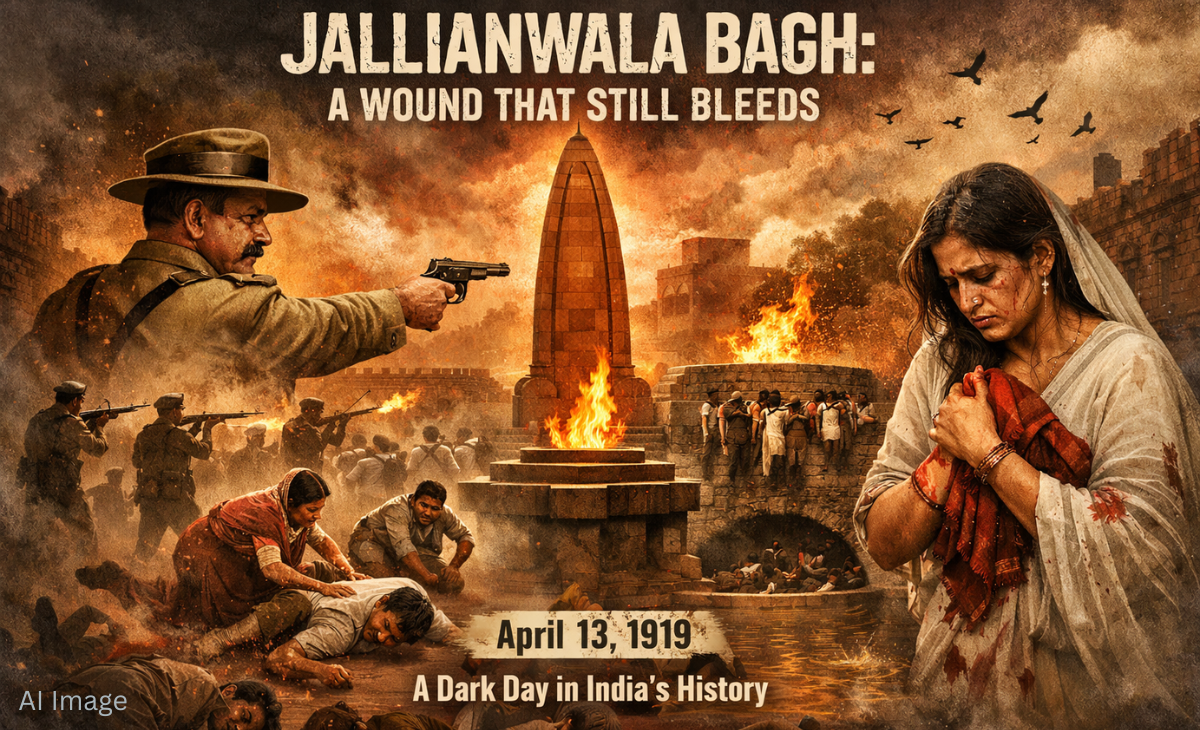
April 13, 1919—this date is not just a line in history, but a scar etched deep into the soul of India. Each year, the anniversary of the Jallianwala Bagh massacre forces us to confront a truth we cannot forget. Today, the site in Amritsar stands as a memorial, yet its soil still seems to echo with the cries, fear, and helplessness of that fateful day.
It was Baisakhi, a day of joy and festivity. Families had gathered, some to celebrate, others to peacefully protest against the oppressive Rowlatt Act. No one imagined that within moments, the place would transform into one of the darkest chapters of colonial rule.
As evening fell, General Dyer marched in with his troops. Without warning, without giving the crowd a chance to disperse, he ordered open fire. Bullets rained down on men, women, and children trapped within the walled garden. Panic-stricken people ran, screamed, and tried to escape—but the only exit was a narrow passage, blocked by soldiers. In minutes, laughter turned to silence, and Jallianwala Bagh became a graveyard.
The most haunting image remains the “Martyrs’ Well”, where hundreds jumped in desperation to save themselves. That well still stands—quiet, yet carrying the terror of that day. The bullet marks on the walls remain visible, not as relics of history but as living testimony to brutality.
The exact death toll remains disputed. The British downplayed the numbers, while Indian sources recorded far higher casualties. This difference is not just about figures—it reflects the attempt to suppress truth.
The massacre was not merely an incident; it became a turning point in India’s freedom struggle. It ignited a wave of resistance across the nation, strengthening the resolve for independence. Yet beyond politics, it was a human tragedy—families shattered, children orphaned, mothers left grieving forever.
Today, the eternal flame at Jallianwala Bagh reminds us that sacrifice is never in vain. Every April 13, people gather to pay homage. But true tribute lies not in remembrance alone—it lies in learning from history. The massacre warns us that when power turns tyrannical, humanity is the first casualty.
Jallianwala Bagh is not just a place—it is an emotion, a reminder, a question that pierces our conscience:
Have we truly understood the meaning of that sacrifice?
Atul Thakur