
Munish Sood
Mandi
In a move that blends administrative reform with political signalling, the Himachal Pradesh government led by Chief Minister Sukhvinder Singh Sukhu has introduced a formal dress code for all government employees and officers—an unprecedented step that is already generating debate across bureaucratic and political circles.
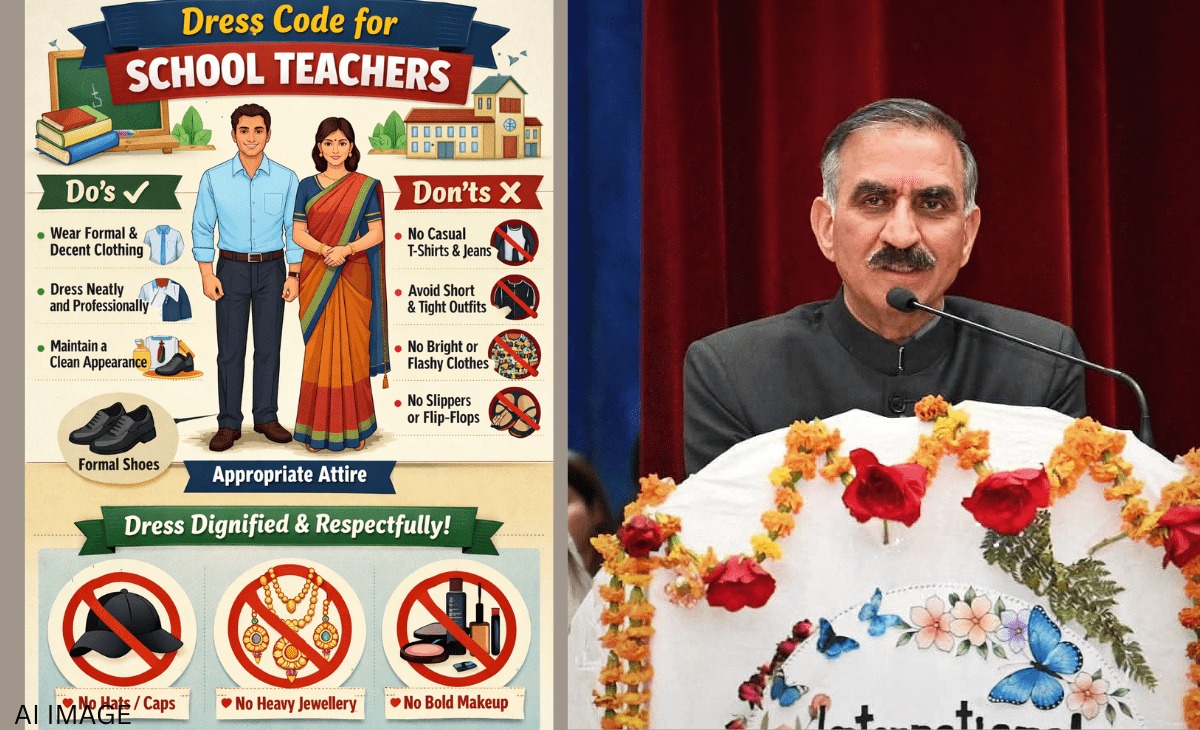
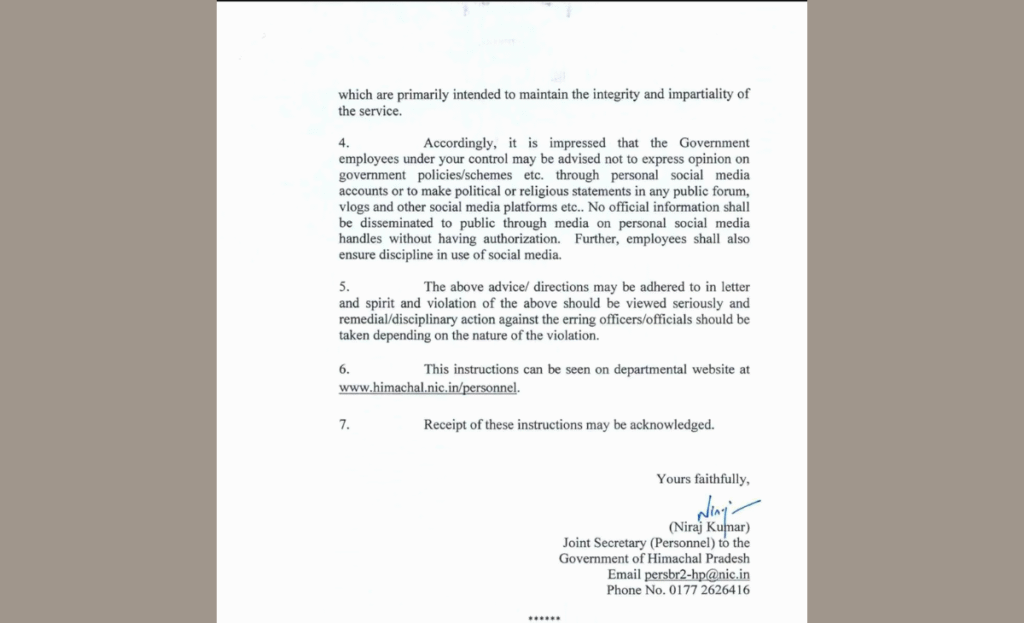
As per the notification issued by the state’s Personnel Department, male employees will now be required to attend offices in formal shirts and trousers. Female employees have been directed to wear sarees or salwar suits, with an additional provision allowing them to opt for collared shirts paired with formal trousers. The order clearly prohibits casual attire such as jeans, T-shirts, and party wear in government offices.
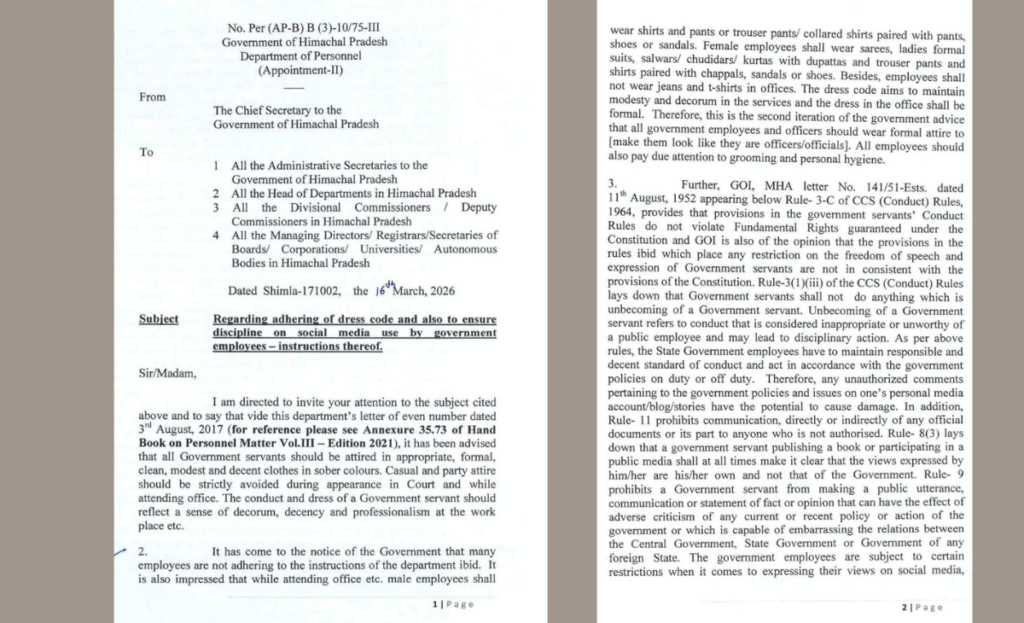
The directive has been issued by Joint Secretary (Personnel) Neeraj Kumar and is to be implemented across all departments with immediate effect.
Governance Reform or Political Optics?
While the government is expected to project the move as an effort to promote discipline and professionalism within the administrative system, political observers believe the timing and nature of the decision point to a broader narrative.
The Sukhu government has been navigating financial pressures and governance-related scrutiny in recent months. In this context, the dress code directive is being seen by some analysts as an attempt to reinforce a message of control, order, and administrative seriousness.
“This is as much about perception as it is about policy. Such decisions often aim to create a visible shift in governance culture,” a senior political analyst remarked.
Opposition Likely to Question Priorities
The opposition is expected to raise questions over the government’s priorities, potentially framing the move as symbolic rather than substantive. Critics may argue that issues such as employment generation, fiscal stability, and infrastructure development deserve greater attention than regulating employee attire.
At the same time, employee unions are likely to weigh in, with possible concerns around personal freedom and practicality, especially given the state’s diverse climatic conditions.
A First in India’s Governance Framework
Dress codes are commonly enforced in sectors such as education, corporate offices, judiciary, and aviation. However, implementing a uniform dress code across government departments is largely without precedent in India.
This positions Himachal Pradesh as a test case for a governance approach where visual discipline is being institutionalised alongside administrative functioning.
The Road Ahead
The success or failure of this directive will depend on its acceptance among employees and the government’s handling of any pushback. What is certain, however, is that the decision has already placed the Sukhu government at the centre of a wider conversation—one that goes beyond attire and touches upon governance style, public perception, and the balance between discipline and individual choice.
As reactions begin to emerge, the policy could either evolve into a model for administrative reform or become a fresh flashpoint in the state’s political landscape.