

Munish Sood
Mandi
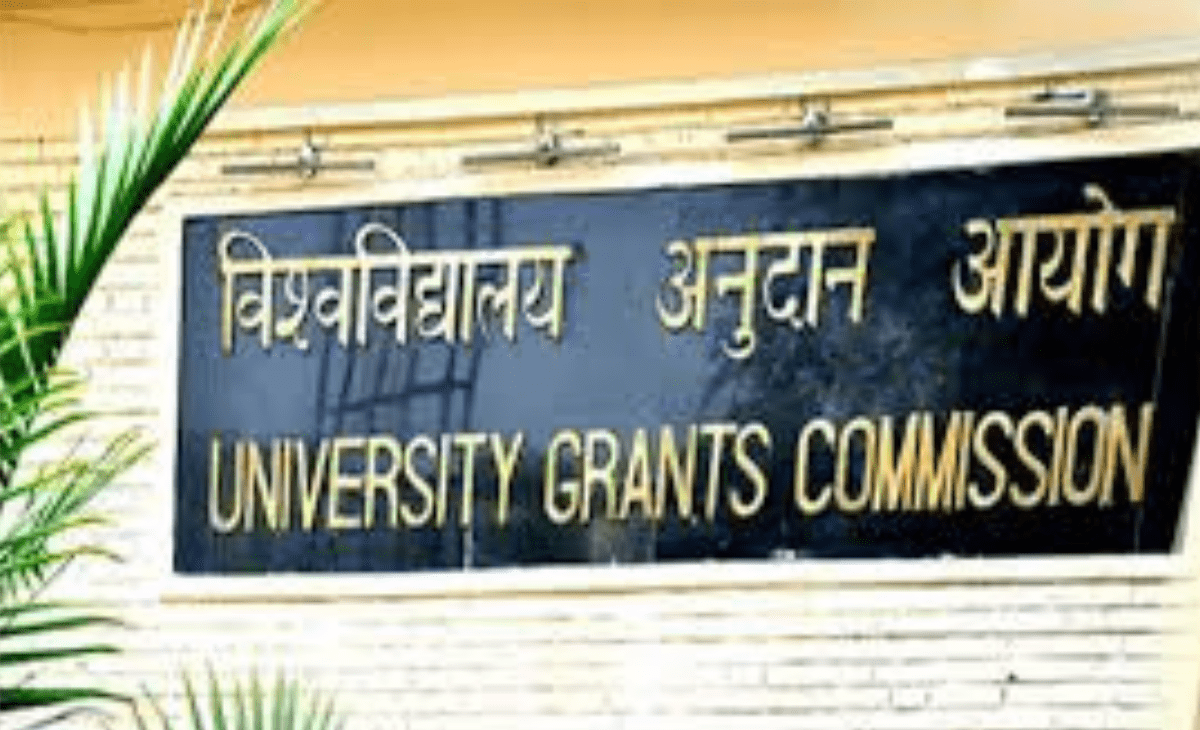
The University Grants Commission (UGC) has formally notified the Promotion of Equity in Higher Education Institutions Regulations, 2026, introducing a new regulatory framework aimed at eliminating discrimination and ensuring equal opportunity across colleges and universities in India.
Under the new rules, every higher education institution (HEI) is mandated to establish an Equal Opportunity Centre (EOC) and an Equity Committee to receive, examine and act upon complaints related to caste, religion, gender, disability and social discrimination. Institutions are also required to operate a 24×7 Equity Helpline, deploy Equity Squads to monitor vulnerable campus areas, and nominate Equity Ambassadors to assist students and staff in reporting incidents.
According to data presented in Parliament, complaints related to caste-based discrimination in universities have surged by 118 percent over the past five years, highlighting growing concerns over campus equity.
While the government maintains that the move is intended to create safer and more inclusive campuses, the notification has triggered a nationwide debate over academic freedom, procedural fairness and the possibility of misuse.
Education Minister Rajiv Anand defended the regulations, stating:
“These rules strengthen the framework for equity and inclusion in line with the Supreme Court’s directives and the National Education Policy 2020. Higher education institutions must adopt these mechanisms to ensure that every student and staff member can study and work free from discrimination.”
⸻
Critics Warn of Imbalance and Misuse
However, the regulations have drawn sharp criticism from several quarters, particularly regarding perceived procedural imbalances.
“The regulations are well-intentioned, but the removal of provisions dealing with penalties for false complaints risks misuse,” said Advocate Saurabh Malhotra, a legal expert on education law.
“Without safeguards, allegations could disrupt lives and careers before due process has a chance to function.”
⸻
Retired Educationists Flag Risk of Overreach
Reacting to the notification, I.D. Sharma, retired Principal of a Government College in Himachal Pradesh, said the policy must be viewed with caution.
“No one disputes the need to remove discrimination from educational spaces. But creating permanent surveillance structures inside universities without strong safeguards for due process can be dangerous. Campuses should remain spaces of free thought, debate and learning — not zones of constant monitoring,” Sharma said.
He warned that excessive bureaucratic control could erode institutional autonomy.
“If every classroom interaction is viewed with suspicion, it will damage the teacher-student bond and weaken the academic ecosystem.”
Prof. Chaman Mahajan, also a retired Principal of a Government College in Himachal Pradesh, echoed similar concerns.
“Equity must be ensured, but justice must be balanced. Committees should act as facilitators of harmony, not enforcement squads. Otherwise, campuses may slowly turn into conflict zones rather than centres of knowledge,” Mahajan said.
He added:
“True inclusion is built through awareness and sensitivity, not fear and punishment.”
⸻
Students Voice Anxiety Over Career and Reputation
Among students, the regulations have generated mixed reactions. Many welcome stronger protection mechanisms, while others fear the long-term impact of complaints — especially if found to be unverified.
Ajay Thakur, a postgraduate student from Himachal Pradesh preparing for UGC-NET, said the rules have created uncertainty among aspirants.
“Students already face enormous pressure from competitive exams and shrinking opportunities. Now there is fear that even an unproven complaint could affect our academic record, reputation and future career,” Thakur said.
He added:
“Protection from discrimination is important, but protection from false accusations is equally important. The system must ensure accountability for everyone.”
Smriti Pathak, a final-year student at a government college in Himachal Pradesh, said campuses need support systems, not surveillance culture.
“Every student wants a discrimination-free campus. But the rules should not presume guilt before investigation. Young people need counselling, guidance and dialogue — not constant monitoring,” she said.
She further added:
“Universities should unite students, not divide them into permanent categories of victims and accused.”
⸻
Far-Reaching Impact on Higher Education
Under the new framework, institutions will be required to submit periodic compliance reports to the UGC. Non-compliance could invite regulatory action, including withdrawal of grants and recognition.
From the start of the academic year, universities and colleges are expected to:
• Constitute Equity Committees with mandated representation from SC, ST, OBC, persons with disabilities and women
• Establish Equal Opportunity Centres to provide guidance, awareness and support services
• Maintain bi-annual reporting and submit annual compliance records to the UGC
Non-compliant institutions risk losing eligibility for UGC grants or even recognition.
Education policy observers say the real test will lie in implementation.
“Equity cannot be enforced through fear,” said retired principal I.D. Sharma.
“It has to be built through trust, awareness and education.”
As campuses across India prepare to roll out the new system in the upcoming academic session, the debate over fairness, institutional autonomy and student rights is expected to intensify nationwide.