
Munish Sood
Kullu:
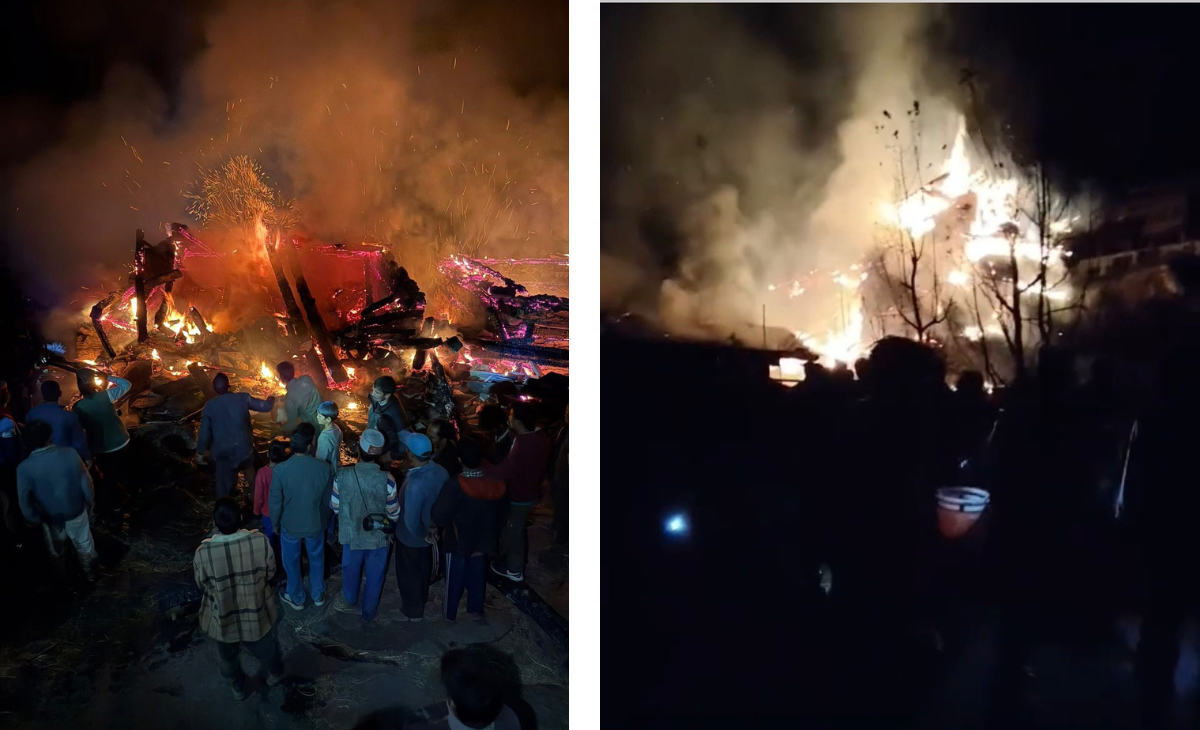
What could have turned into a devastating blaze that wiped out an entire century-old Himachal Pradesh village was narrowly averted after timely intervention by youth volunteers, who managed to stop a fast-spreading fire from reaching residential homes in Pekhri village of Kullu district’s Banjar subdivision, and that too without any assistance from the fire department.
At least four cowsheds were reduced to ashes after the fire broke out around 7 pm in a cluster of structures used for storing fodder and housing livestock. The flames spread rapidly due to dry hay and wooden construction, creating panic among residents as the fire moved dangerously close to nearby buildings.
The situation soon became critical as the blaze approached another structure located just a few feet away. Given Pekhri’s dense settlement pattern and traditional wooden houses, villagers said even a slight delay could have resulted in the fire engulfing the entire village within minutes.
Youths use portable water pump to douse flames
With no motorable road leading to Pekhri, fire tenders were unable to reach the site. In a decisive intervention, Bhanu and Chhina, two young men from a neighbouring village, carried a portable water pump nearly one kilometre on foot across steep and uneven terrain. Their effort proved crucial in controlling the flames.
Working alongside them, villagers formed human chains to draw water from nearby sources and used buckets, pipes and available tools to douse the fire. The collective response helped contain the blaze before it could spread to residential homes, preventing what residents described as an inevitable disaster.
No loss of life was reported in the incident, but the destruction of the cowsheds has caused substantial losses to the affected families, many of whom depend heavily on livestock for their livelihood.
Himachal Pradesh villages more vulnerable to fire in winter
The incident once again exposed the extreme vulnerability of remote Himachal Pradesh villages, where lack of road connectivity, absence of firefighting infrastructure, limited water storage and delayed emergency response make fire control a daunting challenge.
Experts and social organisations working in the region have stressed the urgent need for village-level fire preparedness. Suggestions include rainwater harvesting systems with dedicated fire-reserve storage of at least one lakh litres, along with portable firefighting equipment designed for rugged, road-less terrain.
“Himalayan villages are living heritage sites. Losing them to fire would mean losing centuries of culture, architecture and community life,” said a representative of a local voluntary organisation working on environment, education and sustainable tourism. The organisation said discussions were underway with vernacular architects and disaster-risk specialists to develop locally adaptable fire-safety solutions for remote villages, with pilot initiatives expected in the near future.
Recurring fires in Banjar region raise serious concerns
The Pekhri incident is not an isolated case. In recent months, the Banjar region of Kullu district has witnessed multiple destructive fires, including major blazes in villages such as Jhaniar and Tandi. In these incidents, dozens of traditional houses, cow sheds, fodder stores and even temples were destroyed, leaving several families homeless, often during harsh winter conditions.
Such recurring fires have emerged as a serious threat to Himachal Pradesh’s traditional architectural heritage, much of which survives only in remote pockets of Kullu and surrounding regions. These villages preserve centuries-old wooden craftsmanship, settlement patterns and building styles that form the cultural identity of the Himalayas.