
Remained at centre of Bangladesh’s fiercely contested politics for over three decades
Sunil Chadha
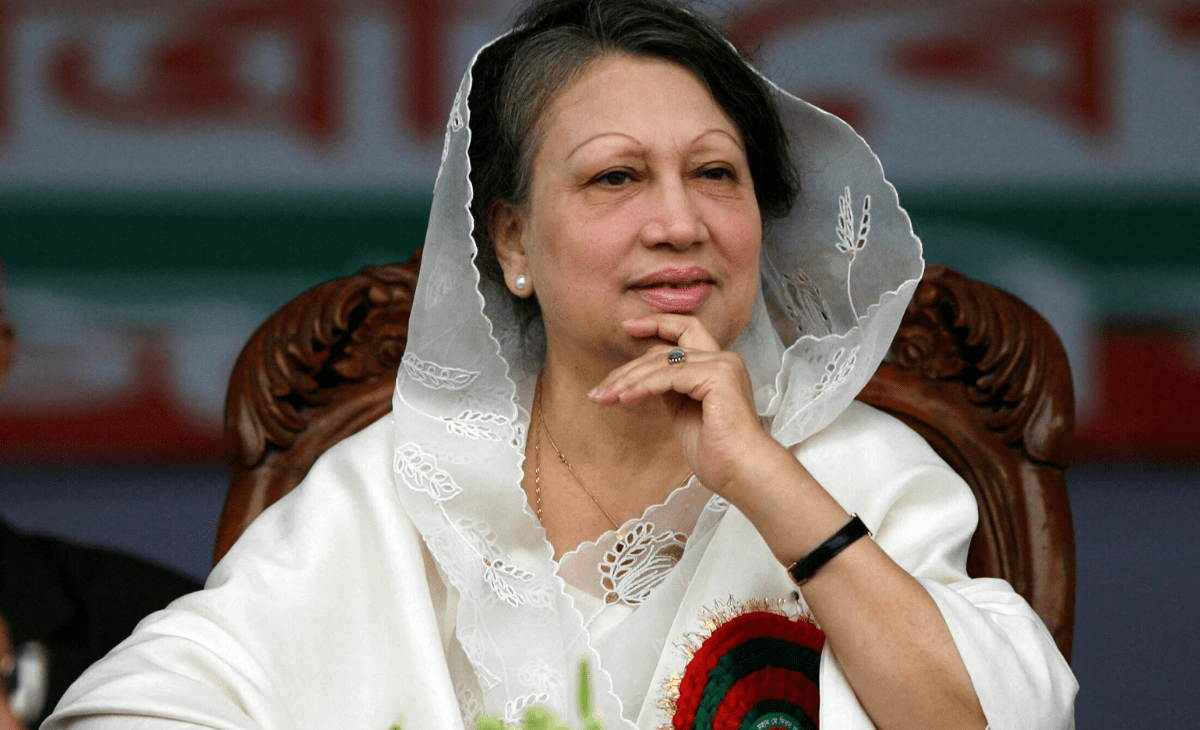
Former Bangladesh Prime Minister and Bangladesh Nationalist Party (BNP) chairperson Khaleda Zia passed away early Tuesday (December 30, 2025) morning, ending a political journey that shaped the country’s post-military democratic phase. She was 80 and had been battling prolonged illness. Khaleda breathed her last at 6 am at Dhaka’s Evercare Hospital, the BNP confirmed in a statement.
A towering yet polarising figure, Khaleda Zia remained at the centre of Bangladesh’s fiercely contested politics for over three decades, alternately ruling the country and leading the opposition with equal tenacity.
From captivity to centre stage
Khaleda Zia’s public life began not by choice but circumstances. During the 1971 Liberation War, she was placed under house arrest by the Pakistani Army as her husband, then Major Ziaur Rahman, joined the Mukti Bahini. Even after Independence, she stayed away from public affairs, focusing on family life despite her husband’s growing political prominence.
Her reluctant entry into politics came only after Ziaur Rahman’s assassination in 1981, when the BNP — founded by him — faced marginalisation under military rule.
Long battle against military autocracy
Stepping into public life in the early 1980s, Khaleda Zia gradually emerged as the BNP’s rallying point against General Hussain Muhammad Ershad’s regime. Years of street protests and political mobilisation eventually culminated in Ershad’s ouster, paving the way for a return to parliamentary democracy.
In 1991, Khaleda Zia scripted history by becoming Bangladesh’s first woman Prime Minister, and only the second in the Muslim world after Pakistan’s Benazir Bhutto.
Her later years were marked by corruption convictions, imprisonment and deteriorating health. Sentenced in multiple graft cases in 2018, Khaleda spent long periods in custody before her sentence was suspended on medical grounds.
After intermittent hospitalisations in Dhaka and treatment abroad, her condition worsened again in recent months. Her death closes a defining chapter of Bangladesh’s adversarial politics, long dominated by the Khaleda Zia-Sheikh Hasina rivalry.