
She shares her journey in an exclusive conversation with The Newz Radar
Munish Sood
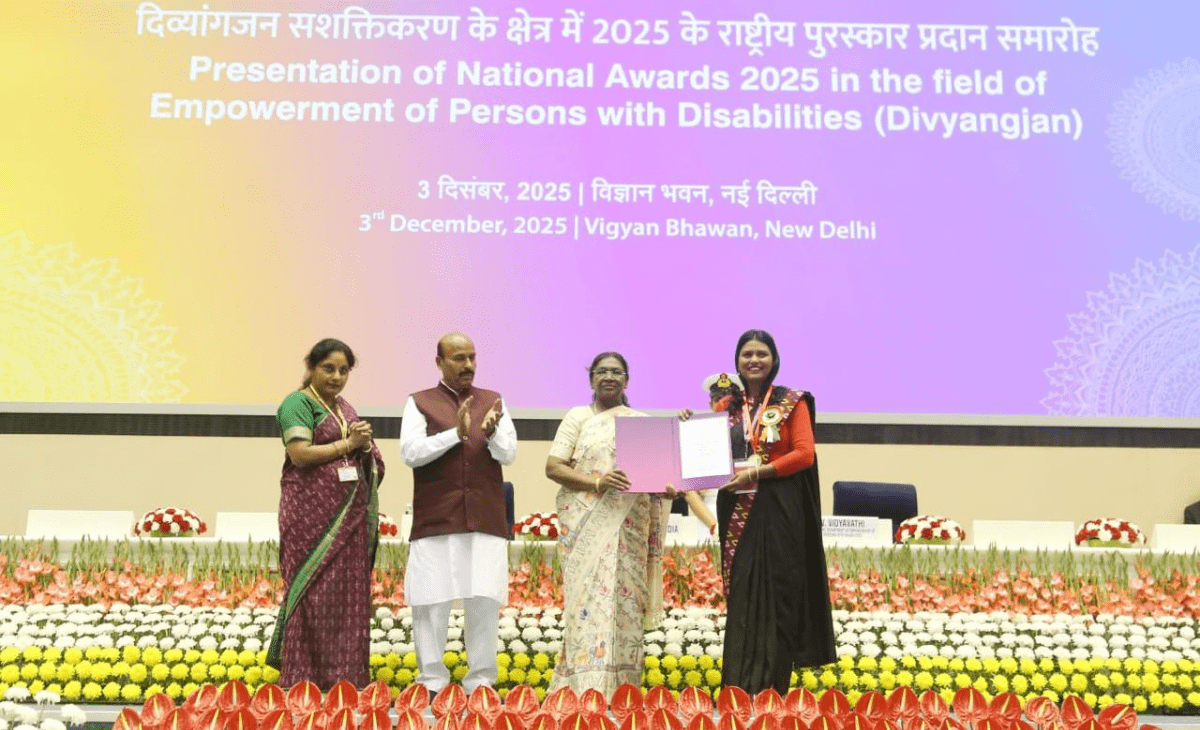
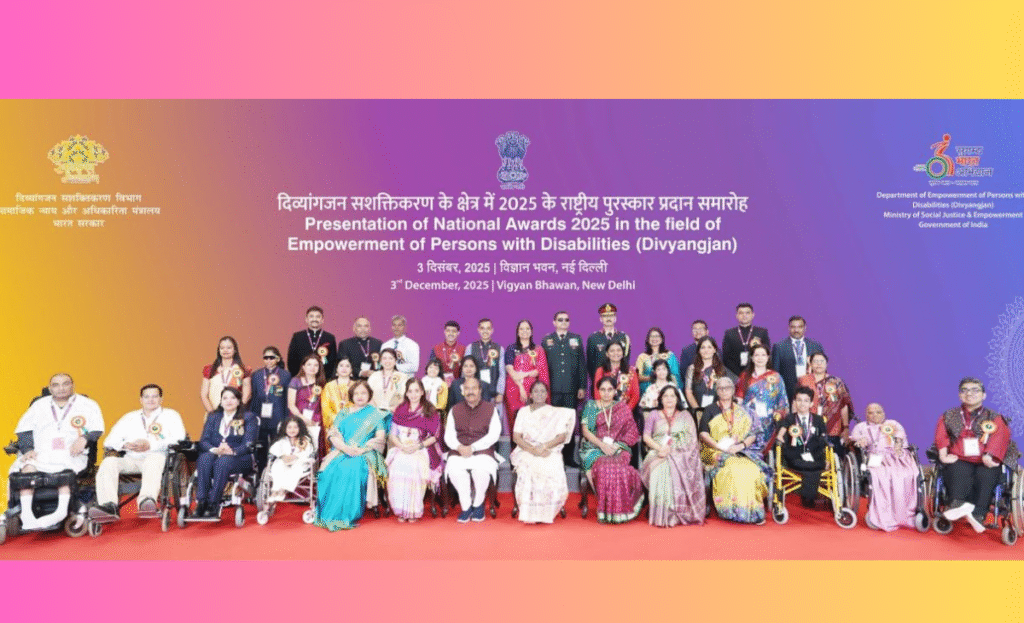
MANDI: Himachal Pradesh received rare national attention on Wednesday (December 3, 2025) when President Droupadi Murmu conferred the prestigious National Award for Empowerment of Persons with Disabilities on Dr Shruti More Bhardwaj at Vigyan Bhawan in New Delhi. She was selected under the category ‘Best Rehabilitation Professional’ for her decade-long transformative work in Himachal’s remote and mountainous regions.
The award, given on the occasion of International Day of Persons with Disabilities, recognises her outstanding contribution to developmental disability care, early intervention and community-led rehabilitation in Kullu district.
Speaking exclusively to The Newz Radar moments after receiving the honour, Dr Shruti described the award as a collective victory for the people of Himachal. “Parents are the first and most important therapists for their children. Their patience, strength and love have inspired every step of my journey,” she said.
Mumbai to Kullu: The journey that rewrote a life
Dr Shruti’s story is not merely a career trajectory but a life redirected by empathy. Raised in Mumbai and armed with an exceptional academic record, she completed her Bachelor’s in Occupational Therapy from Seth GS Medical College and KEM Hospital, and was preparing for higher studies in the United States. A global research career in top institutions was within reach. But a cycling expedition to Himachal Pradesh changed everything.
During this trip, she encountered Sonali, a 13-year-old girl with cerebral palsy, living in extreme isolation due to stigma and lack of awareness. The helplessness of the child, the anxiety of the mother and the silence of the community shook her deeply.
“That moment broke something inside me. I realised I could either follow the life I had planned… or choose the life that truly mattered,” she told The Newz Radar.
Within months, Shruti abandoned her plans for the US and shifted permanently to Kullu. She joined Handimachal, an NGO working with children with disabilities and over seven years rose to become its executive head, driving community outreach, programme innovation and inclusive therapy models.
Her exemplary work was soon recognised globally. She presented research at the American Academy of Cerebral Palsy and Developmental Medicine and received the Young Connectors of the Future Fellowship from the Swedish Institute. The Ministry of Women and Child Development honoured her with the International Women’s Day Award for her service in Kullu.
Yet, despite the accolades, she felt a bigger responsibility waiting ahead.
Birth of Samphia Foundation: A Community-Centred Disability Model
With a vision to build a sustainable, inclusive system for children with special needs, Dr Shruti founded the Samphia Foundation in Kullu. Its following initiatives are now considered among the most robust community-driven disability services in Himachal.
Aash Child Development Centre: A hub offering early intervention, therapy and special education under one roof.
Therapy on Wheels: A mobile rehabilitation unit that reaches deep rural and remote areas, ensuring no child is left behind due to geography.
Technical Support to District Early Intervention Centre, Dhalpur
Samphia Foundation partners with the RBSK programme to strengthen government-led rehabilitation services.
Samphia office-bearer Biju emphasises the central philosophy of the organisation: “Parents are at the centre of everything. They remain the child’s first therapist and the most powerful change-makers.”
Himachal gave me my purpose: Shruti’s message to state
For Dr Shruti, the mountains are not just a workplace but the foundation of her mission. “Himachal became my home. The people, their struggles and their courage have shaped my purpose. This award belongs to them as much as to me,” she said.
She believes the recognition by President Murmu is a reminder that disability care in rural India needs stronger systems, wider awareness and more compassionate professionals willing to work at the grassroots.
In a state where difficult terrain often limits access to specialised health services, Dr Shruti’s work has emerged as a model for rural disability rehabilitation. Her initiatives have provided thousands of children with a pathway to education, mobility, dignity and inclusion.