
Munish Sood
Mandi
The District Development Coordination and Monitoring Committee (DISHA) meeting held in Una on Saturday offered more than a review of development schemes. It briefly exposed how small administrative details often mirror larger systemic challenges in governance.
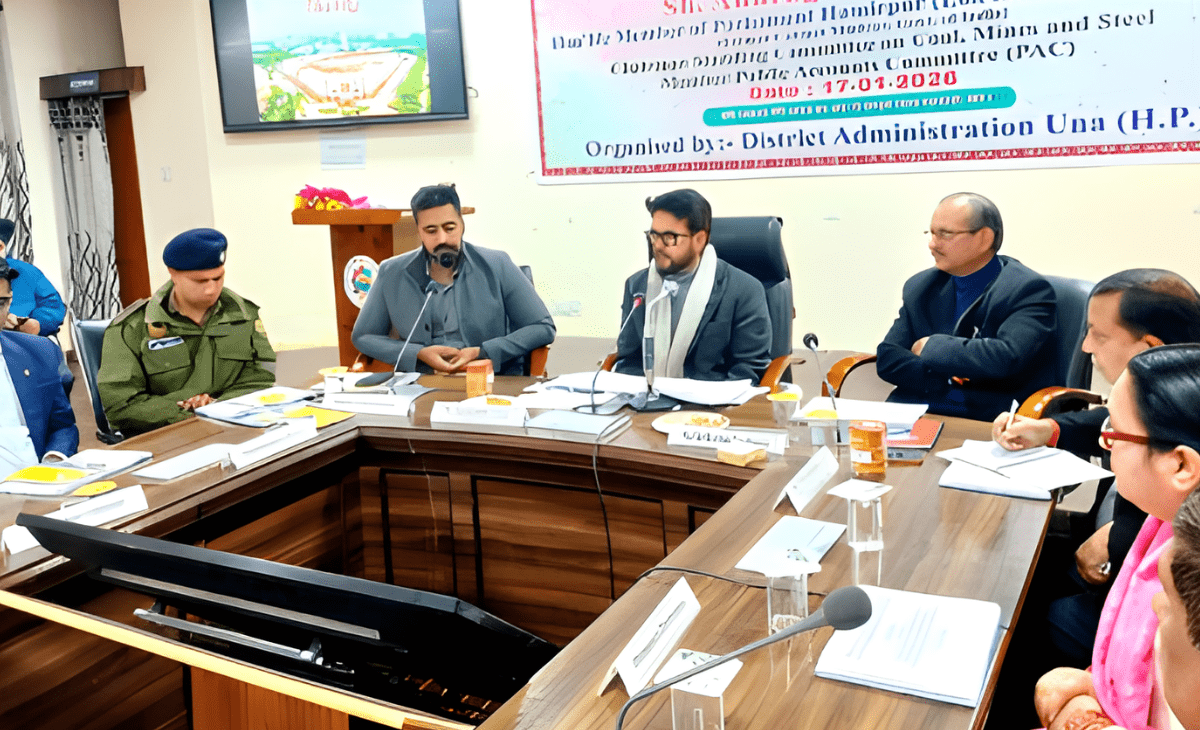
Chaired by BJP Member of Parliament and former Union Minister Anurag Thakur, the meeting was convened to assess progress on development projects and public welfare schemes. During the proceedings, a concern was raised regarding the quality of refreshments served — an issue that was promptly noticed and addressed at the venue.
While the matter itself was minor in nature, it became a moment of reflection on how administrative systems function under routine pressure, and how feedback—when it surfaces—tests the responsiveness of institutions.
Beyond Hospitality: What the Moment Represented
The concern flagged by the MP was not merely about food quality. It highlighted a broader principle: that governance credibility is built as much on everyday discipline as on large policy decisions.
Official meetings are extensions of public administration, and the standards followed there reflect the seriousness with which systems operate. When lapses occur, the real test lies not in denial or defensiveness, but in how institutions acknowledge and course-correct.
In this case, officials present took note immediately, and directions were issued for inspection, signalling that mechanisms exist to respond when issues are flagged.
Administrative Structures Under the Lens
The responsibility for logistical arrangements lies within established administrative channels. Such moments inevitably raise questions about internal checks, delegation, and supervision, particularly in districts where officers manage a wide range of responsibilities simultaneously.
Observers note that district administrations today function under intense workload pressures, and while this does not excuse lapses, it underlines the need for stronger systems rather than ad-hoc fixes.
Development Review Remains the Core Mandate
Following the interruption, the DISHA meeting returned to its central agenda — reviewing development works, scheme implementation, and timelines. Anurag Thakur reiterated the need for projects to translate from files to ground-level outcomes, urging officers to reduce delays and improve coordination.
Senior officials, including Deputy Commissioner Jatin Lal, SP Amit Yadav, Additional Deputy Commissioner Mahendra Pal Gurjar, BJP MLA Satpal Satti, and departmental heads, participated in discussions focused on execution and accountability.
A Governance Moment, Not a Controversy
The Una episode does not warrant sensationalism. Nor does it justify institutional defensiveness. Instead, it serves as a reminder that administrative strength lies in institutional learning — recognising gaps, tightening processes, and moving forward.
Good governance is rarely about perfection. It is about responsiveness, internal correction, and the ability to absorb feedback without disruption.
In that sense, the DISHA meeting in Una offered a quiet but important governance lesson:
that even small interruptions can prompt larger conversations — not about blame, but about how systems can function better for the public they serve.