
Munish Sood
Mandi
Popularly known as the “Choti Kashi” of the Himalayas, the historic town of Mandi hosts one of India’s most spiritually significant and culturally rich Shivratri festivals. Recognised internationally for its scale and tradition, the festival is a rare blend of devotion, heritage, mythology, and centuries-old royal customs.
Unlike most religious gatherings, the Shivratri Festival of Mandi is marked by a unique sequence of daily temple rituals that trace their origins back to the princely era. For seven days, worship is performed at different ancient shrines across the town, continuing traditions once personally observed by the rulers of the Mandi kingdom.
Today, these ceremonial practices are maintained by the district administration and the festival committee, preserving the historic spiritual rhythm of the celebration.
Day One: Rituals at the Raj Madhorai Temple
The festival begins with prayers at the Raj Madhorai Temple, located within the administrative परिसर of the Deputy Commissioner’s office.
This custom dates back to 1632, during the reign of Raja Suraj Sen, making it one of the oldest ceremonial traditions linked with the Shivratri celebrations in Mandi.
Day Two: Worship at the Jagannath Temple
On the second day, devotees gather at the Jagannath Temple in Paddal. Historical records suggest that Raja Gur Sen brought the idol of Lord Jagannath from Puri in Odisha in 1679.
Legend holds that the king, unable to travel annually to the coastal shrine, was guided to install the deity in Mandi itself. This event established a lasting spiritual connection between Mandi and the Jagannath tradition.
The temple, originally built in traditional hill architecture, was later reconstructed in the classical North Indian spire style during the 1990s.
Day Three: Shyama Kali Shrine at Tarna
The third day is dedicated to Goddess Shyama Kali at Tarna, a powerful centre of Shakti worship.
Situated near the former royal capital, the shrine is believed to mark the original sacred seat of Tarna Mata. Raja Shyama Sen is said to have built the temple following a historic military victory, and the sanctum houses an ancient stone-carved image of the goddess.
Day Four: Ramchandra, Sita and Jalpa Devi Temples
The fourth day features worship at the rare Ramchandra Temple, built between 1637 and 1664 by Raja Suraj Sen. Though its sculptural design reflects Vishnu iconography, the temple is revered as a manifestation of Lord Ram, symbolising righteousness and divine order.
Rituals are also performed at the Jalpa Devi Temple, located along the banks of the Beas River. Local belief associates the goddess with water-born divine energy, representing prosperity, nature, and spiritual abundance.
Day Five: Siddh Kali and Bhuvaneshwari Temples
On the fifth day, prayers are offered at the Siddh Kali Temple in Sankan Garden, established by Raja Siddh Sen.
The shrine is especially admired for its striking multi-armed stone idol carved directly from rock, reflecting the craftsmanship of Himalayan temple traditions. Worship also takes place at the nearby Bhuvaneshwari Temple.
Day Six: Trilokinath and Sheetla Mata Temples in Old Mandi
The sixth day’s rituals are held at the ancient Trilokinath Temple, dedicated to Lord Shiva and located in Old Mandi. Declared a protected monument by the Archaeological Survey of India, the temple is believed to be more than 500 years old.
Alongside, worship is performed at the Sheetla Mata Temple, an equally historic shrine that suffered damage during the devastating Kangra earthquake of 1905, later restored by the local community.
⸻
Day Seven: Grand Worship at the Bhootnath Temple
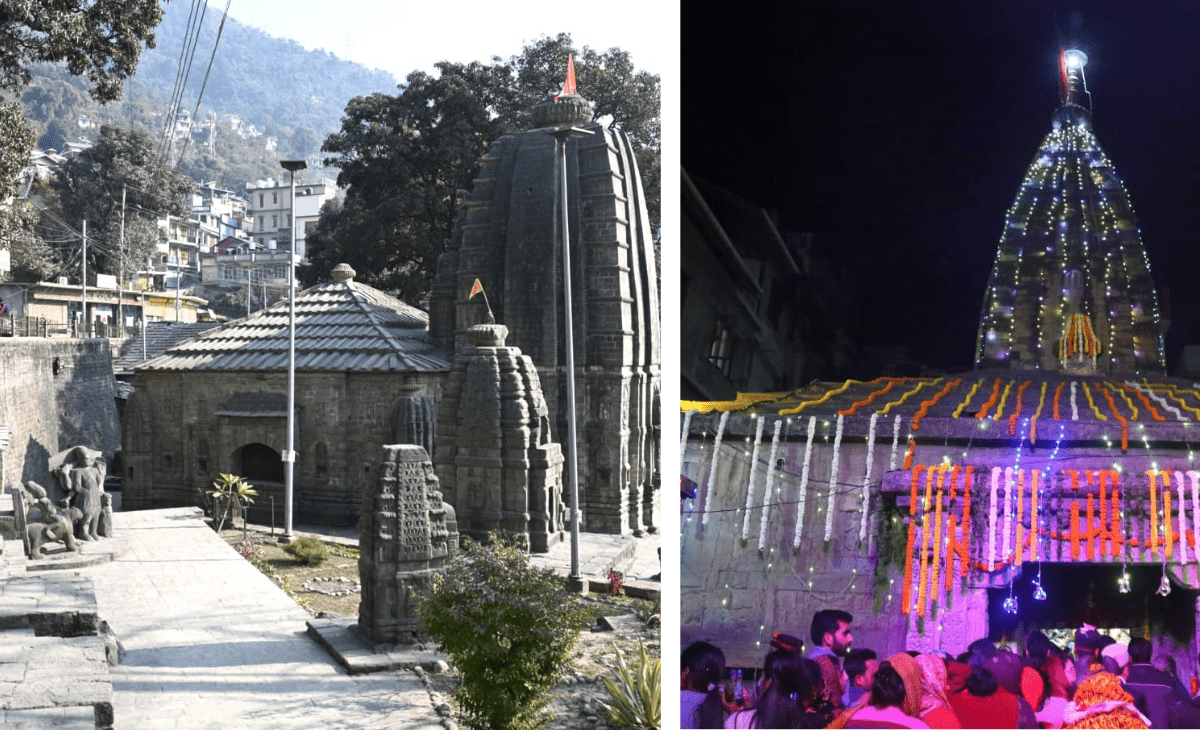
The final and most significant day culminates at the iconic Bhootnath Temple, the spiritual centre of Mandi.
Built in 1526–27 by Raja Ajbar Sen, founder of the town, the temple houses a naturally formed Shiva lingam and is regarded as the seat of the town’s presiding deity.
It is widely believed that the Shivratri fair gained prominence after the establishment of this shrine, as the day of its consecration coincided with Shivratri itself.
⸻
A Living Heritage of Faith and History
The Shivratri Festival of Mandi is far more than a religious gathering. It is a living heritage event where royal-era rituals, sacred architecture, mythology, and community devotion converge in a rare seven-day spiritual tradition.
Each temple worship ceremony strengthens Mandi’s identity as one of the most enduring cultural and religious centres of the Himalayan region, making its Shivratri celebrations a timeless symbol of faith and history.