

Sarkaghat Farmers Earn New Income from High-Value CropFrom traditional farming to commercial fruit production, progressive growers embrace diversification; two-bigha orchards generate encouraging returns, with horticulture department extending financial and technical support
Munish Sood
Mandi: Dragon fruit, once considered an exotic fruit largely associated with imported produce and distant markets, is gradually finding a place in the agricultural landscape of Mandi district. With farmers in the Sarkaghat region taking up its commercial cultivation and reporting encouraging returns, the crop is emerging as a promising alternative to traditional farming and opening new avenues for horticultural diversification in the district.
The shift is particularly significant for farmers looking to make better use of small landholdings, diversify their income sources and move towards high-value fruit production. The success of growers in villages such as Bharnal is also demonstrating that innovative horticultural practices, backed by technical guidance and government assistance, can create new economic opportunities in rural areas.
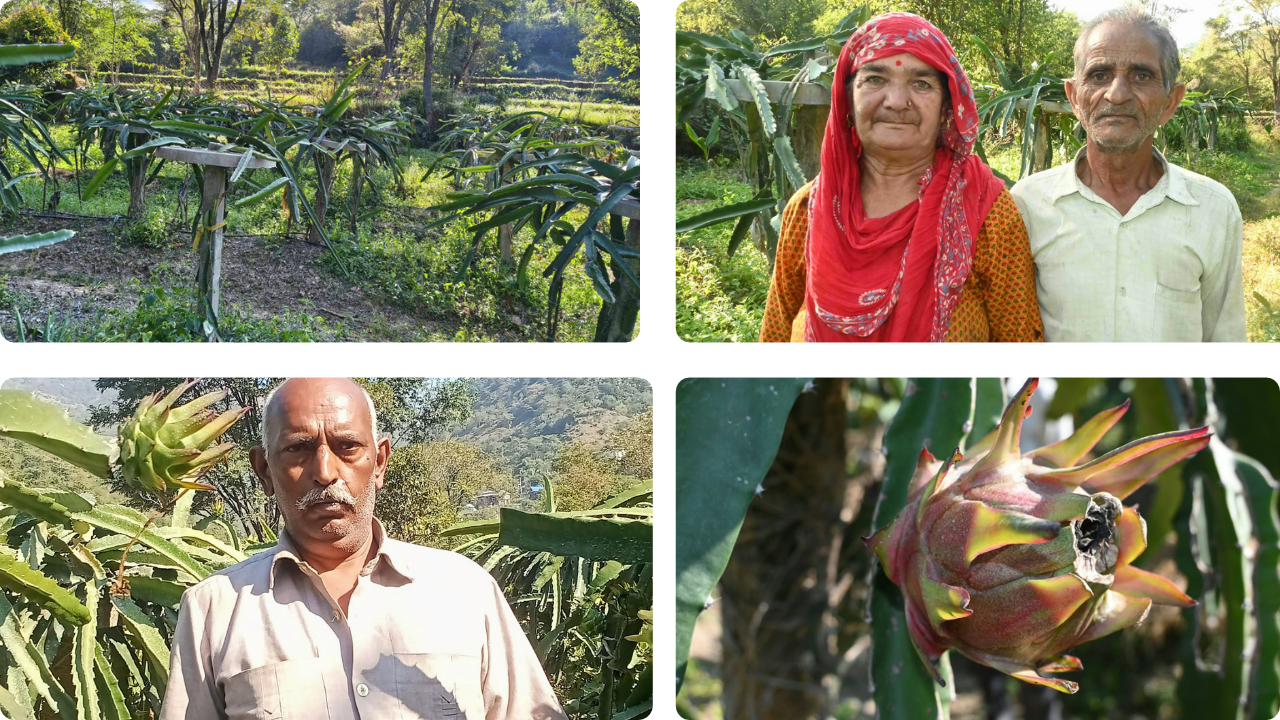
A recent example is that of progressive farmers Roop Lal and Tek Chand of Bharnal village in the Sarkaghat subdivision, who have established dragon fruit orchards over approximately two bighas each. Roop Lal has reportedly earned around Rs 2 lakh from his first commercial harvest, giving an encouraging indication of the crop’s economic potential in the region.
According to the reported details, Roop Lal began exploring dragon fruit cultivation in 2023 after receiving information and guidance from the Horticulture Department at Sarkaghat. He subsequently procured nearly 400 plants of the Jumbo Red Flesh variety from a registered nursery in Gopalpur and developed his orchard using the RCC ring-pole-supported cultivation system.
The plants began yielding commercially in the third year. During the harvesting season, the fruit was picked in five to six rounds, with the produce fetching approximately Rs 180 per kilogram in the market. The farmer has also adopted natural and organic cultivation practices, avoiding chemical fertilisers.
A crop with long-term production potential
What makes dragon fruit particularly attractive is its perennial nature. With proper management, a plantation can remain productive for approximately 17 to 20 years. The crop also requires comparatively less water than many conventional fruit crops because it belongs to the cactus family.
Its harvesting potential, multiple picking cycles and relatively long productive life make it an interesting option for farmers in the warmer parts of Mandi district. However, successful cultivation depends on suitable climatic conditions, proper drainage, adequate sunlight, quality planting material and scientific orchard management.
The RCC ring-pole system is another important aspect of its cultivation. In this method, four plants are generally trained around a supporting concrete pole, allowing them to grow vertically and develop a productive canopy. This arrangement helps farmers utilise available land more efficiently.
Government support giving farmers a push
The Horticulture Department is also encouraging farmers to explore high-value fruit crops through various development programmes. Under the Mission for Integrated Development of Horticulture (MIDH), eligible farmers can receive financial assistance of up to 50 per cent of the approved establishment cost for dragon fruit cultivation, subject to applicable scheme norms.
Farmers can also avail themselves of assistance for modern irrigation facilities, including drip irrigation, under relevant government schemes.
Sarkaghat Horticulture Development Officer Shabnam Rana has highlighted the potential of dragon fruit cultivation in the region, particularly because of its relatively low water requirement and long production cycle. The crop can also be cultivated on suitably prepared sloping land, subject to soil and drainage conditions.
Beyond traditional farming: An opportunity for Mandi
The growing interest in dragon fruit cultivation comes at a time when diversification has become increasingly important for Himachal Pradesh’s agricultural economy. Dependence on a limited number of traditional crops makes farmers vulnerable to fluctuating market prices, changing weather patterns and rising cultivation costs.
The Himachal Pradesh Subtropical Horticulture, Irrigation and Value Addition (HPSHIVA) project is also working towards expanding the state’s fruit basket through subtropical and high-value horticulture. Mandi is among the districts covered under this initiative, which aims to create new income opportunities through organised horticultural development.
Dragon fruit’s growing popularity in domestic markets, attractive appearance and nutritional profile further add to its commercial significance. Rich in dietary fibre, antioxidants and other nutrients, it has found a place in the health-conscious consumer market.
The emerging success of farmers in Sarkaghat suggests that dragon fruit could become an additional source of income for growers in suitable pockets of Mandi. However, expanding production will also require attention to organised marketing, availability of quality planting material, post-harvest handling and reliable market linkages.
For Mandi, the development is more than the introduction of another fruit crop. It represents a gradual shift towards innovative farming, commercial horticulture and the exploration of new income opportunities. If supported by scientific cultivation practices and assured market access, dragon fruit could become an important addition to the district’s horticultural economy.


