
Munish Sood
Mandi
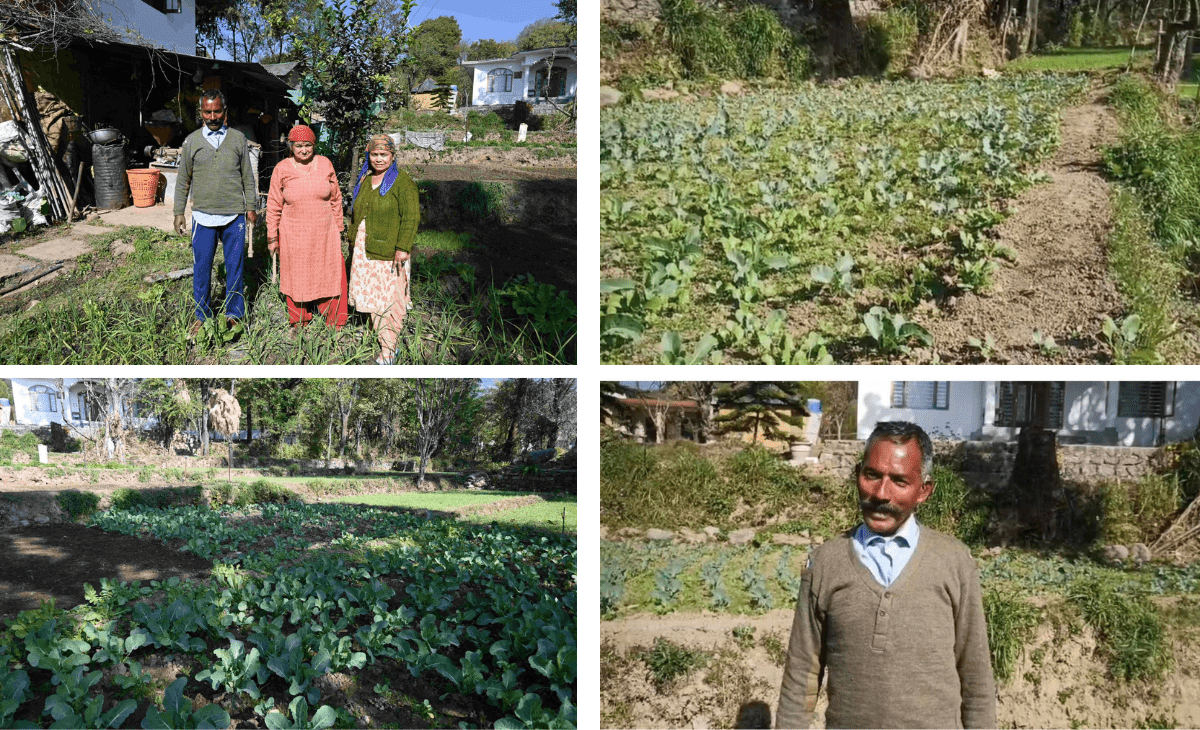
In the remote hill village of Tikkri Mushehra in Jogindernagar subdivision of Mandi district, farmer Ajay Kumar stands as a quiet symbol of perseverance. Practising natural farming for over two decades, Ajay’s journey reflects the long struggle of farmers who believed in chemical-free agriculture long before it found policy support or market recognition.
Ajay Kumar adopted natural farming in 2003, when the concept had little acceptance and almost no organised market. Selling naturally grown produce was difficult, prices were uncertain, and farmers had to rely largely on local buyers. “Those were testing years,” he recalls, adding that many farmers abandoned the practice midway due to lack of assured returns.
The situation has gradually improved with the introduction of Minimum Support Prices (MSP) for natural produce, providing farmers a sense of security. Recently, Ajay sold two quintals of naturally grown maize at MSP, earning over ₹6,000. For him, the income is important—but more significant is the recognition of natural produce as a valued agricultural output.
A similar story of change is emerging from Sagnehar gram panchayat, also in the Jogindernagar area, where Kamla Devi and a group of nearly 20 rural women have turned natural farming into a collective livelihood model. Associated with the practice since 2018, the women cultivate crops without chemical fertilisers or pesticides, focusing on both sustainability and health.
Working as a self-help group, the women sold two quintals of maize and six quintals of wheat under the MSP system. Including transportation assistance, the group received a total payment of ₹37,200, a significant amount for a women-led rural collective. Members say the income has strengthened their financial independence and boosted confidence.
Beyond cereals, both Ajay Kumar and the Kamla Group are now cultivating vegetables, ragi and other crops through natural methods, generating additional income. Agriculture officials say the Kamla Group was trained under the ATMA project, through a two-day on-site training programme focusing on natural farming techniques. Following the training, naturally grown ragi produced by the group has attracted traders, fetching better market prices.
At present, MSP rates for natural produce stand at ₹40 per kg for maize, ₹60 per kg for wheat, and ₹90 per kg for turmeric, leading to a visible shift among farmers towards chemical-free cultivation in the region.
Kamla Devi believes the biggest gain from natural farming goes beyond economics. “It ensures safe food for our families and protects our health. The soil also remains fertile for future generations,” she says, encouraging more farmers to adopt the practice.
The experiences of Ajay Kumar in Tikkri Mushehra and the women of Sagnehar demonstrate how market assurance, training and sustained effort can transform natural farming into a reliable source of income—quietly strengthening rural livelihoods in Himachal Pradesh.